Zebra Pleco Care Guide
A Complete Care Guide for Hypancistrus zebra
Introduction
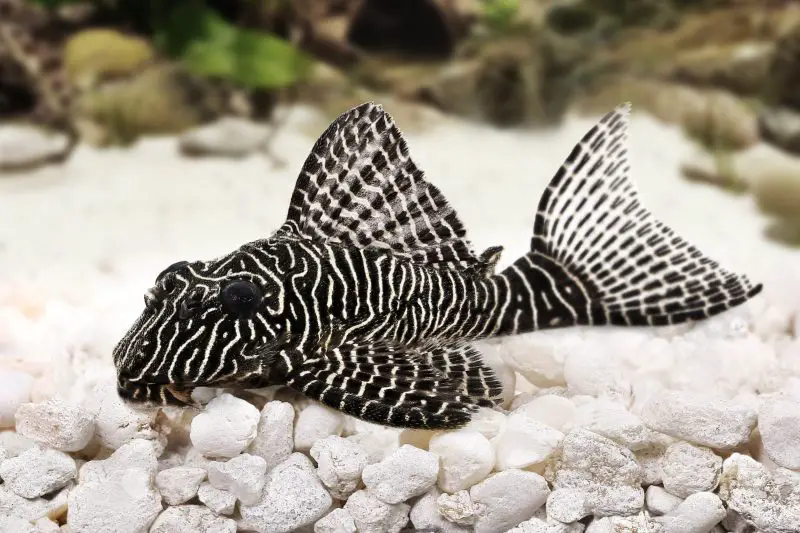
Hypancistrus zebra, the zebra pleco (also known as L046), is one of the most visually striking and coveted freshwater fish in the hobby. Their bold black-and-white striped pattern resembles that of a zebra and stands out dramatically in any aquarium. They are native to the Xingu River in Para state, Brazil, and are listed as endangered in the wild due to dam construction that has drastically altered their native habitat.
Zebra plecos are small (3–4 inches), carnivore-leaning, and require warm, fast-flowing, highly oxygenated water to thrive. Their specific care requirements, relatively high price, and difficulty sourcing make them a fish for intermediate to advanced keepers rather than beginners.
In the right environment, however, zebra plecos are long-lived, breed in captivity, and are among the most beautiful fish money can buy. Every detail of their care is worth getting right for a fish this extraordinary.
Basic Overview
Common Misconceptions
"Zebra plecos eat algae like bristlenose plecos." Zebra plecos are carnivore-leaning omnivores that consume very little algae. They need meaty foods. Do not purchase them expecting algae control.
"They can be kept in standard tropical conditions." Zebra plecos require warm water (82–88°F), high flow, and very high oxygen levels. Standard 76–78°F tropical tanks are too cool for them long-term.
"Any cave is suitable." Zebra plecos are very specific about cave dimensions. The cave entrance should be just large enough for the fish to enter, and the interior should be roughly the length of the fish's body. Too large or too small caves are rejected.
"They are rare and impossible to breed in captivity." Zebra plecos breed regularly in captivity when conditions are correct. A thriving captive breeding community exists worldwide, and all legal trade specimens should be captive-bred.
Recommended Setup
- 20+ gallon tank for a pair; 30+ gallons for a breeding group of 1 male and 2–3 females
- Fine sand or smooth bare-bottom substrate
- Multiple correctly sized caves: PVC pipe or terra cotta tubes barely wider than the fish
- Very strong flow: powerhead or wavemaker providing 10–20 tank volumes per hour
- Excellent oxygenation: surface agitation and high dissolved oxygen essential
- Warm water maintained at 84–86°F; reliable high-quality heater
- No bright lighting; dim or heavily shaded tank preferred
Diet
Zebra plecos are carnivore-leaning omnivores that eat primarily meaty foods:
- Frozen bloodworms (primary food; highly preferred)
- Frozen brine shrimp and mysis shrimp
- Sinking carnivore pellets
- Frozen blackworms
- Occasional sinking veggie wafer or blanched zucchini (small amount for balance)
Feed in the evening when they emerge. Place food directly in or near their cave entrances. Zebra plecos are shy feeders that may not venture far from shelter even at night. In a species-only setup, ensure every individual receives food; dominant fish will monopolize food in a community setup.
Personality
Zebra plecos are secretive, primarily nocturnal fish that spend most daylight hours wedged inside their chosen cave. At night they emerge to feed and explore, moving with deliberate purpose across the substrate and driftwood.
Males are territorial over caves and will compete with other males through pushing contests at cave entrances. This competition is important for selecting breeding partners; providing more caves than there are males reduces conflict.
Observed at night with a red light, zebra plecos reveal their full personality: methodical, purposeful, and surprisingly active for a fish that appears inert during the day.
Breeding Zebra Plecos
Breeding zebra plecos in captivity is achievable with the right setup. The male claims a cave, courts females by blocking the entrance and fanning his fins, and spawning occurs inside the cave with 7–15 eggs laid on the ceiling.
The male guards the eggs, fanning them continuously until they hatch in 5–7 days. Fry remain in the cave, sustained by their yolk sac, for another 7–10 days before emerging and immediately accepting sinking foods.
Water quality must be pristine during breeding. Strong flow, warm temperatures (85–87°F), and daily small water changes with slightly cooler water can trigger spawning in a well-conditioned group. The investment in setting up proper conditions is rewarded by one of the hobby's most satisfying breeding successes.
Water Parameters
Zebra plecos come from the fast-moving, highly oxygenated Xingu River:
- pH: 6.0–7.5
- Hardness (gH): 2–6 dGH (very soft)
- Temperature: 82–88°F
- Ammonia and Nitrite: 0 ppm
- Nitrate: below 10 ppm (very sensitive to nitrate)
Here are some top tips to deal with unwanted parameters:
- Flow and oxygenation are as critical as temperature. The Xingu River is a whitewater system with exceptional current and dissolved oxygen. Replicate this with a powerhead and strong surface agitation.
- Nitrate below 10 ppm is important. The Xingu River is virtually nitrate-free. Frequent small water changes (20% twice weekly) rather than one large weekly change maintains the low nitrate levels zebra plecos need.
- Very soft water is important for this species from the mineral-poor Amazon region. RO water with minimal remineralization (target 2–4 dGH) is ideal.
- High temperature combined with high oxygenation can seem contradictory, as warm water holds less oxygen. Strong surface agitation and high turnover rates compensate and must not be neglected.