Snowball Pleco Care Guide
A Complete Care Guide for Hypancistrus inspector (L102)
Introduction
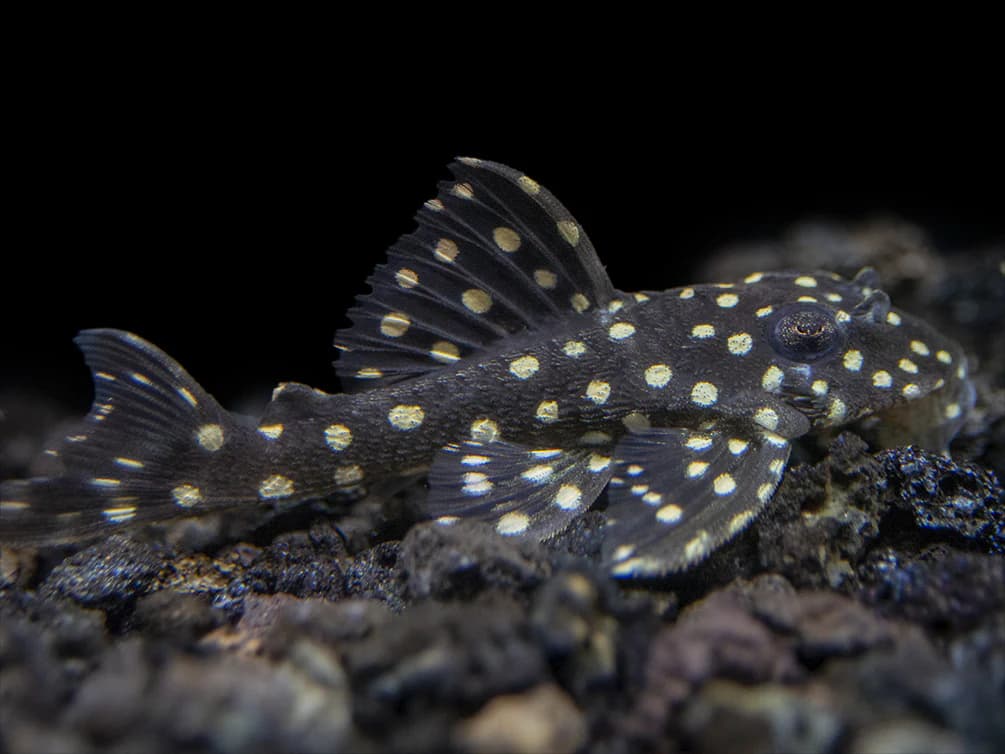
Hypancistrus inspector, the snowball pleco (L102), is a visually striking small pleco with a bold pattern of large white spots on a jet-black body that give it an appearance reminiscent of a field of snowballs. Closely related to the zebra pleco (L046), the snowball shares many of the same care requirements: warm water, high flow, excellent oxygenation, and a meaty diet.
Native to the Rio Negro and its tributaries in Brazil and Venezuela, snowball plecos inhabit warm, fast-flowing blackwater rivers with rocky substrates and abundant driftwood. The Rio Negro is exceptionally soft, acidic, and mineral-poor, shaping this species water chemistry requirements.
Snowball plecos are a manageable size for dedicated keepers (4-5.5 inches), breed in captivity, and represent a more accessible entry point into the Hypancistrus genus than the more expensive zebra pleco. Their care requirements are specific but achievable with proper equipment.
Basic Overview
Common Misconceptions
"They eat algae like common plecos." Snowball plecos are carnivore-leaning Hypancistrus that consume very little algae. They need meaty foods. They are not algae cleaners and should not be purchased for algae control.
"Standard tropical conditions are sufficient." Snowball plecos require warm water (79-86 degrees F), high flow, and very high dissolved oxygen. Standard 76-78 degree F setups with moderate flow are not adequate for long-term health.
"Caves are optional decoration." Caves sized precisely for each individual fish are essential for territorial behavior, spawning, and security. Without appropriate caves, males cannot breed and the fish will be chronically stressed.
"They are just cheaper zebra plecos." While closely related, snowball plecos are their own distinct species with a different pattern (large round white spots vs. thin zebra stripes). Their care requirements are similar but not identical.
Recommended Setup
- 30+ gallon tank for a pair; 40+ gallons for a colony of 1 male and 2-3 females
- Fine sand or bare-bottom substrate
- Multiple precisely sized caves: PVC pipe or ceramic tubes just wider than the fish
- Strong flow: powerhead providing 8-15x tank volume per hour turnover
- Excellent surface agitation and oxygenation
- Warm water at 81-84 degrees F maintained by a reliable quality heater
- Dim lighting; heavily shaded tank preferred
Diet
Snowball plecos are carnivore-leaning omnivores that need primarily meaty foods, unlike most pleco species:
- Frozen bloodworms (primary food; highly accepted)
- Frozen brine shrimp and mysis shrimp
- Sinking carnivore or Hypancistrus-type pellets
- Frozen blackworms
- Occasional blanched zucchini or sinking algae wafer (small amount for dietary balance)
Feed in the evening after lights out when snowball plecos emerge to forage. Place food near or directly at cave entrances for shy individuals. In a colony, ensure all individuals receive food; dominant fish may monopolize feeding areas.
Personality
Snowball plecos are secretive, cave-dwelling fish that emerge primarily at night. During the day they remain wedged inside their chosen cave, visible only as a pattern of white spots disappearing into the darkness. After lights out, they move methodically around the tank, foraging and exploring with deliberate purpose.
Males are territorial over caves and will push and wrestle with rival males for ownership of a preferred cave. Providing more caves than there are males substantially reduces this competition. Females are less territorial and can share territory more readily.
For keepers willing to observe their tank by red light after lights out, snowball plecos reveal themselves as active, interesting fish with distinct individual personalities. The combination of their striking pattern and their secretive, cave-oriented lifestyle makes them compelling long-term residents.
Breeding Snowball Plecos
Snowball plecos breed in captivity using the same cave-spawning approach as other Hypancistrus. The male claims a cave and courts females; spawning occurs on the cave ceiling with 8-20 eggs laid and guarded exclusively by the male.
Eggs hatch in 5-7 days; fry remain in the cave on their yolk sac for another 7-10 days before emerging and immediately accepting fine sinking foods. First foods include baby brine shrimp, micro pellets, and finely crushed frozen bloodworms.
Water changes with slightly cooler water, combined with an increase in flow rate and high-quality live or frozen foods, triggers spawning in a well-conditioned group. Keeping the group well-fed with meaty foods for several weeks before attempting to trigger breeding produces the best results.
Water Parameters
Snowball plecos come from the warm, fast-flowing, extremely soft blackwaters of the Rio Negro system:
- pH: 5.0-7.0 (soft acidic)
- Hardness (gH): 0-4 dGH (very soft water; Rio Negro is mineral-poor)
- Temperature: 79-86 degrees F
- Ammonia and Nitrite: 0 ppm
- Nitrate: below 10 ppm
Here are some top tips to deal with unwanted parameters:
- Very soft water is a genuine requirement for snowball plecos from the mineral-poor Rio Negro. RO water with minimal remineralization (targeting 1-3 dGH) is ideal.
- High flow and oxygenation are as critical as temperature. Use a powerhead in addition to the primary filter to achieve the 8-15x hourly turnover that replicates their fast-water habitat.
- Frequent small water changes (20% twice weekly) maintain the near-zero nitrate levels these Rio Negro fish are adapted to. The Rio Negro is one of the most nutrient-poor river systems in the world.
- High temperature combined with high oxygenation requires deliberate attention to surface agitation, as warm water holds less dissolved oxygen. Never neglect surface movement in a snowball pleco setup.