Royal Pleco Care Guide
A Complete Care Guide for Panaque nigrolineatus
Introduction
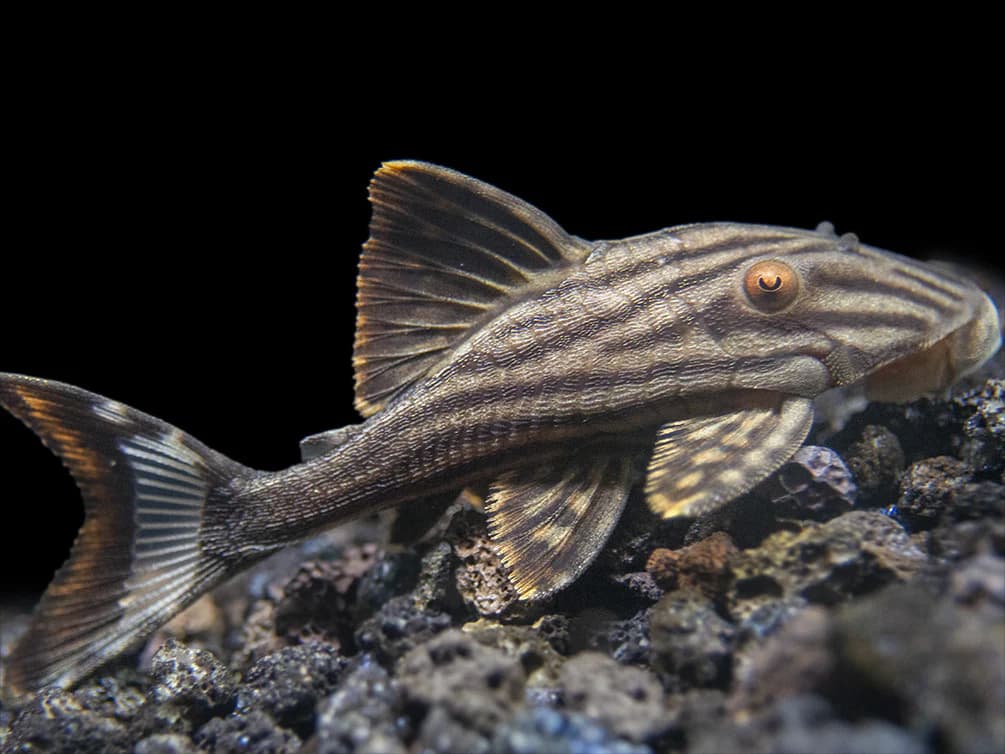
Panaque nigrolineatus, the royal pleco (L190), is one of the most striking large plecostomus species available. Their dramatic striped pattern of dark gray or black lines against a lighter gray body, combined with brilliant red eyes and the characteristic Panaque body plan, makes them an impressive centerpiece for a large aquarium.
Native to the upper Amazon and Orinoco River basins in Colombia and Venezuela, royal plecos inhabit fast-flowing rivers with abundant driftwood. Unlike most plecos, Panaque species are wood-eating fish: their spoon-shaped teeth are adapted for rasping and consuming driftwood (xylivory), and driftwood is not just decor for them but a dietary necessity.
Royal plecos grow large (up to 17 inches in optimal conditions, though typically 10-13 inches in aquariums) and require a spacious, well-filtered tank with large pieces of driftwood. They are a long-term commitment for dedicated keepers with appropriate facilities.
Basic Overview
Common Misconceptions
"Driftwood is optional decoration for royal plecos." Driftwood is a dietary component for Panaque species. They rasp and ingest wood as a significant part of their diet. Without driftwood, their digestive system is compromised. Large, hard driftwood pieces must always be present.
"They are typical algae eaters." Royal plecos are wood eaters, not primarily algae eaters. They do consume some algae and biofilm, but they are fundamentally different from bristlenose or common plecos in their dietary requirements.
"A 55-gallon tank is adequate for an adult." Adult royal plecos reach 10-17 inches and produce enormous amounts of waste. A 125-gallon tank is the genuine minimum for a single adult; larger is better.
"They are shy and hide all the time." Royal plecos are nocturnal and hide during the day, but in a well-established tank with appropriate hiding spots, they emerge regularly at night and become increasingly visible over time.
Recommended Setup
- 125+ gallon tank for an adult; juveniles can be raised in 55+ gallons
- Large pieces of driftwood (multiple pieces; this is dietary necessity, not just decoration)
- Sand or fine gravel substrate
- Large caves and hiding spots: PVC pipe, large clay caves, rock formations
- Excellent filtration: canister filter rated for 2-3x tank volume (they produce enormous waste)
- Strong flow with good oxygenation
- Dim lighting; they are nocturnal and prefer low light conditions
Diet
Royal plecos are wood eaters (xylivores) with specific dietary needs that differ from most plecos:
- Driftwood (always available; rasped continuously and essential)
- Sinking algae wafers and spirulina wafers
- Blanched vegetables: zucchini, cucumber, sweet potato, squash
- Sinking carnivore or omnivore pellets (small proportion)
- Frozen bloodworms and brine shrimp (occasional protein supplement)
Ensure driftwood is always available; it is consumed continuously and provides essential fiber for their unusual digestive system. Supplement with sinking vegetable-based foods daily. Avoid high-protein diets; the Panaque digestive system is adapted for wood fiber and plant matter, not meat.
Personality
Royal plecos are nocturnal fish that spend daylight hours wedged tightly into their chosen hiding spot, emerging reliably after lights out to forage, rasp driftwood, and explore. In a well-established tank with appropriate hiding spots, they develop a consistent routine that experienced keepers learn to observe.
They are peaceful toward other species sharing their tank but will aggressively defend their territory and hiding spot from other large plecos. Two large plecos in a tank require significant space and multiple separate territories to coexist without conflict.
Their feeding behavior is fascinating to observe: they approach driftwood pieces deliberately and rasp methodically with their specialized teeth, leaving characteristic pale scrape marks on the driftwood surface that record their activity during the night.
Driftwood Selection and Management
Not all driftwood is equal for royal plecos. Hard, dense driftwood (mopani, cholla, ironwood) provides both longer-lasting rasping substrate and more nutritional value than softer woods. Soft driftwood is consumed rapidly and may foul the water quickly.
A single royal pleco will visibly consume driftwood over months: pieces shrink, scrape marks appear, and sections eventually become so thin they need replacement. This is completely normal and a sign of a healthy, active fish.
Driftwood should be soaked before use to reduce tannin leaching, though moderate tannins benefit the tank aesthetically and chemically. Replace driftwood pieces as they are consumed; always maintain multiple large pieces in the tank simultaneously.
Water Parameters
Royal plecos come from the fast-flowing, well-oxygenated rivers of the upper Amazon and Orinoco systems:
- pH: 6.0-7.5
- Hardness (gH): 2-12 dGH (softer water preferred)
- Temperature: 73-82 degrees F
- Ammonia and Nitrite: 0 ppm
- Nitrate: below 20 ppm (important; they produce enormous waste)
Here are some top tips to deal with unwanted parameters:
- Excellent filtration and frequent water changes are essential. Royal plecos produce prodigious amounts of waste from their wood-based diet. A 30% weekly water change is a minimum; twice-weekly changes are better for large adults.
- Strong flow and high oxygenation suit their fast-water background. A powerhead or wavemaker in addition to the canister filter improves both oxygen levels and their comfort.
- Soft to moderately hard water suits them well. In very hard areas, blending with a proportion of RO water improves conditions. Driftwood also naturally softens and acidifies water over time.
- Avoid copper-based medications. Like all plecos, royal plecos are sensitive to copper at concentrations safe for most fish. Always check medication ingredients before treating a tank housing them.