Whiptail Catfish Care Guide
A Complete Care Guide for Rineloricaria sp.
Introduction
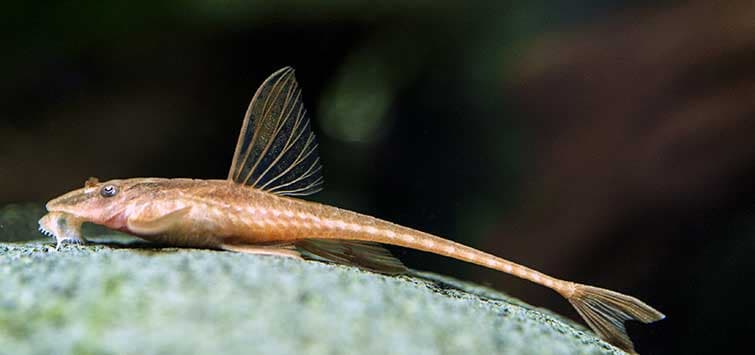
Rineloricaria species, collectively called whiptail catfish, are slender, elongated armored catfish from South America recognizable by their extremely flattened body, long tapering tail (giving the common name), and covered with overlapping armor plates. Several species are available in the hobby, including Rineloricaria lanceolata and related species, all with similar care requirements.
Native to flowing rivers and streams throughout tropical South America, whiptail catfish inhabit sandy or rocky substrates in moderate to fast-flowing water. They cling to substrate and flat surfaces using their modified sucker mouth, grazing on biofilm and algae.
Whiptail catfish are peaceful, undemanding catfish suited to planted community tanks. They are smaller than common plecos (6-8 inches), do not destroy plants, and their unique body shape and gentle nature make them interesting additions to medium-sized planted setups.
Basic Overview
Common Misconceptions
"They are the same as common plecos." Whiptail catfish are very different from common plecos. They are smaller, thinner, do not destroy plants, and prefer cooler, faster water. They are a much better choice for planted community tanks than common plecos.
"They primarily eat algae." While whiptail catfish graze biofilm and some algae, they are omnivores that need a balanced diet with significant protein and vegetable matter. Relying on tank algae alone is insufficient.
"They can be kept in still water." Whiptail catfish come from moderate to fast-flowing streams and prefer good water movement and high dissolved oxygen. Low-flow tanks with poor oxygenation cause health issues over time.
"They are visible during the day." Whiptail catfish are primarily nocturnal. They spend most daytime hours clamped to a surface or hiding under driftwood. Nighttime activity observation reveals their true behavior.
Recommended Setup
- 30+ gallon tank
- Fine sand or smooth gravel substrate
- Flat surfaces: smooth rocks, driftwood, broad-leaved plant leaves
- Moderate to strong flow with good oxygenation
- Hardy plants (they will not damage them)
- Caves or hiding spots
- Good filtration
Diet
Whiptail catfish are omnivores that need varied foods including plant matter:
- Algae wafers and spirulina-based foods
- Blanched vegetables: zucchini, cucumber, spinach
- Sinking pellets
- Frozen bloodworms (occasional protein)
- Dried leaf litter for biofilm grazing
Feed once daily in the evening. Provide a mix of algae-based and protein-based sinking foods. Blanched vegetables placed near the substrate are eagerly accepted. A varied diet is important for long-term health; algae alone or protein alone is insufficient.
Personality
Whiptail catfish are calm, methodical fish that spend their time grazing over surfaces in the tank. Their flat, streamlined body shape allows them to press tightly against any surface, and their sucker mouth moves across the substrate, glass, and decor in a constant, slow patrol.
Males of some Rineloricaria species develop bristles (odontodes) on their cheeks and snout, and defend spawning caves. Breeding pairs will use a cave or hollow log as a spawning site, with the male guarding the egg cluster.
Their peaceful nature makes them excellent community fish compatible with virtually all non-aggressive tank inhabitants including small shrimp and snails.
Water Parameters
Whiptail catfish come from the clear, fast-flowing, cool-to-warm rivers of South America:
- pH: 6.0-7.5
- Hardness (gH): 2-15 dGH
- Temperature: 72-79 degrees F
- Ammonia and Nitrite: 0 ppm
- Nitrate: below 20 ppm
Here are some top tips to deal with unwanted parameters:
- Good flow and oxygenation are important. Whiptail catfish come from fast-flowing streams and need well-oxygenated water.
- Cooler temperatures (72-76 degrees F) are optimal. They are not a strictly tropical species.
- Weekly 25% water changes maintain good conditions. Soft to moderately soft water is ideal.
- Avoid copper-based medications.