Farlowella Catfish Care Guide
A Complete Care Guide for Farlowella acus
Introduction
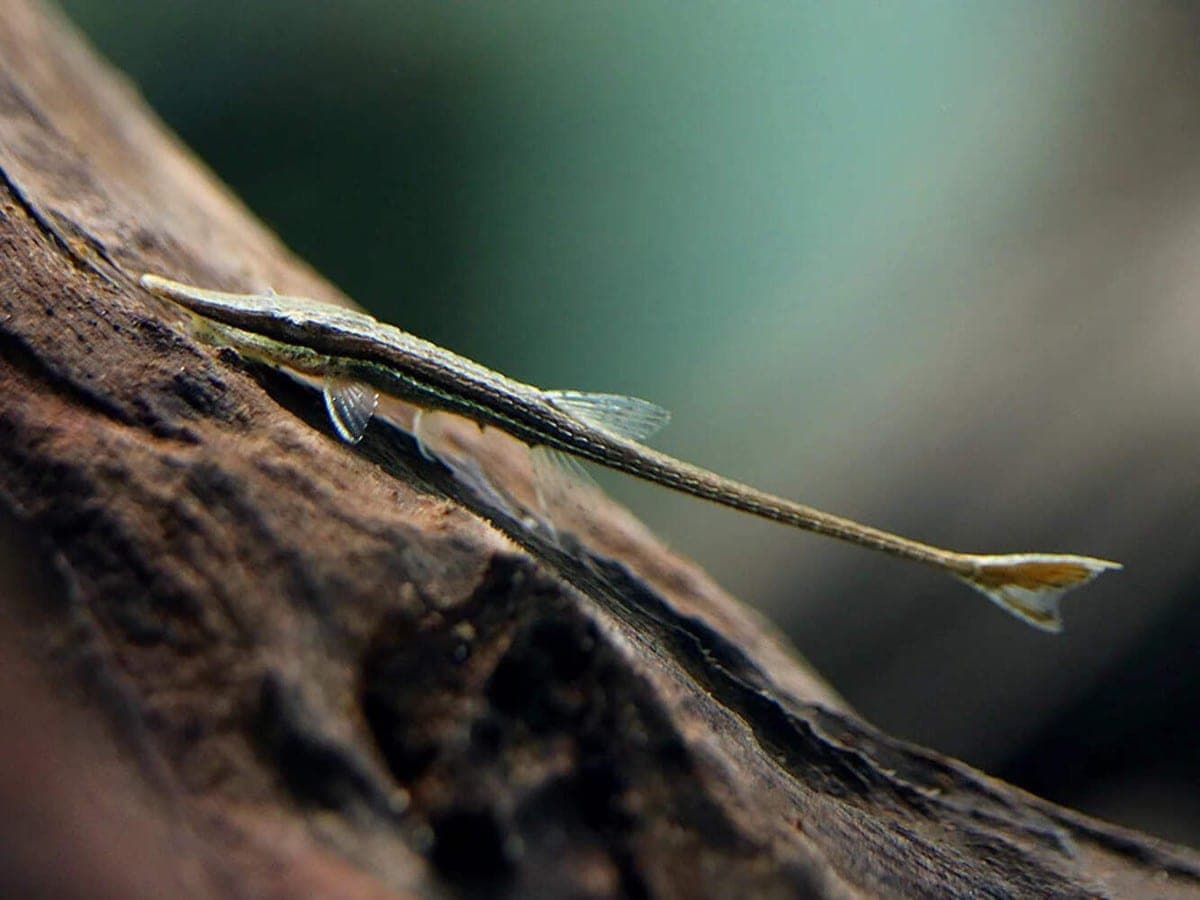
Farlowella acus, the twig catfish (or farlowella), is one of the most unusually shaped fish in the freshwater hobby. Their extraordinarily elongated, pencil-thin body with a long pointed snout and armored plates makes them resemble a stick or twig, providing remarkable camouflage among driftwood and plant stems. They are gentle, slow-moving algae grazers.
Native to the Orinoco River basin in Venezuela and Colombia, farlowella catfish inhabit slow-moving rivers and flooded areas with abundant submerged wood and vegetation. They cling to surfaces using their sucker mouth, moving slowly along wood and plant stems in search of biofilm and algae.
Farlowella care is intermediate in difficulty. They are sensitive to poor water quality and need good oxygenation, a diet of algae and vegetables, and appropriate hiding among driftwood. They are peaceful fish that should be kept with very gentle, non-competitive tank mates.
Basic Overview
Common Misconceptions
"They compete well in a community tank." Farlowella catfish are extremely slow, gentle fish that will be outcompeted for food by virtually any standard community tank inhabitant. They need either dedicated feeding or very calm, non-competitive tank mates.
"Algae in the tank is sufficient food." Tank algae alone is rarely sufficient to sustain farlowella catfish. Regular provision of algae wafers, spirulina tabs, and blanched vegetables directly on their resting surfaces is required.
"They are the same as whiptail catfish." While both are armored South American catfish with elongated bodies, farlowella and whiptail catfish (Rineloricaria) are different genera with somewhat different care requirements. Farlowella are more delicate and sensitive.
"Strong flow is fine." Farlowella come from slow-moving water and cannot handle strong current. Gentle, diffused flow is appropriate.
Recommended Setup
- 30+ gallon tank
- Abundant driftwood and wood surfaces for resting and grazing
- Hardy plants for additional grazing surfaces
- Very gentle flow
- Good filtration with gentle output
- Dim to moderate lighting
- Non-competitive, very peaceful tank mates
Diet
Farlowella catfish are primarily herbivorous algae grazers:
- Algae wafers placed directly on their resting surface
- Spirulina wafers
- Blanched vegetables: zucchini, cucumber, spinach
- Dried Indian almond leaves (for biofilm grazing)
- Occasionally frozen bloodworms (small amount of protein)
Feed once daily, placing food directly on a surface near where the farlowella rests. They will not compete for food in open water. Consistency is key: farlowella that are not specifically target-fed in a community tank often slowly starve despite appearing active.
Personality
Farlowella catfish are meditative, unhurried fish that move through their tank with slow deliberation. Their extraordinary body shape, resembling a twig or piece of wood, makes them difficult to spot in a well-planted or driftwood-heavy tank even for the keeper.
They are utterly peaceful and will not harm any tank mate regardless of size. Their slow pace and gentle disposition make them incompatible with boisterous or nippy fish that may target their exposed fins.
Breeding pairs exhibit brief but interesting spawning behavior. Males develop larger rostral odontodes (bristles on the snout) and guard egg clutches deposited on flat wood surfaces. The eggs are visible as a cluster on the wood surface.
Water Parameters
Farlowella catfish come from the clean, warm, slightly soft Orinoco river system:
- pH: 6.0-7.5
- Hardness (gH): 2-12 dGH
- Temperature: 75-79 degrees F
- Ammonia and Nitrite: 0 ppm
- Nitrate: below 15 ppm
Here are some top tips to deal with unwanted parameters:
- Farlowella are sensitive to elevated nitrate. Maintaining nitrate below 15 ppm requires weekly 25-30% water changes.
- Gentle flow is important. Strong current prevents natural slow-moving behavior and causes stress.
- Slightly soft, slightly acidic water produces the best long-term health outcomes.
- Avoid copper-based medications absolutely.