Spotted Raphael Catfish Care Guide
A Complete Care Guide for Agamyxis pectinifrons
Introduction
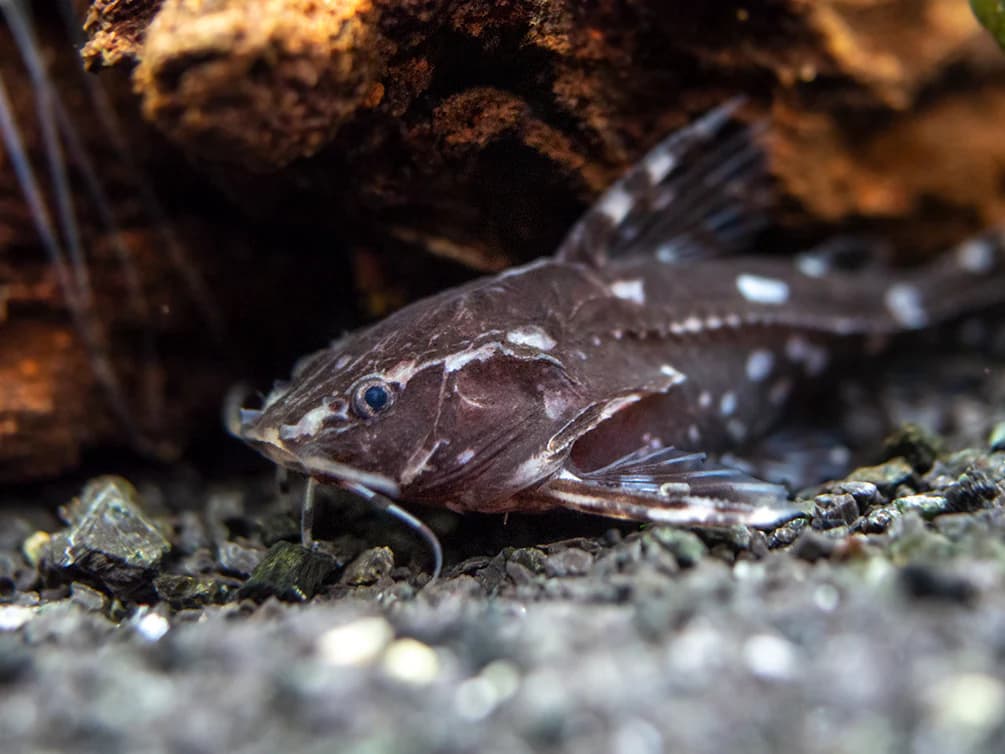
Agamyxis pectinifrons, the spotted raphael catfish (also called the spotted talking catfish), is a striking armored catfish from South America covered with a distinctive pattern of white or cream spots on a dark brown to black body. They are members of the family Doradidae, the thorny catfish, and can produce audible sounds by grinding pectoral fin spines against their pectoral girdle - the source of the "talking catfish" common name.
Native to the Amazon River basin and surrounding drainages in Peru, Ecuador, and Colombia, spotted raphael catfish inhabit slow-moving rivers, floodplains, and flooded forests with leaf litter and woody debris. They are nocturnal bottom-dwellers that hide in dense cover during the day.
Their care is straightforward: they are hardy, long-lived, and peaceful with fish too large to eat. The main requirements are appropriate hiding spots, a meaty diet, and tank mates large enough not to be swallowed overnight.
Basic Overview
Common Misconceptions
"They are active display fish." Spotted raphael catfish are strictly nocturnal and will be invisible for most of the day, wedged into their favorite hiding spot. They are fascinating fish but should not be purchased expecting visible daytime activity.
"They are safe with all fish." Any fish small enough to fit in their mouth may be consumed overnight. Small tetras and nano fish are at risk. Tank mates should be 3+ inches.
"They are easy to net." The sharp, locking pectoral spines of raphael catfish tangle extremely easily in nets, causing injury to both fish and keeper. Always use a container or bowl to catch them, never a net.
"They do not need special food." While they accept a range of sinking foods, spotted raphael catfish need a meaty, protein-rich diet. Algae wafers alone are insufficient. Sinking carnivore pellets and occasional frozen meaty foods are appropriate.
Recommended Setup
- 40+ gallon tank
- Multiple hiding spots larger than the fish (PVC pipe, clay pots, driftwood caves)
- Soft substrate (sand or fine gravel)
- Leaf litter to replicate natural habitat
- Gentle to moderate flow
- Good filtration
- Dim lighting or floating plants to reduce light intensity
Diet
Spotted raphael catfish are omnivores with a strong preference for protein-based foods:
- Sinking carnivore pellets or wafers as a staple
- Frozen bloodworms
- Frozen brine shrimp
- Sinking algae wafers (supplemental)
- Small earthworms or blackworms
Feed after lights-out when the fish is active. Drop food directly at or near their hiding spot. They are reliable nocturnal feeders that emerge consistently for food once settled into their tank.
Personality
Spotted raphael catfish are characterful, long-lived fish that develop a consistent presence in their tank even though they are rarely visible. Experienced keepers know where their raphael lives and can check it is well simply by looking at its favorite spot.
Their ability to produce sounds is unusual among freshwater fish. When handled or threatened, they make an audible clicking or grunting sound by rotating their pectoral spines. The sound is unmistakable and often surprises new keepers the first time they hear it.
Despite their armored, thorny appearance, spotted raphael catfish are gentle, slow-moving fish that cause no harm to appropriate tank mates. They make excellent long-term residents in large community tanks.
Water Parameters
Spotted raphael catfish come from the slow-moving, warm, soft Amazonian waterways:
- pH: 6.0-7.5
- Hardness (gH): 2-15 dGH
- Temperature: 72-79 degrees F
- Ammonia and Nitrite: 0 ppm
- Nitrate: below 20 ppm
Here are some top tips to deal with unwanted parameters:
- Spotted raphael catfish are relatively hardy and tolerate a range of water conditions. Standard community tank parameters are adequate.
- Weekly 25% water changes maintain good water quality. They are long-lived fish and consistent maintenance throughout their life is important.
- Avoid copper-based medications. Like all armored catfish, they are sensitive to copper.
- Cool to moderate temperatures (72-78 degrees F) are preferred. They are not strictly tropical and tolerate slightly cooler conditions.