Sterbai Corydoras Care Guide
A Complete Care Guide for Corydoras sterbai
Introduction
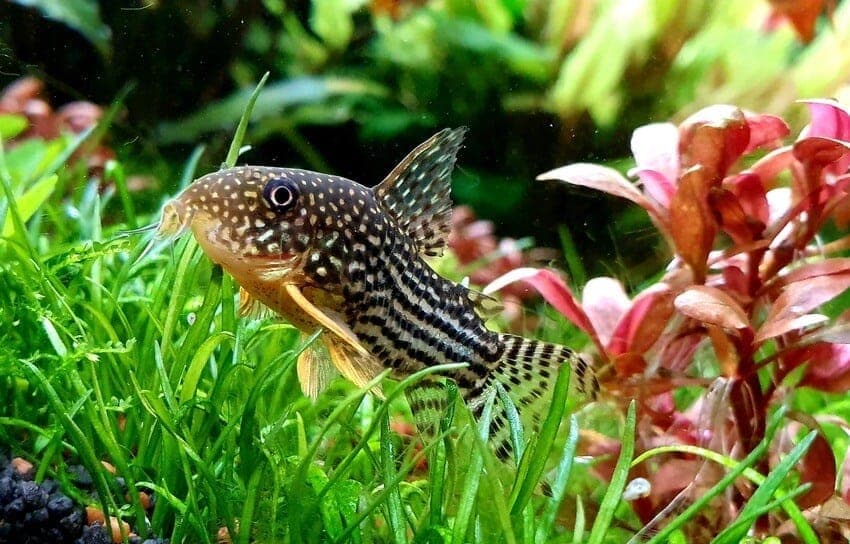
Corydoras sterbai, the sterbai corydoras, is one of the most sought-after corydoras species in the hobby. Their bold white-spotted dark body, orange pectoral fins, and orange belly make them significantly more colorful than most other corydoras species, and their warm-water tolerance (up to 86°F) makes them one of the few corydoras species compatible with discus tanks.
Native to the Guapore River system on the border of Brazil and Bolivia, sterbai inhabit soft, warm, tropical waters with sandy substrates and abundant leaf litter. They are social, bottom-dwelling fish that must be kept in groups of at least 6 to express their natural schooling behavior.
They are hardier than their price suggests and make an excellent choice for planted tanks, discus setups, and any warm soft-water community. Their distinctive coloration and social behavior make them one of the most rewarding corydoras species to keep.
Basic Overview
Common Misconceptions
"They are interchangeable with other corydoras." Sterbai are distinctly warmer-water tolerant than most corydoras. While many cory species struggle above 78°F, sterbai thrive at 82–86°F, making them the go-to corydoras for discus and other warm-water setups.
"They can live on leftover food." Sterbai need dedicated feedings of appropriate sinking foods. Relying on leftover food drifting to the bottom leads to nutritional deficiency.
"Sharp gravel is acceptable." Fine sand is essential. Sterbai, like all corydoras, have sensitive barbels that are damaged and infected by sharp substrate, leading to painful and difficult-to-treat bacterial infections.
"A group of 3 is sufficient." Sterbai in groups of 3 are stressed, pale, and inactive compared to the same fish in a group of 6 or more. Social group size directly determines health and activity level in this species.
Recommended Setup
- 20+ gallon tank for a group of 6; 30+ gallons for a group of 10
- Fine sand substrate (mandatory for barbel health)
- Dense planting along sides and back; open sandy areas for foraging in front
- Driftwood and leaf litter mimic their natural Guapore River habitat
- Gentle to moderate filtration; sponge filter or pre-filtered intake
- Warm water: 78–84°F suits both sterbai and discus simultaneously
- Low to moderate lighting
Diet
Sterbai corydoras are omnivores that sift the substrate for small invertebrates, organic matter, and plant material. They require foods that reach the bottom:
- Sinking corydoras wafers or mini catfish pellets as a staple
- Frozen bloodworms (a favorite; sink well and are nutritious)
- Frozen brine shrimp and daphnia
- Blanched vegetables: zucchini slices, cucumber, peas
- Sinking micro pellets that reach the substrate before other fish eat them
Feed in the evening or just before lights out when corydoras are most active. They are competitive with each other at feeding time but peaceful with other species. Ensure enough food reaches the substrate; in tanks with faster mid-water fish, target feeding the bottom layer.
Personality
Sterbai corydoras are active, curious bottom dwellers that explore every inch of the substrate, pushing through sand and leaf litter with their sensitive barbels, popping up to the surface occasionally to gulp air, and clustering together in resting huddles between feeding bouts.
In a group of 6 or more, their social behavior is clearly visible: coordinated foraging runs, communal resting spots, and a loose hierarchy within the group. They are significantly more active and confident in larger groups.
Their distinctive appearance, with the orange pectoral and belly coloration contrasting with the dark spotted body, makes them stand out beautifully in planted and dark-substrate setups. Under warm-spectrum lighting they are genuinely striking fish.
Sterbai in Discus Tanks
Corydoras sterbai is the most recommended corydoras companion for discus tanks precisely because of its warm-water tolerance. While most corydoras species are stressed above 80°F, sterbai remain healthy and active at the 82–86°F temperatures discus require.
In a discus setup, sterbai serve both practical and aesthetic roles: they clean up sinking food that discus miss, maintain the bottom substrate, and add activity to the lower level of a tank dominated by the slower, more regal discus in the midwater.
A classic pairing: 6–8 sterbai corydoras on the bottom of a large discus tank, with cardinal tetras in the middle and 4–6 discus as the centerpiece. All three species share compatible water parameters and create a breathtaking layered display.
Water Parameters
Sterbai corydoras come from the warm, soft, slightly acidic rivers of the Brazil-Bolivia border region:
- pH: 6.0–7.5
- Hardness (gH): 2–12 dGH (soft water preferred)
- Temperature: 75–86°F (genuinely warm-water tolerant)
- Ammonia and Nitrite: 0 ppm
- Nitrate: below 20 ppm
Here are some top tips to deal with unwanted parameters:
- Fine sand is non-negotiable. Barbel health is the single most important husbandry factor for all corydoras. Use sand with a grain size below 1mm throughout the tank bottom.
- Weekly 25% water changes maintain water quality. Corydoras produce significant waste for their size relative to most nano fish.
- Avoid copper-based medications. All corydoras, including sterbai, are sensitive to copper at concentrations safe for most fish.
- Soft, slightly acidic water with driftwood and leaf litter produces the best color and health. In harder tap water, a partial RO blend improves conditions.