Corydoras Catfish Care Guide
The Ultimate Care Guide for Corydoras Catfish
Introduction
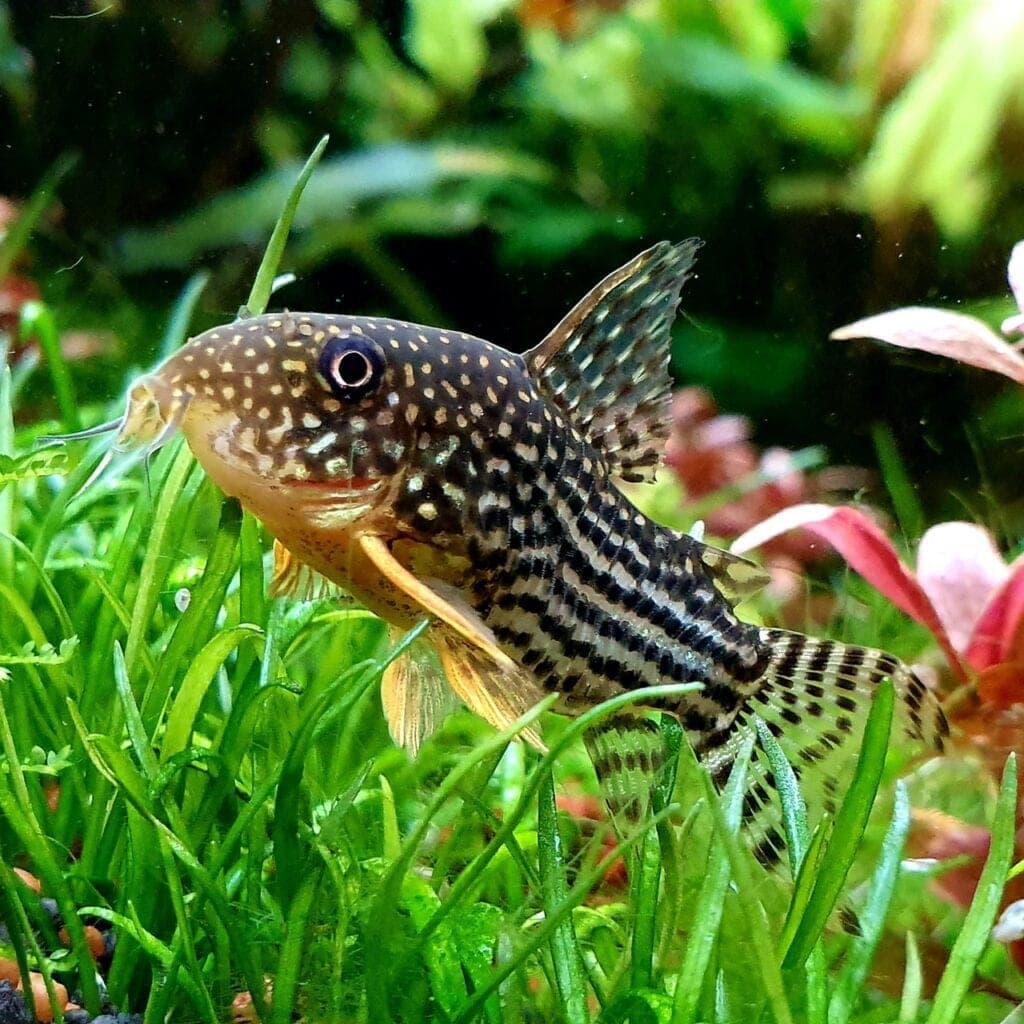
Corydoras spp., commonly known as corydoras catfish or simply "corys," are a diverse genus of small, armored catfish native to South America. With over 160 described species, there is an enormous variety to choose from, but most share very similar care requirements. Most species reach 1-2.5 inches in size and live 5-10 years in a well-maintained tank.
Corys are social, bottom-dwelling fish that must be kept in groups. They spend most of their time scavenging along the substrate using their sensitive barbels, the whisker-like appendages around their mouth, to find food. Their gentle, busy nature makes them a fantastic addition to almost any peaceful community tank.
Unlike most fish, corydoras occasionally dart to the surface to gulp air, which is completely normal. They have a modified section of digestive tract that can absorb some oxygen from air. They are genuinely delightful little fish full of personality.
Basic Overview
Common Misconceptions
"Corydoras will eat all the leftover food and keep the tank clean!" Corys are scavengers, not janitors. Relying on them to clean up after other fish leads to underfed corys and poor water quality. They need their own dedicated feedings.
"One or two corydoras is plenty!" Corydoras are highly social fish that become stressed and withdrawn when kept alone or in very small groups. A minimum of 6 of the same species is strongly recommended for their wellbeing.
"All corydoras species have the same care needs!" While most corys share similar requirements, there are differences worth noting. Sterbai corys, for example, prefer warmer water (78-82 degrees Fahrenheit) than many other species. Always research your specific species before buying.
"Corydoras can live fine on gravel substrate!" Sharp gravel can damage and erode the delicate barbels corys use to find food. Fine sand or smooth, rounded substrate is strongly recommended for their long-term health.
Recommended Setup
- 20+ gallon tank, cycled, with a lid, heater, and gentle filter
- Fine sand substrate (essential for barbel health)
- Hiding spots: caves, driftwood, and dense planting
- Gentle to moderate flow
- Peaceful community tankmates
- Aquarium siphon
Diet
Corydoras are omnivorous scavengers that need dedicated feedings, since faster fish often consume all the food before it reaches the bottom. They enjoy:
- Sinking wafers or pellets as a staple (floating food rarely reaches them)
- Frozen or live bloodworms
- Frozen or live brine shrimp
- Daphnia
- Blanched zucchini, cucumber, or spinach
Feed sinking foods in the evening when other fish are less active to give corys the best chance at a full meal. Remove uneaten food after a few hours.
Personality
Corydoras are gentle, busy little characters that spend most of their time exploring the bottom of the tank together, barbels twitching constantly as they search for food. A group of corys moving in loose formation across the substrate is genuinely charming to watch.
They occasionally "play dead," lying motionless on their side for a brief moment before popping back up and carrying on as normal. It can be alarming the first time you see it, but as long as it's brief and the fish quickly resumes normal behavior, there's nothing to worry about.
Corys are also known to make audible squeaking sounds when handled out of water. This is a defense mechanism and a reminder to keep handling to an absolute minimum.
Compatible Tankmates
Corydoras are compatible with virtually any peaceful community fish. As bottom dwellers, they naturally complement mid-water and surface-swimming species, filling out the lower level of the tank beautifully.
They pair especially well with tetras, rasboras, danios, gouramis, and livebearers. They are also generally safe with snails and larger shrimp.
Avoid keeping corys with large, aggressive fish or territorial cichlids that dominate the bottom of the tank. Mixing different cory species is generally fine as long as care requirements are compatible.
Water Parameters
Corydoras prefer clean, well-oxygenated water with a neutral to slightly acidic pH. They are sensitive to ammonia and nitrites, so a fully cycled tank is non-negotiable. Target:
- pH: 6.5-7.5
- gH: 50-150 PPM
- Temperature: 72-78 degrees Fahrenheit (check your specific species)
Here are some top tips to deal with unwanted parameters:
- Vacuum the substrate thoroughly during every water change. Dirty, anaerobic substrate can damage barbels and cause bacterial infections. Clean substrate is one of the most important things you can do for cory health.
- If corydoras barbels become short, eroded, or appear damaged, this is a red flag. Improve substrate cleanliness and water quality immediately.
- Do 25-30% water changes weekly to maintain the clean water corys need.
- Remember, using random chemicals is not recommended, since they can cause more problems through sudden, drastic changes.