Discus Care Guide
The King of the Freshwater Aquarium
Introduction
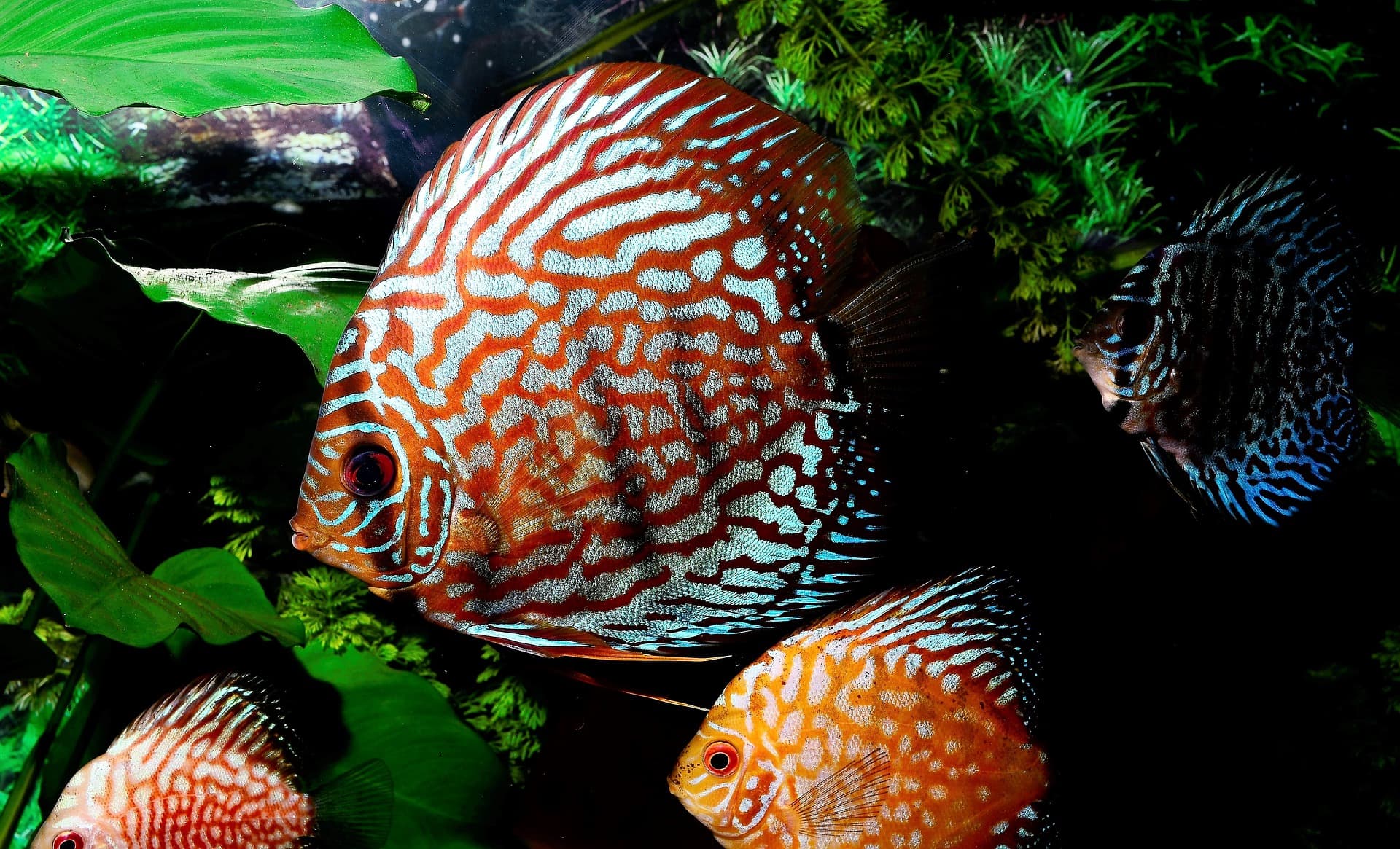
Symphysodon spp., commonly known as discus, are widely regarded as the most beautiful freshwater fish in the hobby. Their disc-shaped bodies, vivid colors, and stately presence have earned them the nickname "king of the aquarium." They are native to the warm, soft, acidic blackwater rivers of the Amazon basin in South America.
Discus have a well-deserved reputation as demanding fish. They require warm water (82–88°F), soft and acidic conditions, and exceptional water quality. Frequent water changes, a protein-rich diet, and a stress-free environment are all essential. That said, experienced keepers who provide these conditions are rewarded with fish that live 10–15 years and display colors that seem almost impossible in a living creature.
If you are new to the hobby, it is worth gaining experience with other South American fish before attempting discus. But if you are ready for the challenge, few fish are more rewarding.
Basic Overview
Common Misconceptions
"Discus can be kept alone." Discus are highly social fish that become stressed and withdrawn when kept alone. A group of at least 6 is recommended so they can establish a natural social hierarchy.
"Discus can thrive in standard tropical conditions." Standard tropical temperatures (76–78°F) are too cold for discus. They need 82–88°F to stay healthy and show their best colors. A dedicated, high-quality heater is essential.
"Discus are impossible for most hobbyists." Discus are demanding but not impossible. Captive-bred strains are significantly hardier than wild-caught specimens and can adapt to a wider range of water conditions. Many intermediate keepers successfully keep them.
"Any community fish can share a tank with discus." Tank mates must tolerate high temperatures and be peaceful. Cardinal tetras, corydoras sterbai, and rams are classic companions. Avoid fish that prefer cooler water or that might nip at discus fins.
Recommended Setup
- 55+ gallon tall tank (discus prefer height; 75 gallons is ideal for a group of 6)
- Bare-bottom or fine-sand substrate (bare-bottom is easier to keep clean)
- Soft, slightly acidic water; RO water blended with tap water is popular
- Excellent filtration; canister filter with gentle flow
- Tall plants like Amazon swords or Vallisneria provide cover without blocking swimming space
- Driftwood and leaf litter to soften water and create a natural feel
- Reliable, high-quality heater (a backup heater is strongly recommended)
Diet
Discus are omnivores with a preference for protein-rich foods. In the wild they feed on small invertebrates, algae, and plant matter. In captivity, feed a varied diet:
- High-quality discus pellets or granules as a staple
- Frozen bloodworms (a favorite; feed several times per week)
- Frozen brine shrimp and mysis shrimp
- Beef heart mix (a classic discus food; use sparingly to avoid water fouling)
- Spirulina flakes for plant-based nutrition
Feed 2–3 times daily in small amounts discus can consume in 3–5 minutes. Remove uneaten food promptly. Discus that go off food are often signaling a health issue or water quality problem.
Personality
Discus are peaceful, curious, and surprisingly interactive fish. They quickly learn to recognize their keeper and will often approach the glass eagerly at feeding time. In a well-established group, you will observe fascinating social dynamics, including subtle dominance displays, pair bonding, and cooperative behaviors.
They can be shy in new environments, so allow a few weeks for them to settle in before judging their behavior or colors. Stress causes discus to darken dramatically; a fish that looks dull and dark is usually unhappy with some aspect of its environment.
Discus pairs that bond will often spawn on flat vertical surfaces like Amazon sword leaves or the aquarium glass. Both parents care for the fry, and watching discus parenting behavior is one of the most memorable experiences in the hobby.
Water Change Routine
Water changes are the single most important maintenance task for discus. In a lightly stocked tank, 25–30% weekly changes are a minimum. Many dedicated discus keepers do daily water changes of 10–20%, especially with young fish or heavily stocked tanks.
Always match the temperature and chemistry of replacement water precisely. Discus are extremely sensitive to sudden changes in temperature or pH. Use a thermometer to verify replacement water is within 1°F of tank temperature before adding it.
Some keepers use an automatic water change system that slowly drips fresh water into the tank while overflow drains away. This approach keeps parameters exceptionally stable and reduces the stress of large weekly changes.
Water Parameters
Discus thrive in soft, warm, slightly acidic water that mimics their native Amazon habitat:
- pH: 6.0–7.0 (6.0–6.5 is ideal for breeding)
- Hardness (gH): 1–8 dGH (soft water)
- Temperature: 82–88°F
- Ammonia and Nitrite: 0 ppm at all times
- Nitrate: below 10–20 ppm (discus are very sensitive to nitrate buildup)
Here are some top tips to deal with unwanted parameters:
- Use RO water blended with tap water to achieve the right hardness and pH. Aim for roughly 50–70% RO water in most tap water conditions.
- Add Indian almond leaves or a small bag of peat in the filter to naturally lower pH and add beneficial tannins.
- Never use pH-lowering chemicals that work by adding acids; they cause dangerous pH swings. Use natural methods instead.
- Test water parameters at least weekly. Invest in a high-quality liquid test kit rather than relying on strips.