German Blue Ram Care Guide
The Ultimate Care Guide for German Blue Rams
Introduction
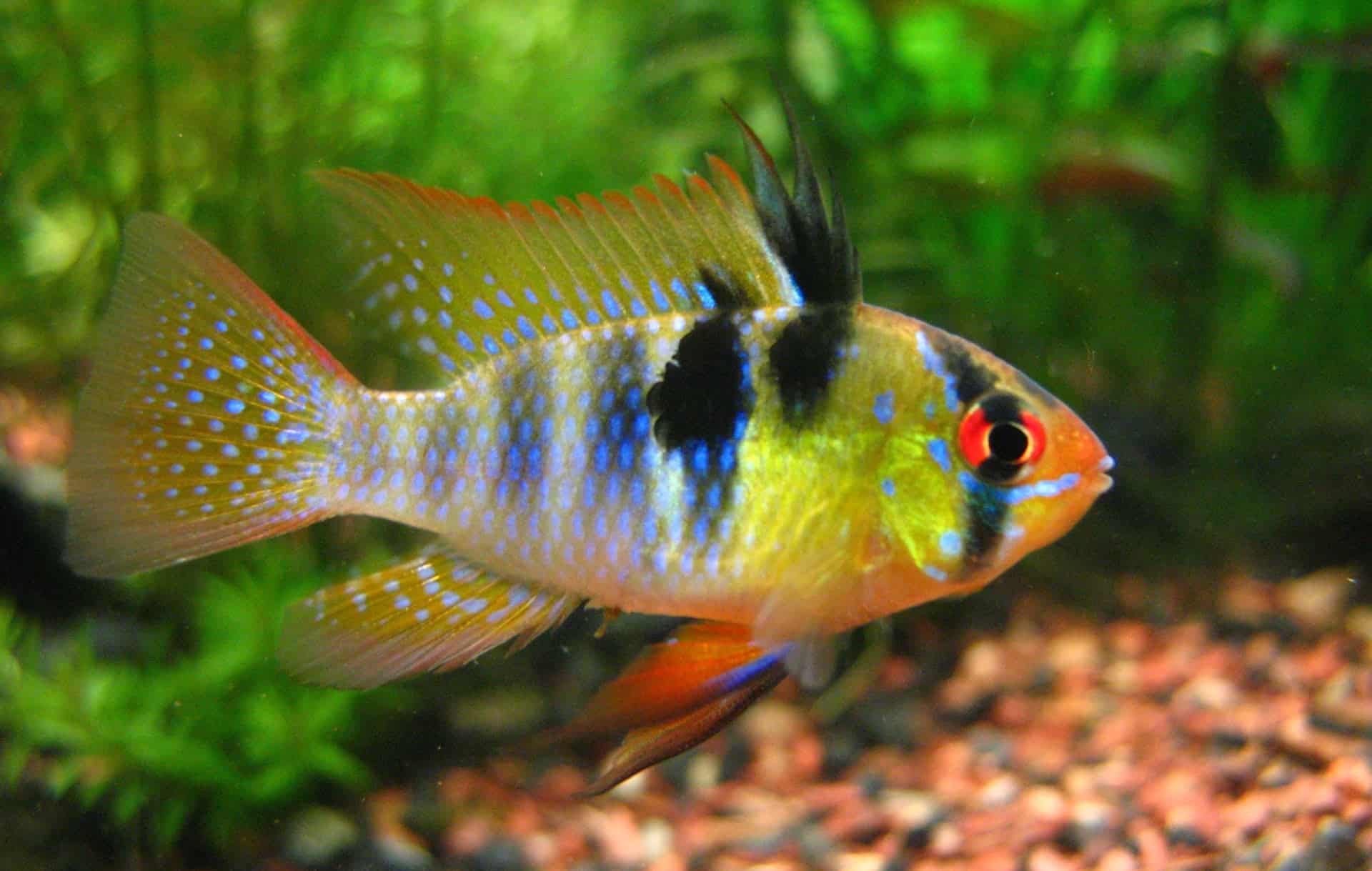
Mikrogeophagus ramirezi, commonly known as the German blue ram or butterfly cichlid, is one of the most strikingly beautiful small fish in the freshwater hobby. They live roughly 2-4 years in captivity and prefer temperatures of 78-85 degrees Fahrenheit. They commonly reach 2-3 inches in size, with males being slightly larger and more colorful than females.
German blue rams are dwarf cichlids native to the warm, slow-moving, vegetation-dense rivers of Venezuela and Colombia. They are one of the few cichlids that can realistically be kept in a planted community tank, given their small size and generally peaceful nature.
They are not beginner fish. Their need for warm, stable, soft water and their sensitivity to poor water quality make them better suited to hobbyists with some experience. But for those who can meet their requirements, they are among the most rewarding and beautiful fish in the hobby.
Basic Overview
Common Misconceptions
"German blue rams are the same as Bolivian rams!" These are related but distinct species. German blue rams require warmer water, are more sensitive to water quality, and are more colorful. Bolivian rams are hardier, tolerate a wider temperature range, and are often recommended as a more beginner-friendly alternative.
"Any tropical tank temperature works for German blue rams!" German blue rams genuinely need warm water, 78-85 degrees Fahrenheit. In tanks kept at typical tropical temperatures of 74-76 degrees, they become sluggish, lose color, and are far more susceptible to disease.
"German blue rams will harass all their tankmates!" Outside of breeding periods, German blue rams are generally peaceful with most other fish. The territorial behavior is usually directed at other bottom-dwelling fish that enter their breeding territory, not at fish occupying different zones.
"German blue rams are easy beginner fish because they're small!" Small size does not mean easy care. German blue rams are sensitive to ammonia, nitrites, nitrates, and temperature swings. A mature, stable tank and consistent maintenance are essential for keeping them healthy.
Recommended Setup
- 20+ gallon tank, well-cycled and mature, with a lid, heater set to 78-85 degrees, and gentle filter
- Heavy live planting (they feel most secure in dense vegetation)
- Flat stones or broad leaves for potential spawning sites
- Caves and hiding spots
- Fine sand substrate
- Indian almond leaves or driftwood to soften water and create a natural feel
- Aquarium siphon
Diet
German blue rams are carnivore-leaning omnivores that prefer meaty foods. Their small mouths require appropriately sized foods. They enjoy:
- High-quality micro pellets or small cichlid pellets as a staple
- Frozen or live baby brine shrimp (a particular favorite)
- Frozen or live daphnia
- Frozen or live bloodworms
- Frozen or live micro worms
Feed small amounts twice daily. German blue rams can be shy eaters at first, especially if kept with faster, more competitive fish. Make sure they are actually getting food, not just the leftovers after faster tankmates have eaten.
Personality
German blue rams have a calm, deliberate quality to their movement that is genuinely captivating. They spend a lot of time exploring the lower levels of the tank, investigating every plant stem, leaf, and piece of substrate with a careful curiosity.
Pairs form strong bonds and are delightful to watch together. Spawning behavior, including the cleaning of a flat stone, guarding eggs, and herding fry, is one of the most fascinating things you can observe in a home aquarium.
Males can become territorial with other bottom-dwelling fish during breeding, but outside of this they are among the more peaceful cichlids available. A well-planted tank with clear zone separation between species minimizes almost all conflict.
Compatible Tankmates
German blue rams do well with peaceful mid-water and surface-dwelling species that stay out of their bottom territory. Excellent options include small tetras like neon or cardinal tetras, harlequin rasboras, corydoras (with some caution during breeding), and small peaceful gouramis.
Avoid other bottom-dwelling cichlids or fish that will compete for the same territory. Avoid fin nippers like tiger barbs that will stress them. Avoid large, boisterous fish that produce turbulent water flow.
They are generally safe with snails and larger shrimp, though very small shrimp may be at risk, especially during the rams' breeding period.
Water Parameters
German blue rams require warm, soft, slightly acidic water. This is the most important aspect of their care and where most failures occur. Target:
- pH: 6.0-7.0 (soft, acidic water strongly preferred)
- gH: 50-100 PPM (soft water)
- Temperature: 78-85 degrees Fahrenheit
Here are some top tips to deal with unwanted parameters:
- Temperature is the single most critical parameter for German blue rams. A heater failure or temperature drop is one of the most common causes of sudden illness in this species. Consider using two heaters as insurance.
- To soften water and lower pH, use driftwood, Indian almond leaves, or peat moss in the filter. Reverse osmosis water mixed with tap water is the most reliable way to achieve consistently soft water.
- Do weekly 20-25% water changes with water matched to the tank temperature. A cold water change can shock and stress them.
- Remember, using random chemicals is not recommended, since they can cause more problems through sudden, drastic changes.