African Dwarf Frog Care Guide
A Complete Care Guide for Hymenochirus boettgeri
Introduction
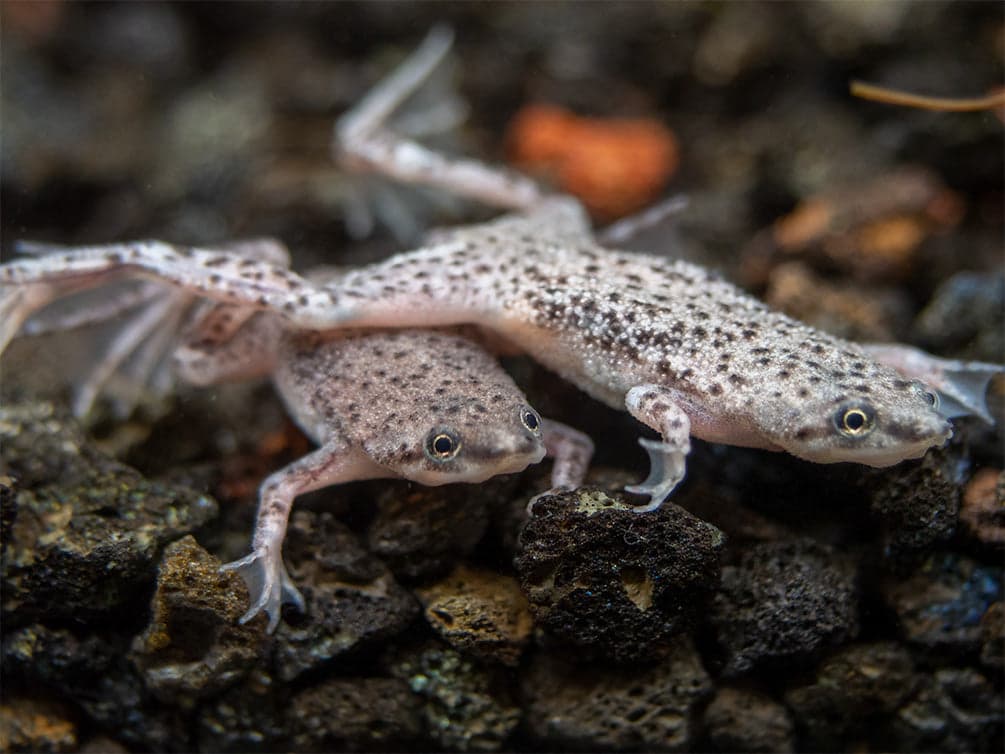
Hymenochirus boettgeri, the African dwarf frog, is one of the few truly aquatic frogs suitable for home aquariums. Unlike the African clawed frog (which grows large and aggressive), African dwarf frogs remain small (1.5–2 inches), fully aquatic, and peaceful enough for community tanks with appropriately sized fish.
These frogs are native to the tropical rainforest streams and ponds of equatorial Africa, including parts of Nigeria, Cameroon, Gabon, and the Democratic Republic of Congo. They are fully aquatic and should never be removed from water for extended periods.
African dwarf frogs are charming and personable tank inhabitants that add a unique dimension to any freshwater setup. Watching them float to the surface for a quick breath, interact with tank mates, and hunt for food is endlessly entertaining.
Basic Overview
Common Misconceptions
"African dwarf frogs are the same as African clawed frogs." They are completely different animals. African clawed frogs (Xenopus laevis) grow to 4–5 inches, are aggressive, will eat fish, and require entirely different care. Always check the species name before purchasing.
"They can eat regular fish flakes." African dwarf frogs are nearly blind and hunt by smell and movement. They struggle to locate floating flake food. They need sinking foods placed directly near them, or live/frozen foods that trigger their hunting response.
"A small decorative bowl is an acceptable home." ADFs need a proper cycled, filtered tank with a heater. They are fully aquatic and sensitive to water quality. A bowl without filtration leads to rapid ammonia buildup and shortened lifespan.
"They can jump out of tanks." They will. ADFs are surprisingly agile and will escape through any gap in a lid. A tight-fitting lid with small openings is essential. Mesh lids work well.
Recommended Setup
- 10 gallon tank for a group of 2–4 frogs
- Fine sand or smooth pebble substrate (frogs feed on the bottom and can ingest sharp gravel)
- Gentle filtration only; strong flow or suction can injure them
- Hiding spots: caves, driftwood, broad-leaf plants like Amazon swords
- Floating plants or broad-leaf plants they can rest on near the surface
- A tight-fitting lid with minimal gaps; ADFs are escape artists
- Shallow water depth (no more than 12 inches) so they can easily reach the surface to breathe
Diet
African dwarf frogs are carnivores that hunt by smell and movement. They have poor eyesight and cannot locate stationary food easily. Best feeding approach:
- Frozen bloodworms (their favorite; thaw and place directly in front of them with feeding tweezers)
- Frozen brine shrimp and daphnia
- Sinking pellets placed directly in their feeding area
- Live blackworms or live brine shrimp for enrichment
- Repashy Grub Pie or similar sinking gel foods
Feed 3–4 times per week. Remove uneaten food promptly. ADFs are slow, clumsy eaters and will be outcompeted by fish if food is added to the water column generally. Target feeding with tongs or a pipette directly at the frogs is the most reliable method.
Personality
African dwarf frogs are fascinating, quirky animals with distinct behaviors. They periodically float motionless near the surface in what keepers call the "zen pose" or "dead man's float," which is completely normal resting behavior and not a sign of illness.
Males "sing" by buzzing or humming, especially at night, as a mating call. If you hear a quiet buzzing from your tank after lights out, your male frogs are displaying. Pairs and groups will also engage in amplexus, the amphibian mating grip, regularly even outside of breeding conditions.
They are comically clumsy swimmers, using powerful kicks of their hind legs to dart around the tank. They frequently rest on plant leaves, the substrate, or decorations, peering at their surroundings with their small, upward-facing eyes.
Tank Mates
African dwarf frogs can be kept with many peaceful community fish, but tank mate selection requires care. Avoid any fish large enough to fit an ADF in its mouth. Good companions include small tetras (neon, ember, cardinal), small rasboras, and snails.
Avoid aggressive fish, fin nippers, and bottom-dwelling fish that might compete aggressively for food. Corydoras can sometimes be kept with ADFs but may eat food targeted at the frogs. Shrimp larger than the frog's mouth may work, but smaller shrimp will likely be eaten.
ADFs do very well in species-only tanks. A 10-gallon tank with 3–4 African dwarf frogs, some snails, and dense planting is a low-maintenance, highly rewarding setup.
Water Parameters
African dwarf frogs come from warm, slow-moving tropical waters and thrive in:
- pH: 6.5–7.8
- Hardness (gH): 5–20 dGH (adaptable)
- Temperature: 72–80°F
- Ammonia and Nitrite: 0 ppm
- Nitrate: below 20 ppm
Here are some top tips to deal with unwanted parameters:
- Weekly 25% water changes are essential. ADFs are sensitive to nitrate and waste buildup, which manifests as skin problems and lethargy.
- Always use a water conditioner that neutralizes chlorine and chloramine. ADFs absorb water through their skin and are more sensitive to these chemicals than fish.
- Keep the water level lower than the maximum tank height, or ensure the frogs have easy access to the surface. They must breathe air regularly and can drown if exhausted from a long swim to the surface.
- A sponge filter is ideal: it provides biological filtration and gentle circulation without creating strong currents or intake suction that could trap or stress the frogs.