Dwarf Gourami Care Guide
The Ultimate Care Guide for Dwarf Gouramis
Introduction
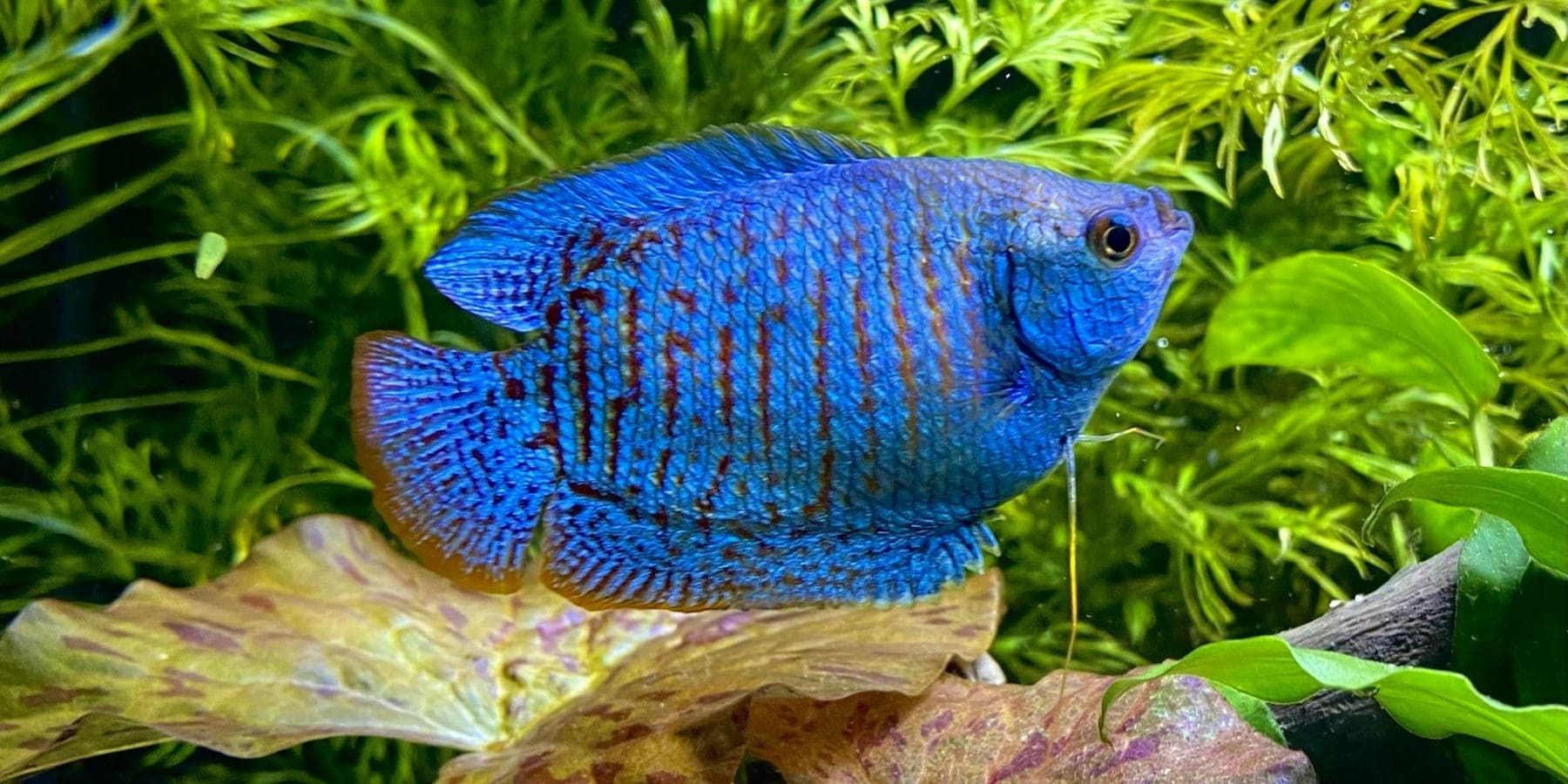
Trichogaster lalius, commonly known as the dwarf gourami, is one of the most vividly colored small fish in the freshwater hobby. They live roughly 4-6 years in captivity and prefer temperatures of 72-82 degrees Fahrenheit. They commonly reach 2 inches in size. Males are brilliantly colored in striking combinations of red, blue, orange, and teal, while females are a more subdued silver-gray.
Like bettas and honey gouramis, dwarf gouramis are labyrinth fish, meaning they breathe air directly from the surface using a specialized organ. They come from slow-moving, densely vegetated waters across South Asia and thrive in heavily planted tanks.
Their stunning colors and manageable size make them popular choices for community and nano tanks. However, they are prone to a viral disease called Dwarf Gourami Iridovirus (DGiV), which is common in commercially farmed specimens, so buying from reputable sources and quarantining new fish is especially important with this species.
Basic Overview
Common Misconceptions
"Dwarf gouramis are the same as honey gouramis!" While related, these are distinct species. Dwarf gouramis are more vividly colored but significantly more prone to disease, particularly DGiV. Honey gouramis are often recommended as a hardier alternative for beginners.
"You can keep two male dwarf gouramis together in a small tank!" Male dwarf gouramis can and do fight, especially in smaller tanks. In a 10-gallon setup, keeping only one male is strongly advised to avoid chronic stress and injury.
"All dwarf gouramis in stores are healthy!" DGiV is extremely widespread in commercially farmed dwarf gouramis. There is no cure, and infected fish often develop a progressive wasting condition. Buying from reputable breeders and quarantining all new fish is essential.
"Dwarf gouramis are great beginner fish!" Their care requirements are not extreme, but their disease susceptibility and sensitivity to water quality make them better suited for hobbyists with some experience. The honey gourami is a more forgiving starting point.
Recommended Setup
- 10+ gallon tank, cycled, with a lid, heater, and gentle filter
- Heavy planting including floating plants at the surface
- Hiding spots and visual barriers between territories
- Low to moderate flow (they strongly prefer calm water)
- Indian almond leaves (benefits water quality and mimics their natural environment)
- Aquarium siphon
Diet
Dwarf gouramis are omnivores that accept most small, prepared and live foods. Their mouths are small, so food size matters. They enjoy:
- High-quality micro pellets or small flake food as a staple
- Frozen or live baby brine shrimp
- Frozen or live daphnia
- Frozen bloodworms (treat)
- Blanched zucchini or spinach (some individuals accept these readily)
Feed small amounts once or twice daily. Dwarf gouramis can be shy eaters when first introduced to a new tank, so don't be alarmed if they ignore food for the first day or two. They warm up quickly.
Personality
Dwarf gouramis are gentle, somewhat shy fish that take time to settle into a new environment. Once comfortable, males often become much bolder and curious, exploring the tank freely and occasionally building bubble nests at the surface near floating plants. A bubble-nesting dwarf gourami is a happy dwarf gourami.
Males can be territorial with other males, particularly in smaller tanks. In a community tank with only one male, they generally coexist peacefully with most other species. Their calm, deliberate movements through a planted tank are lovely to observe.
Like all labyrinth fish, they surface periodically to breathe air. They need clear access to the water surface at all times, so do not cover it entirely with floating plants.
Compatible Tankmates
Dwarf gouramis do well with peaceful community fish. Good options include small tetras like neon or ember tetras, rasboras, corydoras catfish, small loaches, livebearers, and snails.
They are generally safe with larger shrimp, though very small shrimp or shrimplets may occasionally be at risk. A heavily planted tank gives smaller tank inhabitants plenty of places to hide.
Avoid aggressive fish or fin nippers that will stress them. Avoid other male dwarf gouramis in smaller tanks. Bettas are generally a poor pairing as both are territorial labyrinth fish.
Water Parameters
Dwarf gouramis prefer soft, slightly acidic to neutral water. Good water quality is especially important given their disease susceptibility. Target:
- pH: 6.0-7.5
- gH: 50-150 PPM
- Temperature: 72-82 degrees Fahrenheit
Here are some top tips to deal with unwanted parameters:
- A tight-fitting lid is essential. Like all labyrinth fish, dwarf gouramis can and do jump, and the warm, moist air just above the surface is important for their labyrinth organ health.
- Quarantine all new dwarf gouramis for 4-6 weeks before adding them to an established tank to reduce DGiV risk.
- To lower pH, use driftwood, Indian almond leaves, or a small bag of peat moss in the filter.
- Remember, using random chemicals is not recommended, since they can cause more problems through sudden, drastic changes.