Bleeding Heart Tetra Care Guide
A Complete Care Guide for Hyphessobrycon erythrostigma
Introduction
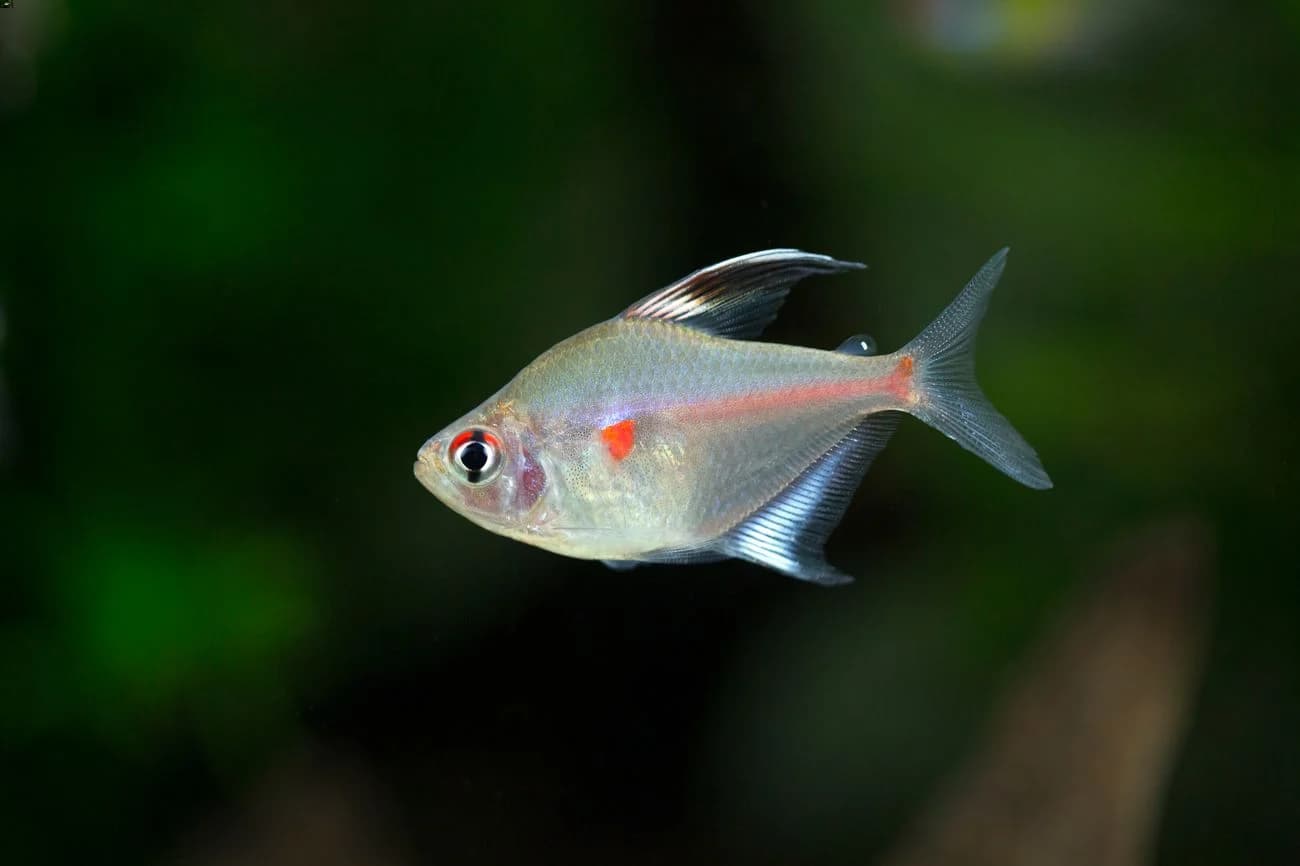
Hyphessobrycon erythrostigma, the bleeding heart tetra, is one of the larger tetras commonly available, reaching up to 3 inches. Their rosy-pink to deep red body with the distinctive bright red spot on the flank (the "bleeding heart") and the elongated dorsal fin of males make them one of the most visually impressive medium tetras available.
Native to the upper Amazon River system in Peru and Colombia, bleeding heart tetras inhabit slow-moving, tannin-stained blackwater streams with dense vegetation. They are a species where soft, slightly acidic water makes a significant difference to color intensity and long-term health.
They are peaceful schooling fish suitable for medium to large planted community tanks. Their larger size means they require more swimming space than nano tetras, and they look best in schools of 8 or more where their collective coloration creates a striking display.
Basic Overview
Common Misconceptions
"The red spot indicates illness." The bright red spot on the flank is the species's natural marking, not a wound or disease. A vivid, well-defined spot is a sign of good health; a fading spot indicates stress or poor conditions.
"They are the same as other large tetras." Bleeding heart tetras are distinctly larger and more colorful than common tetras. They need more swimming space and show off best in a 30+ gallon tank where their size and coloration can be fully appreciated.
"Hard alkaline tap water is fine long-term." Bleeding heart tetras tolerate neutral water but show significantly reduced color and shorter lifespan in persistently hard, alkaline conditions. Soft, slightly acidic water is genuinely beneficial.
"A group of 3-4 is enough." Like most tetras, bleeding hearts are more confident, more active, and more colorful in larger groups. A school of 8 or more in a 30-gallon tank produces a visually impressive result.
Recommended Setup
- 30+ gallon planted tank for a school of 8
- Dark fine sand or planted substrate
- Dense background and side planting: Amazon swords, crypts, large stem plants
- Driftwood and Indian almond leaves for tannins
- Open midwater swimming space of at least 24 inches length
- Gentle filtration; sponge filter or low-flow canister
- Warm-spectrum lighting at moderate intensity
Diet
Bleeding heart tetras are omnivores that accept a wide range of foods:
- High-quality tropical flakes or small pellets as a staple
- Frozen bloodworms and brine shrimp (important for color maintenance)
- Frozen daphnia and cyclops
- Live foods for enrichment
- Spirulina flakes for plant component
Feed once or twice daily. Carotenoid-rich foods like brine shrimp and krill maintain and enhance the red coloration. In schools with a mix of male and female, males will display their elongated dorsal fin during feeding, which is one of the most impressive sights the species offers.
Personality
Bleeding heart tetras are active, social schooling fish that occupy the middle water column. Males are particularly striking, developing a significantly taller and more elaborate dorsal fin than females, which they erect during displays to other males.
They are compatible with a wide range of peaceful community fish and are large enough to hold their own in tanks with moderately assertive tank mates. Their substantial size means they are a genuine centrepiece schooling fish rather than a background filler.
In a well-planted tank with good water quality, a school of 10 or more bleeding heart tetras creates one of the most impressive medium-sized community displays available: their collective pink-red coloration and the contrast of their elongated dorsal fins in motion is genuinely beautiful.
Tank Mates
Bleeding heart tetras work well with other medium South American species. Excellent companions include: sterbai or bronze corydoras on the bottom, a pair of apistogrammas or keyhole cichlids as a centerpiece, and other medium tetras as co-schoolers.
Their larger size means they are less vulnerable than nano tetras to predation from medium cichlids, making them useful in tanks where smaller fish would be at risk. They are not appropriate companions for very small fish (under 1 inch) that might be harassed.
Avoid highly aggressive cichlids and nippy species like tiger barbs in small groups, which will target the elongated dorsal fin of the males.
Water Parameters
Bleeding heart tetras come from the soft, warm, tannin-rich rivers of the upper Amazon:
- pH: 5.5-7.0 (soft acidic ideal)
- Hardness (gH): 1-10 dGH
- Temperature: 75-82 degrees F
- Ammonia and Nitrite: 0 ppm
- Nitrate: below 20 ppm
Here are some top tips to deal with unwanted parameters:
- Soft, slightly acidic water with driftwood or Indian almond leaves produces the deepest red coloration and best fin development.
- In harder tap water areas, blending with 40-60% RO water brings conditions into range. The color improvement after the transition to soft water is noticeable within weeks.
- Weekly 25% water changes in a planted tank. Avoid sudden large changes in soft water setups due to low buffering capacity.
- Temperature stability around 78-80 degrees F is optimal. Fluctuations outside the 75-82 degree range suppress immune function and coloration.