Black Phantom Tetra Care Guide
A Complete Care Guide for Hyphessobrycon megalopterus
Introduction
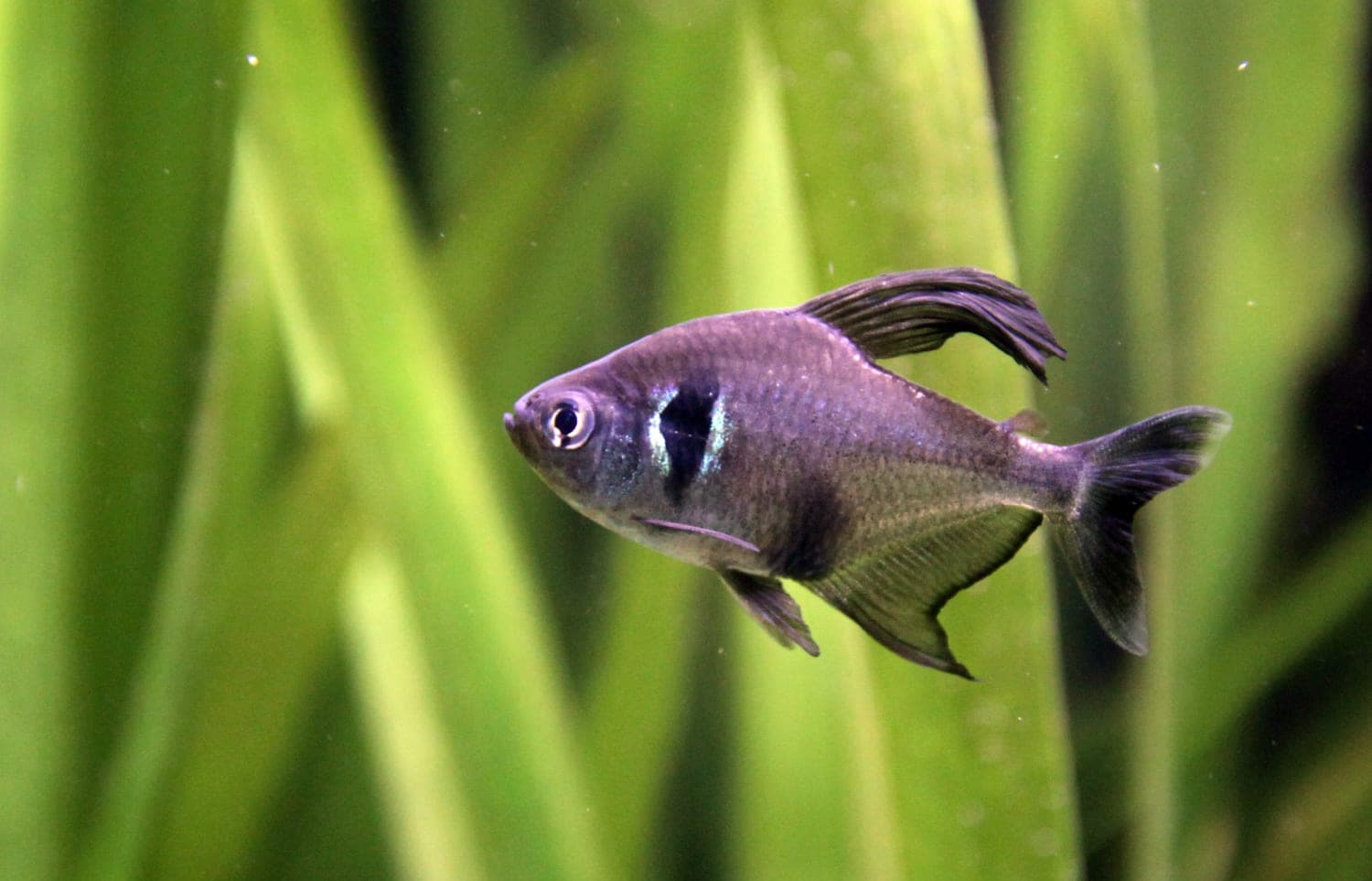
Hyphessobrycon megalopterus, the black phantom tetra, is a medium-sized tetra from Bolivia and Brazil noted for its dramatic sexual dimorphism. Males are silver-gray with a deep black patch and, most strikingly, develop greatly extended black dorsal, anal, and ventral fins that they spread in impressive displays. Females are shorter-finned, copper-colored with red accents, and arguably more colorful than the males.
Native to the upper Paraguay River basin and the Rio Sao Francisco in Brazil, black phantom tetras inhabit slow-moving, tannin-stained blackwater streams with dense vegetation. They are adaptable fish that do well across a range of soft to moderately hard water conditions.
They are peaceful, easy to keep, and rewarding to observe when males display to each other in a large school. A group of 10 or more in a well-planted tank produces a striking display of extended black finnage and natural sparring behavior.
Basic Overview
Common Misconceptions
"The male and female are different species." The dramatic difference in coloration and fin length between male and female black phantom tetras leads some keepers to mistake them for different species. Both are H. megalopterus; the dimorphism is natural and normal.
"They need blackwater conditions." While black phantom tetras display most vividly in soft, slightly acidic water, they adapt to moderately hard neutral water without significant health issues. Soft water is preferred, not required.
"Males fighting means they are aggressive." Males spread their fins and circle each other in ritualized displays that rarely escalate to actual injury. This sparring is natural behavior and one of the most interesting aspects of keeping the species in a proper school.
"A group of 4 is sufficient." Small groups produce stress behaviors. A school of 8 or more distributes social interactions, reduces aggression directed at any individual, and produces the full range of display behavior.
Recommended Setup
- 20+ gallon planted tank for a school of 8-12
- Dark substrate for color contrast
- Dense planting along sides and back; open midwater swimming space
- Driftwood and Indian almond leaves for tannins and natural appearance
- Gentle filtration; sponge filter or low-flow HOB
- Floating plants to reduce surface light and create a natural shaded environment
- Warm-spectrum lighting to bring out the black and copper tones
Diet
Black phantom tetras are omnivores that accept most small foods:
- High-quality small flakes or micro pellets as a staple
- Frozen baby brine shrimp
- Frozen daphnia and cyclops
- Micro worms (live) for enrichment
- Spirulina flakes for plant component
Feed once or twice daily. Regular live and frozen food supplements improve color and fin development, particularly in males. Their small mouths need appropriately sized food particles.
Personality
Black phantom tetras are active, social fish that school loosely in the midwater. Males are the visual highlight: when two males encounter each other, both spread all their fins to full extension and circle slowly, creating a display of impressive black finnage. This is ritualized behavior that rarely causes injury.
Females are often underappreciated but are genuinely attractive fish with their copper body and red fin highlights. A mixed-sex group produces the most natural and interesting social dynamic.
They are completely peaceful toward other species and fit naturally in South American biotope-inspired community tanks alongside corydoras, dwarf cichlids, and other tetras.
Maximizing the Display
The full display of male black phantom tetras is one of the most underrated visual spectacles in the nano-to-medium planted tank hobby. To maximize it: keep a school of 8 or more with at least 4 males, use dark substrate and warm-spectrum lighting, and provide a tannin-stained environment.
In hard, brightly lit tanks, males tend to stay pale and keep fins clamped. In soft, dimly lit, tannin-stained water, the same fish will develop deep black finnage and spread at every opportunity.
Pairing with red-toned species like ember tetras, rosy tetras, or chili rasboras creates a striking color contrast with the black and gray of the phantom tetras.
Water Parameters
Black phantom tetras come from the warm blackwater rivers of central South America:
- pH: 6.0-7.5
- Hardness (gH): 2-15 dGH
- Temperature: 72-82 degrees F
- Ammonia and Nitrite: 0 ppm
- Nitrate: below 20 ppm
Here are some top tips to deal with unwanted parameters:
- Soft, slightly acidic water with Indian almond leaves or driftwood produces the best fin development and deepest black coloration.
- Weekly 20-25% water changes in a well-planted tank. Standard neutral tap water is acceptable if soft water is not available.
- Temperature stability around 76-79 degrees F is optimal. They tolerate cooler temperatures but are most active and colorful in the mid-70s.
- Avoid sudden large water changes in soft-water setups due to low buffering capacity. Smaller, more frequent changes maintain stable conditions.