Red Phantom Tetra Care Guide
A Complete Care Guide for Hyphessobrycon sweglesi
Introduction
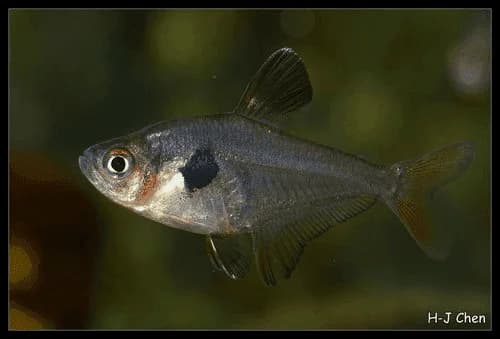
Hyphessobrycon sweglesi, the red phantom tetra, is a small, vivid South American tetra with a deep red body coloration, a distinctive dark shoulder spot, and black-and-red fin patterning. Their saturated red color, particularly intense in males with high-quality diet and soft acidic water, makes them one of the most striking of all small red tetras.
Native to the Orinoco River system in Venezuela and Colombia, red phantom tetras inhabit soft, slightly acidic, tannin-stained rivers and streams with abundant vegetation. They are closely related to the black phantom tetra (Hyphessobrycon megalopterus) and share similar care requirements.
Red phantom tetra care is easy. Their peaceful temperament, vivid coloration, and adaptability to planted community conditions make them excellent additions to soft-water planted tanks. Their most important care requirement is soft, slightly acidic water to maintain full color intensity.
Basic Overview
Common Misconceptions
"Hard water maintains their color." Red phantom tetras display the most intense deep red coloration in soft, acidic water. Hard or alkaline water significantly dulls their color, reducing them from vivid crimson to pale pink-red.
"They are the same as black phantom tetras." H. sweglesi (red phantom) and H. megalopterus (black phantom) are closely related but distinct species with different coloration. The red phantom lacks the dramatic fin displays of the male black phantom but compensates with more intense body color.
"A school of 5 is sufficient." Groups of 8-10 or more produce natural schooling and the most vivid collective red display.
Recommended Setup
- 20+ gallon planted tank
- Soft, slightly acidic water
- Dark substrate
- Indian almond leaves or driftwood for tannins
- Dense planting with open swimming space
- Gentle flow
Diet
Red phantom tetras are omnivores that accept most standard small foods:
- High-quality small flake or micro pellets
- Frozen baby brine shrimp
- Frozen daphnia
- Frozen bloodworms
Feed twice daily. A varied diet with frozen protein foods maintains the most intense red body coloration. Their small mouths require appropriately sized food items.
Personality
Red phantom tetras in a school are vivid, attractive fish that drift through planted tanks in loose formations. Their deep red body under warm-spectrum lighting in a blackwater-style setup with dark substrate and Indian almond leaves is genuinely striking.
Males display subtle fin-spreading behavior within the school. Their peaceful nature makes them compatible with all gentle community fish, dwarf shrimp, and other nano inhabitants.
In a South American biotope tank alongside black phantom tetras and dwarf cichlids, the red phantoms provide vivid color contrast that completes the overall display.
Water Parameters
Red phantom tetras come from the soft, acidic Orinoco River system:
- pH: 5.5-7.0
- Hardness (gH): 2-10 dGH (soft water critical for color)
- Temperature: 72-82 degrees F
- Ammonia and Nitrite: 0 ppm
- Nitrate: below 15 ppm
Here are some top tips to deal with unwanted parameters:
- Soft, acidic water is the most important parameter for maintaining vivid red coloration.
- Indian almond leaves and driftwood provide natural tannins and pH reduction.
- Gentle flow. Avoid strong current.
- Weekly 15-20% water changes maintain stability in nano planted setups.