Lemon Tetra Care Guide
A Complete Care Guide for Hyphessobrycon pulchripinnis
Introduction
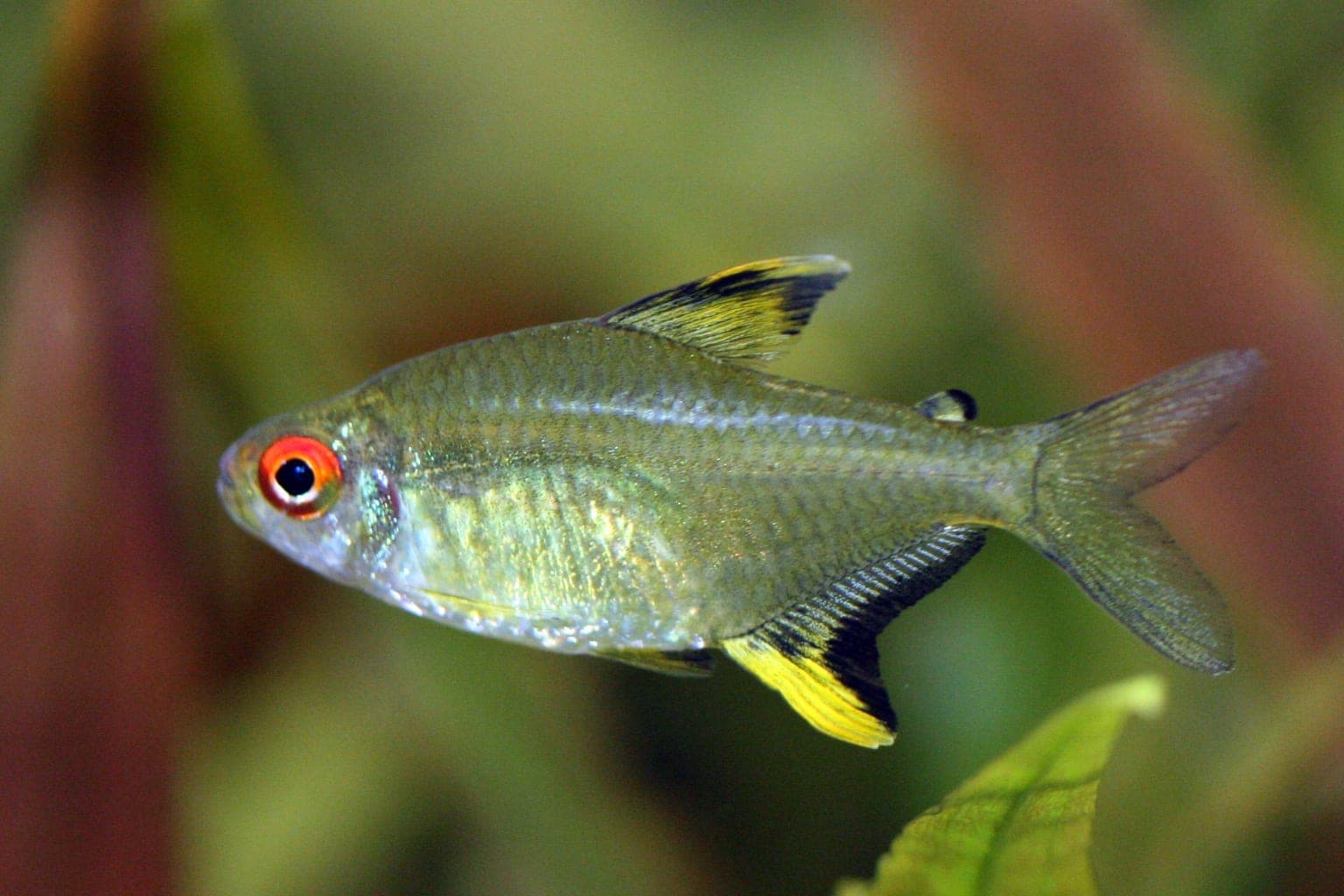
Hyphessobrycon pulchripinnis, the lemon tetra, is a striking small tetra whose coloration rewards close observation: a pale yellow-to-lemon body that becomes translucent toward the tail, brilliant yellow and black patterning on the dorsal and anal fins, and a vivid red eye. In a school against dark substrate and green plants, they create a subtly luminous display that is one of the more distinctive looks among small tetras.
Native to the Tapajos River system in Brazil, lemon tetras inhabit clear and blackwater streams with dense vegetation, sandy substrates, and dappled light. They are naturally schooling fish that form tight groups in the open water of their native habitat.
Lemon tetras are peaceful, moderately sized (1.5 inches), hardy community fish that are suitable for a wide range of planted tanks. Their care is straightforward and their coloration, while understated compared to neon tetras, is elegant and stands out distinctly in the right environment.
Basic Overview
Common Misconceptions
"They are pale and uninteresting." Lemon tetras in optimal conditions with dark substrate, soft water, and warm lighting have a distinctive luminous yellow and translucent quality that is genuinely beautiful. In hard, bright, white-lit tanks they appear washed out and their true color is never seen.
"They are fin nippers." Lemon tetras in appropriate school sizes (8+) are not significant fin nippers. In small groups the stress-driven nipping behavior emerges; in a proper school it is minimal.
"They are just pale neons." Lemon tetras are a distinct species with a different color palette (yellow, translucent, and black fin patterning with a red eye) that suits different aesthetic goals than the classic neon tetra look.
"Any tank size is fine." Like all tetras, lemon tetras are open-water schoolers that need horizontal swimming space. A 20-gallon long is the practical minimum for a proper school.
Recommended Setup
- 20+ gallon planted tank for a school of 8-12
- Dark fine sand or Aquasoil substrate for color contrast
- Dense background and side planting: crypts, Amazon swords, stem plants
- Tannin additions (Indian almond leaves, driftwood) improve coloration
- Open swimming space in the midwater
- Gentle to moderate filtration
- Warm-spectrum lighting (4000-5500K) renders the yellow tones most vividly
Diet
Lemon tetras are omnivores feeding on small insects, invertebrates, and organic matter in the wild. They accept a wide range of aquarium foods:
- High-quality small flakes or nano pellets as a staple
- Frozen baby brine shrimp (excellent for color enhancement)
- Frozen daphnia and cyclops
- Micro worms and other small live foods
- Crushed flakes for juveniles
Feed once or twice daily. Regular live and frozen food supplements, particularly carotenoid-rich foods like brine shrimp, enhance the yellow pigmentation over time. Feed small amounts; lemon tetras have small mouths and moderate appetites.
Personality
Lemon tetras are active, social schooling fish that occupy the middle water column with constant graceful movement. In a school of 10 or more, the collective transparency and yellow luminosity of the school in motion against dark substrate and green plants creates a distinctive visual effect.
Males display to each other constantly with spread fins, showing off the vivid yellow and black anal fin patterning. This low-level rivalry is harmless and actually improves their visual display by encouraging full fin extension.
They are completely peaceful toward other species and fit naturally in any South American community tank. Their moderate size puts them safely above the smallest nano species while being appropriate companions for medium-sized community fish.
Maximizing Color
Lemon tetras are one of the species most transformed by appropriate conditions. The difference between a school in a bright, white-lit tank with hard water and the same school in a warm-lit, soft-water, tannin-rich setup can be dramatic.
Key factors for best color: dark substrate (black sand is ideal), warm-spectrum LED lighting, soft water below 8 dGH, Indian almond leaves or driftwood for tannins, and a diet that includes regular carotenoid-rich live or frozen foods.
Males in a large school with other males to display to will show their most vivid fin coloration. A school of 12 in a well-lit blackwater planted tank is one of the most underrated displays in the hobby.
Water Parameters
Lemon tetras come from the clear and blackwater streams of the Tapajos River system in Brazil:
- pH: 5.5-7.5 (soft acidic ideal)
- Hardness (gH): 1-10 dGH
- Temperature: 72-82 degrees F
- Ammonia and Nitrite: 0 ppm
- Nitrate: below 20 ppm
Here are some top tips to deal with unwanted parameters:
- Soft, slightly acidic water with tannins produces the best color and the most natural behavior. Indian almond leaves require no chemistry management and create beneficial conditions passively.
- In hard tap water areas, blending with 40-60% RO water brings conditions into range. The color improvement in lemon tetras after moving to soft water is noticeable within weeks.
- Weekly 20-25% water changes in a planted tank. Avoid large sudden changes in soft water setups due to low buffering capacity.
- Warm-spectrum lighting at moderate intensity suits lemon tetras well. Overly bright cool-white LED lighting washes out their yellow tones and causes the school to seek shade unnecessarily.