Serpae Tetra Care Guide
A Complete Care Guide for Hyphessobrycon eques
Introduction
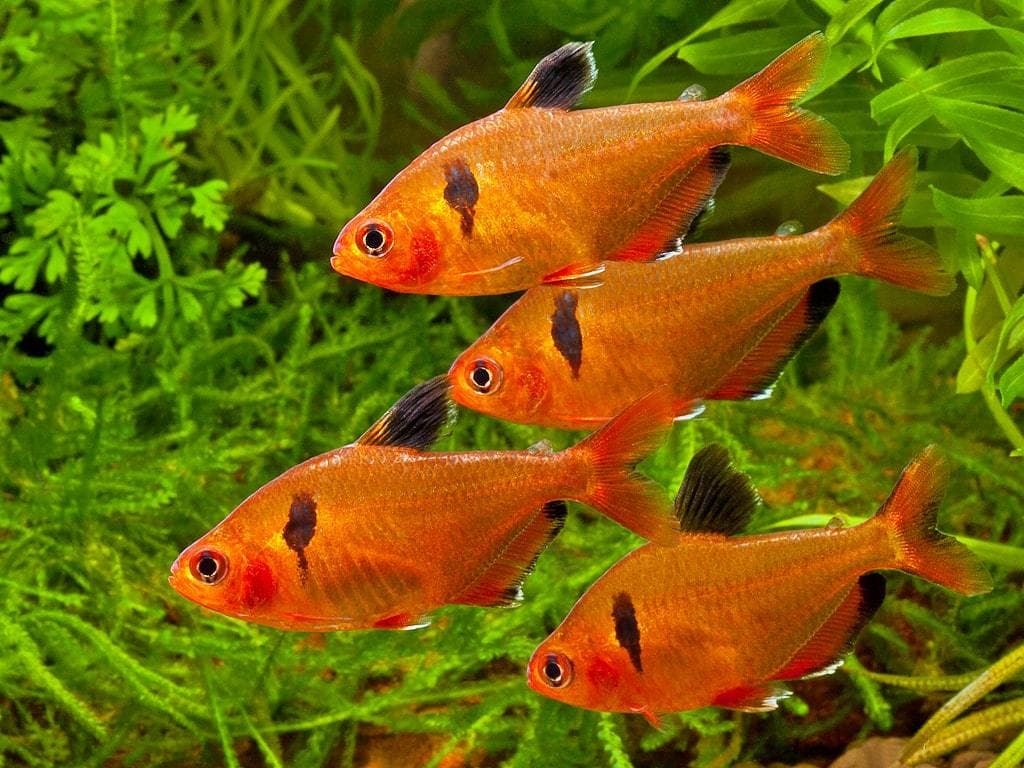
Hyphessobrycon eques, the serpae tetra (also called the jewel tetra or callistus tetra), is a vivid red-to-orange schooling fish from South America with a distinctive black comma-shaped shoulder spot. In a properly sized school under warm-spectrum lighting against a dark substrate, they create a striking flame-colored display.
Native to the Paraguay and Guapore River basins in South America, serpae tetras inhabit slow-moving, heavily vegetated waters with soft, acidic conditions. They are hardy and adaptable, making them popular beginner fish, though their tendency toward fin nipping requires careful tank mate selection.
Their reputation as fin nippers is real but manageable. In adequately sized schools of 8 or more, serpae tetras direct their nipping behavior primarily at each other rather than at other fish. The key to success is group size: more serpae tetras means less nipping of tank mates.
Basic Overview
Common Misconceptions
"Serpae tetras are always aggressive fin nippers." In groups of 8 or more, fin nipping toward other fish drops dramatically because their social behavior is redirected within the group. Small groups of 3–4 are the primary cause of problematic nipping.
"They can be kept with slow, long-finned fish." Even in larger groups, serpae tetras will nip at very slow fish with flowing fins like bettas and long-tailed guppies. Avoid these pairings. Fast, robust fish are better companions.
"Their red color fades in the aquarium." Serpae tetras in clean water with appropriate diet and a dark substrate maintain vivid red-orange coloration. Faded color indicates stress, poor nutrition, or declining water quality rather than an inherent limitation of the species.
"They need very specific water conditions." Serpae tetras are hardy and adaptable. While they prefer soft, slightly acidic water, they thrive in a wide range of conditions including neutral to slightly hard tap water.
Recommended Setup
- 20+ gallon tank for a school of 8–12
- Dark substrate enhances the contrast of their red coloration
- Dense planting along sides and back with open swimming space in the middle
- Tannin-rich environment: driftwood, Indian almond leaves, or dried botanicals
- Moderate filtration with gentle flow
- Warm-spectrum lighting (5000K or lower) brings out the best red coloration
- Floating plants to dim surface light and create a natural environment
Diet
Serpae tetras are omnivores that consume small invertebrates, insects, and plant matter in the wild. They accept most aquarium foods:
- High-quality tropical flakes or small pellets as a staple
- Frozen bloodworms, brine shrimp, and daphnia
- Frozen micro foods for variety
- Live foods for enrichment and breeding conditioning: baby brine shrimp
- Spirulina-based foods for plant component
Feed once or twice daily. A varied diet rich in protein combined with some plant matter produces the best coloration. Regular frozen food feedings make a visible difference in the depth of red coloration in healthy fish.
Personality
In proper group size, serpae tetras are lively, boldly colored schooling fish that are in constant motion through the middle water column. Males chase each other and compete for position in the school with spread fins, creating a dynamic, active display.
Their infamous fin-nipping behavior is directly related to group size and stress. A school of 10+ serpae tetras in a suitably sized tank with compatible companions is often far more peaceful than a smaller group of the supposedly milder species.
They are confident fish that are visible at all times, especially under the warm-toned lighting that makes their red coloration most intense. In a well-planted tank with a dark substrate, a school of serpae tetras is a genuinely dramatic display.
Compatible Tank Mates
Choosing tank mates for serpae tetras requires prioritizing speed and robust fins. Fast-moving, short-finned fish that are not timid or slow work best: giant danios, barbs (tiger barbs are a particular natural match in temperament), rainbowfish, swordtails, and similar active species.
Avoid bettas (will be fin-nipped severely), guppies with long tails, angelfish (will be nipped), and any slow or timid fish. Also avoid very small fish that serpae tetras might eat.
Corydoras catfish on the substrate are generally ignored by serpae tetras, making them a useful bottom-level companion for tanks where the serpae are well-established in a large enough school.
Water Parameters
Serpae tetras come from the soft, slightly acidic rivers of the Paraguay and Guapore drainage in South America:
- pH: 5.5–7.5 (adaptable)
- Hardness (gH): 2–15 dGH
- Temperature: 72–82°F
- Ammonia and Nitrite: 0 ppm
- Nitrate: below 20 ppm
Here are some top tips to deal with unwanted parameters:
- Driftwood, Indian almond leaves, and leaf litter create the tannin-rich, slightly acidic blackwater conditions that bring out the best red coloration in serpae tetras.
- Weekly 25% water changes maintain water quality. Faded coloration in serpae tetras is often the first sign of rising nitrates or declining water quality.
- Dark substrate (black sand or dark gravel) dramatically improves the visual impact of the red coloration against a contrasting background. Light-colored substrate makes them look washed out.
- Keep temperature stable in the 76–80°F range for best health. Fluctuating temperatures increase susceptibility to ich and other diseases.