Angelfish Care Guide
The Ultimate Care Guide for Angelfish
Introduction
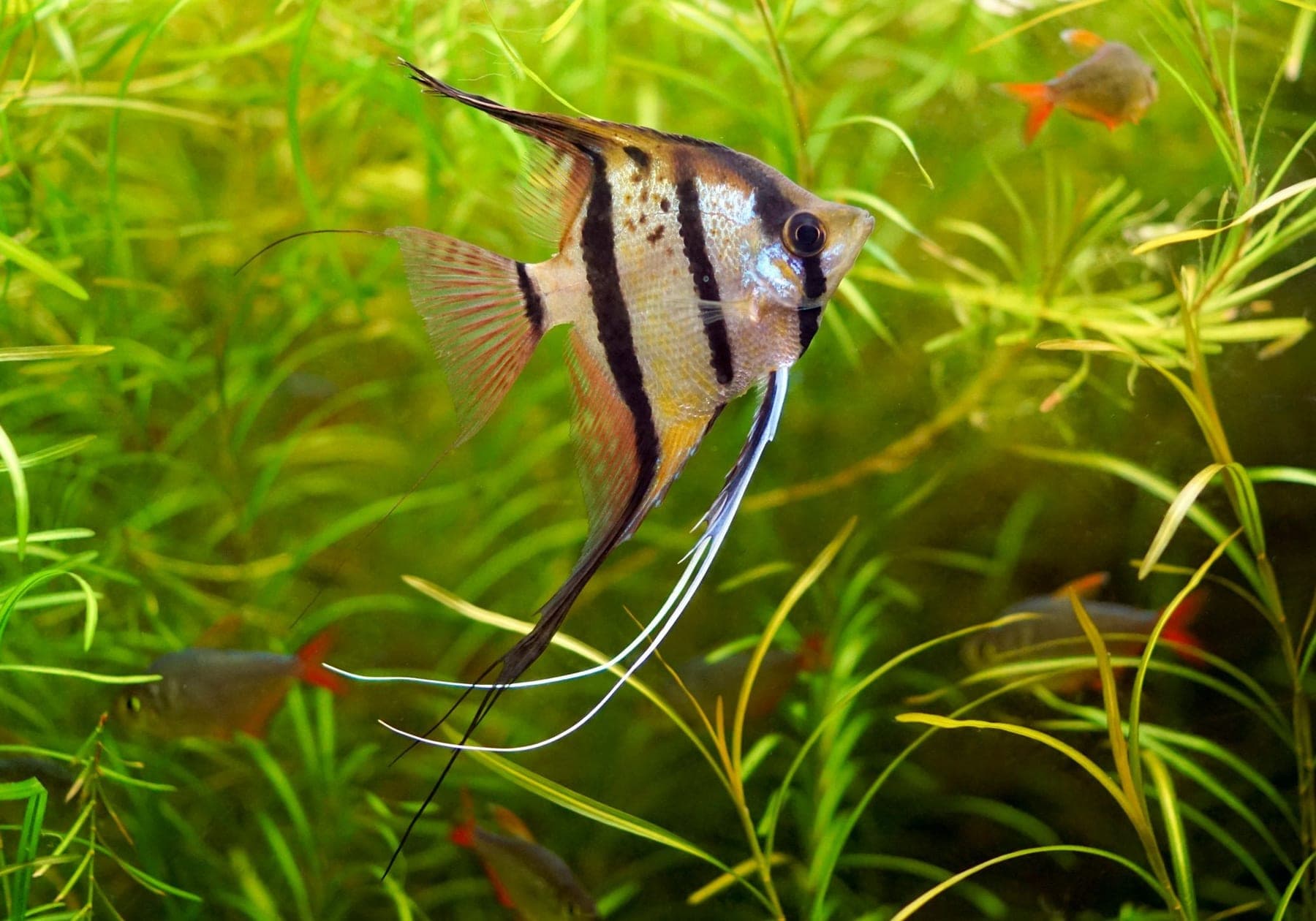
Pterophyllum scalare, commonly known as the angelfish, is one of the most iconic freshwater fish in the aquarium hobby. They live roughly 10–12 years in captivity and prefer temperatures of 76–84°F. Their triangular body shape with long, flowing fins allows them to reach impressive dimensions, bodies up to 6 inches long and over 8 inches tall, making them genuinely majestic in a tall aquarium.
Angelfish are native to the slow-moving rivers, flooded forests, and floodplains of the Amazon Basin. In the wild, they are ambush predators, using dense vegetation to sneak up on small prey. In the aquarium, this translates to a striking, personable fish with a calm, deliberate way of moving that sets them apart from most tropical fish.
Their variety of color morphs, from wild-type silver and black striped to gold, marble, koi, and albino, combined with their dramatic silhouette, makes angelfish one of the most sought-after fish in the freshwater hobby.
Basic Overview
Common Misconceptions
"Angelfish are peaceful community fish that work with everything!" Angelfish are semi-aggressive and will eat small fish that fit in their mouths, neon tetras, small rasboras, and baby guppies are all at risk. They also become significantly more territorial and aggressive when they are breeding.
"A short, wide tank is fine for angelfish!" Angelfish are very tall fish and need tall tanks, ideally 24 inches or more in height, to be truly comfortable and to fully display their finnage. Wide, shallow tanks frustrate them.
"Angelfish mate for life and must always be kept in pairs!" Angelfish do form pair bonds, but these can dissolve if the pair is separated or if one fish is removed and reintroduced. They are not strictly monogamous in the way some other cichlids are.
"Angelfish are delicate and difficult to keep!" Well-established angelfish in a properly sized, cycled tank are actually quite hardy. They have specific needs, but meeting those needs is not particularly difficult. The main challenge is providing adequate space.
Recommended Setup
- 30+ gallon tank, tall (24" height preferred), cycled, with a lid, heater, and filter
- Live plants, Amazon swords are a natural and thematic choice
- Broad-leafed plants and driftwood for cover and comfort
- Low to moderate flow (they prefer calmer water)
- Dimmer lighting, or floating plants to diffuse light
- Aquarium siphon
Diet
Angelfish are carnivore-leaning omnivores that accept a wide variety of foods. They have relatively small mouths for their size, so food sizing matters. They enjoy:
- High-quality flake food or medium-sized pellets as a staple
- Frozen or live bloodworms, a personal favorite for most angelfish
- Frozen or live brine shrimp
- Frozen or live daphnia
- Blanched spinach or zucchini (some individuals accept these, some ignore them)
Feed once or twice daily. Angelfish can be shy eaters when first introduced to a new tank, but they warm up quickly and become enthusiastic, sometimes even demanding, at feeding time. A varied diet helps maintain their color and health.
Personality
Angelfish are one of the most personable fish in the freshwater hobby. They recognize their owners, follow movement along the glass, and have a calm, purposeful way of moving through the tank that sets them apart from more frenetic species.
When a breeding pair forms, their personality shifts dramatically. Breeding angelfish become intensely territorial and will viciously defend their chosen spawning site, even against much larger fish. This is impressive to witness but can be a serious problem in community tanks. Be prepared to move the pair or their tankmates when spawning begins.
Juvenile angelfish are more skittish than adults, but as they mature and establish themselves in the tank, their confidence grows remarkably. A fully grown, comfortable angelfish commands a tank in a way few other fish do.
Compatible Tankmates
Angelfish need tankmates that are large enough not to be eaten and peaceful enough not to harass them. The key is finding fish that occupy different zones of the tank and have compatible water requirements.
Good options include larger tetras (Congo tetras, bleeding heart tetras, diamond tetras), rainbowfish, corydoras catfish, plecos, and similarly sized peaceful cichlids. Bristlenose plecos are a particularly classic and practical pairing.
Avoid small tetras like neons or cardinals if your angelfish are large. Avoid tiger barbs, serpae tetras, and other fin nippers that will shred angelfish fins. Avoid overly aggressive cichlids, angels generally lose those confrontations.
Water Parameters
Angelfish prefer warm, soft, slightly acidic water that mirrors their Amazon homeland. Soft water also tends to bring out the best coloration and encourages breeding. Target:
- pH: 6.5–7.5
- gH: 50–150 PPM (soft water preferred)
- Temperature: 76–84°F
Here are some top tips to deal with unwanted parameters:
- To soften water and lower pH, use driftwood, Indian almond leaves, or a small bag of peat moss in the filter. This naturally recreates Amazonian water conditions.
- To raise pH gently, use crushed coral in the filter in small amounts.
- Do 25–30% water changes weekly. Angelfish are sensitive to nitrate buildup over time.
- Remember, using random chemicals is not recommended, since they can cause more problems through sudden, drastic changes.