Black Skirt Tetra Care Guide
A Complete Care Guide for Gymnocorymbus ternetzi
Introduction
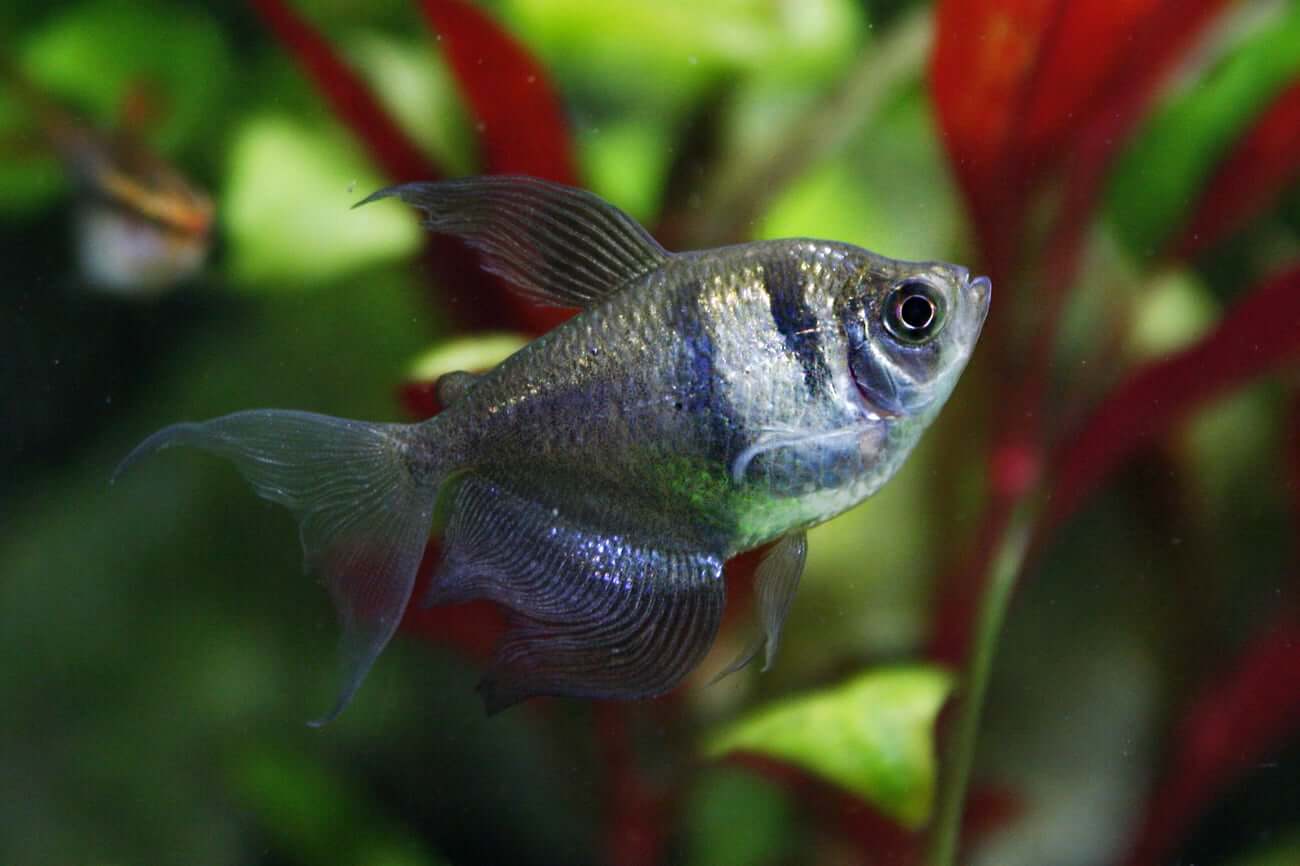
Gymnocorymbus ternetzi, the black skirt tetra (also called the black widow tetra or petticoat tetra), is a classic aquarium fish that has been in the hobby for decades. Their silver-to-gray body, two bold black vertical bars behind the head, and flowing black anal and dorsal fins give them an elegant, distinctive appearance.
Native to the Paraguay and Guapore River basins in South America, black skirt tetras inhabit slow-moving, shaded, vegetated waters. They are hardy, undemanding, and peaceful fish that tolerate a wide range of water conditions, making them genuinely beginner-friendly.
They are also available in several cultivated forms including a long-finned variety and dyed or injected color variants (sometimes sold as "painted tetras" or "blueberry tetras"). These injected varieties are controversial in the hobby due to the harmful processes used to create them; naturally colored wild-type fish are the recommended choice.
Basic Overview
Common Misconceptions
"Painted/colored tetras are a natural variety." Fish sold as "blueberry tetras," "strawberry tetras," or similar colorful varieties are artificially colored through injection or dyeing, a process that is painful and shortens the fish's lifespan. Only natural wild-type specimens are recommended.
"They are always peaceful." In groups of 6 or more they are reliably peaceful. In very small groups (1–3 fish), they can become nippy, particularly toward long-finned fish. Adequate group size is the solution.
"Their black color stays vivid forever." The bold black coloring of juvenile black skirts fades to gray as they mature. This is normal; a healthy older specimen is still attractive but looks quite different from a young one.
"A single black skirt tetra is fine." Like all tetras, black skirts are schooling fish that are stressed alone. A group of 6 minimum is needed for normal behavior.
Recommended Setup
- 20+ gallon tank for a school of 6–8
- Fine gravel or sand substrate
- Dense planting along sides and back with open swimming space
- Driftwood and leaf litter for a natural look and slight water softening
- Moderate filtration with gentle to moderate flow
- Floating plants to dim lighting; they prefer subdued light
- Dark substrate enhances their silver-and-black coloration by contrast
Diet
Black skirt tetras are omnivores that eat insects, small invertebrates, and plant matter in the wild. They accept most aquarium foods readily:
- High-quality tropical flakes or small pellets as a staple
- Frozen bloodworms, brine shrimp, and daphnia
- Spirulina-based flakes for plant component
- Freeze-dried foods as occasional variety
- Live foods for breeding conditioning
Feed once or twice daily. Black skirt tetras are undemanding, enthusiastic feeders that thrive on a simple, consistent diet. A frozen food supplement a few times per week keeps them in best health.
Personality
Black skirt tetras are active, bold schooling fish that occupy the mid-water column and are visible at all times in a well-maintained tank. They are confident enough to explore the full tank and do not spend much time hiding, even in a new setup.
In a proper group they school loosely, with individuals drifting apart and rejoining regularly. The dramatic black vertical bars create a striking visual effect as the school moves.
Juveniles have the boldest black coloration; as they mature, the color transitions to a more subdued steel gray. This color change surprises some keepers but is entirely normal. Both juvenile and adult black skirt tetras are attractive fish in their own way.
Long-Finned Variety
The long-finned black skirt tetra is a cultivated form with dramatically extended anal and dorsal fins. They look spectacular but have slightly different needs: they are more susceptible to fin damage and disease, slower-moving, and more likely to be targeted by fin nippers.
Long-finned varieties should be kept only with very gentle, non-nippy tank mates. Avoid tiger barbs, serpae tetras, and any known fin nippers. Even other black skirt tetras in too-small a group may nip at the long fins.
Otherwise, long-finned black skirts have the same care requirements as the standard form. Their extended fins also make them somewhat vulnerable to bacterial fin rot if water quality declines, so extra attention to maintenance is worthwhile.
Water Parameters
Black skirt tetras are hardy and adaptable across a wide range of water conditions:
- pH: 6.0–7.5 (adaptable)
- Hardness (gH): 4–18 dGH (tolerates a wide range)
- Temperature: 68–82°F
- Ammonia and Nitrite: 0 ppm
- Nitrate: below 20 ppm
Here are some top tips to deal with unwanted parameters:
- Black skirt tetras are among the most forgiving tetras for beginner water management. Standard tap water in most areas suits them without modification.
- Weekly 25% water changes maintain water quality adequately. Their hardy constitution means they tolerate minor lapses in maintenance better than more delicate species.
- Keep temperature stable rather than maximizing it. The 72–78°F range balances activity with longevity. Higher temperatures are tolerated but may shorten lifespan.
- Driftwood and Indian almond leaves improve conditions for this and most South American species, though black skirts are functional across a wider range than many tetras.