Rosy Tetra Care Guide
A Complete Care Guide for Hyphessobrycon rosaceus
Introduction
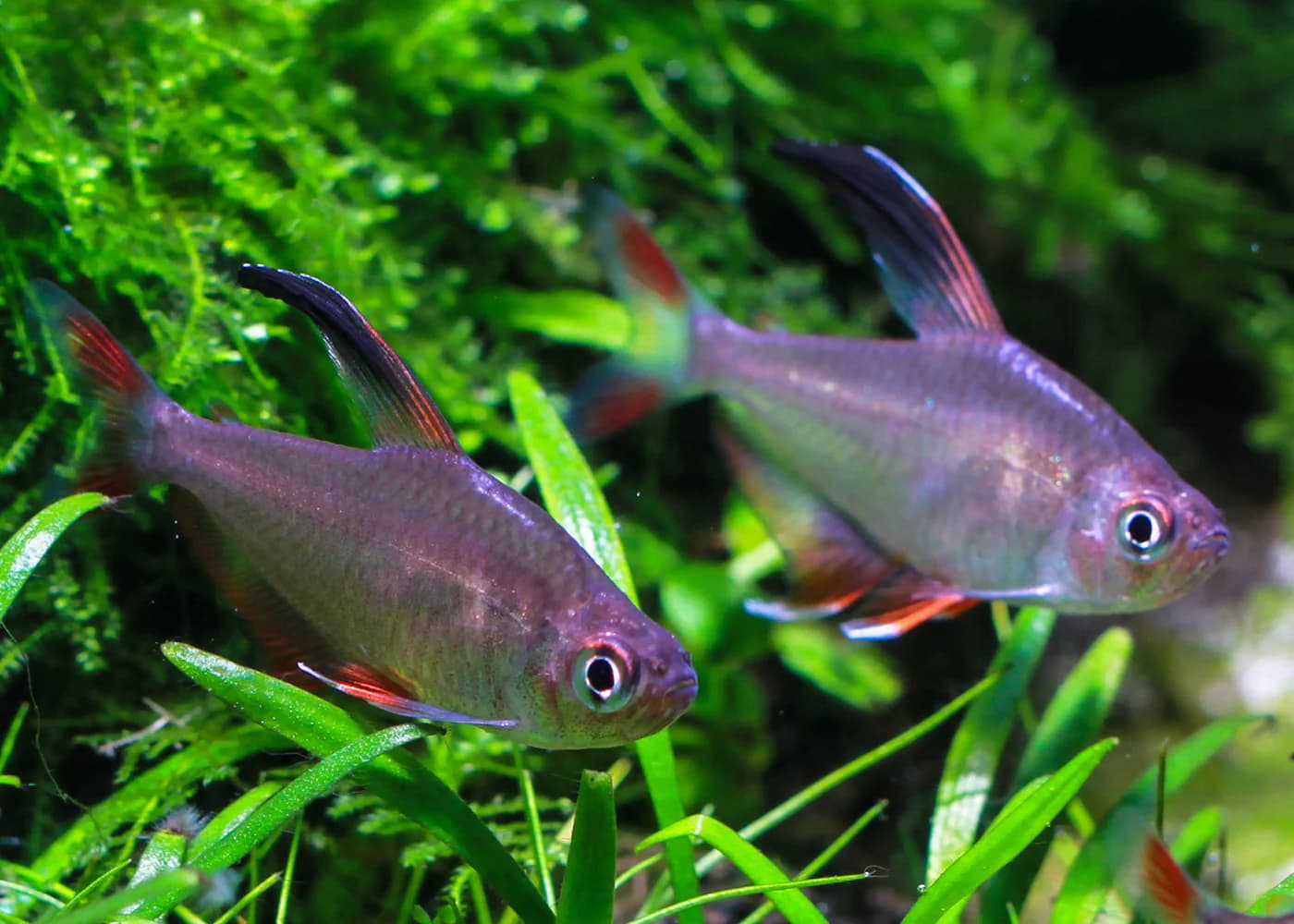
Hyphessobrycon rosaceus, the rosy tetra, is a beautifully colored small tetra from the Guiana Shield region of South America. Their pale rose-to-salmon body with vivid red fins, the distinctive white tips on the dorsal fin, and the black markings on the anal and dorsal fins create a color combination that is genuinely striking in a well-planted tank.
Native to the Essequibo River basin in Guyana and surrounding rivers of Suriname and Brazil, rosy tetras inhabit soft, tannin-stained blackwater streams and flooded forest areas with dense vegetation. Their coloration intensifies dramatically in soft, slightly acidic water that mimics their natural environment.
Rosy tetras are peaceful schooling fish that bring warm color to community tanks. Their modest size (1.5 inches) and calm temperament make them excellent companions for planted setups with other small South American species.
Basic Overview
Common Misconceptions
"They are just a pale version of other tetras." The rosy tetra's warm salmon body paired with deep red fins and white-tipped dorsal is a distinct and beautiful color combination that stands out in a planted tank, particularly under warm-spectrum lighting.
"Hard alkaline tap water is acceptable." Rosy tetras are soft-water fish. In hard, alkaline water their color fades noticeably and long-term health declines. Soft, slightly acidic water dramatically improves their appearance and vitality.
"A group of 4 is enough." Like all tetras, rosy tetras are most comfortable and most colorful in groups of 8 or more. Smaller groups cause stress and the males will harass each other rather than displaying properly.
"They are finicky eaters." Rosy tetras are undemanding omnivores that accept a wide range of foods. Their care is straightforward once water parameters are appropriate.
Recommended Setup
- 20+ gallon planted tank for a school of 8-12
- Dark fine sand or Aquasoil substrate for color contrast
- Tannin-rich environment: Indian almond leaves, driftwood, dried botanicals
- Dense planting: Amazon swords, crypts, Rotala, stem plants
- Floating plants for a natural shaded canopy
- Gentle filtration; sponge filter or low-flow HOB
- Warm-spectrum lighting (4000-5500K) to bring out the rose and red tones
Diet
Rosy tetras are omnivores in the wild, feeding on small insects, invertebrates, and plant matter. They accept a wide range of aquarium foods:
- High-quality tropical flakes or small pellets as a staple
- Frozen baby brine shrimp (improves color significantly)
- Frozen daphnia and cyclops
- Micro worms (live) for enrichment
- Crushed flakes or nano pellets for small individuals
Feed once or twice daily with small amounts. Regular frozen and live food supplements bring out the most vivid color in rosy tetras. Their rose and red pigmentation responds noticeably to diet quality.
Personality
Rosy tetras are active, curious schooling fish that occupy the middle water column and bring constant warmth and movement to a planted tank. Males display to each other with fins spread, showing off the white-tipped dorsal and rich red coloration in constant low-level rivalry that intensifies their colors rather than resulting in any real aggression.
In a school of 10 or more, the collective warm color of their bodies against a backdrop of green plants and dark substrate creates one of the most naturally beautiful mid-size freshwater displays available.
They are completely peaceful toward other species and make excellent companions for other South American tetras, dwarf cichlids, corydoras, and small plecos.
Achieving Best Color
The rosy tetra's color is highly dependent on environment. In hard, alkaline, brightly lit water they appear washed out and pale. In soft, tannin-stained, dimly lit water their salmon body and red fins become vivid and warm.
The most reliable color improvements come from: soft water below 6 dGH, Indian almond leaves or driftwood for tannins, warm-spectrum LED lighting, and a dark substrate. Together these changes can transform a pale school into a glowing display.
Males in particular intensify in color when other males are present in the school, making a larger group (10+) more visually impressive than a smaller one even at the same water quality.
Water Parameters
Rosy tetras come from the soft, acidic blackwater streams of the Guiana Shield:
- pH: 5.5-7.0 (soft acidic ideal)
- Hardness (gH): 1-8 dGH
- Temperature: 75-82 degrees F
- Ammonia and Nitrite: 0 ppm
- Nitrate: below 20 ppm
Here are some top tips to deal with unwanted parameters:
- Indian almond leaves and driftwood naturally create appropriate tannin-rich conditions without requiring RO water in moderately soft tap water areas.
- In hard tap water areas, blending with 50-70% RO water brings hardness into range. The color change in rosy tetras when moved from hard to soft water is immediate and dramatic.
- Weekly 20-25% water changes in a planted tank. Avoid large sudden changes, as soft water has low buffering capacity and pH can shift rapidly with large volume changes.
- A dark substrate and floating plant cover create the subdued, warm environment where rosy tetras are at their most comfortable and most colorful.