Silvertip Tetra Care Guide
A Complete Care Guide for Hasemania nana
Introduction
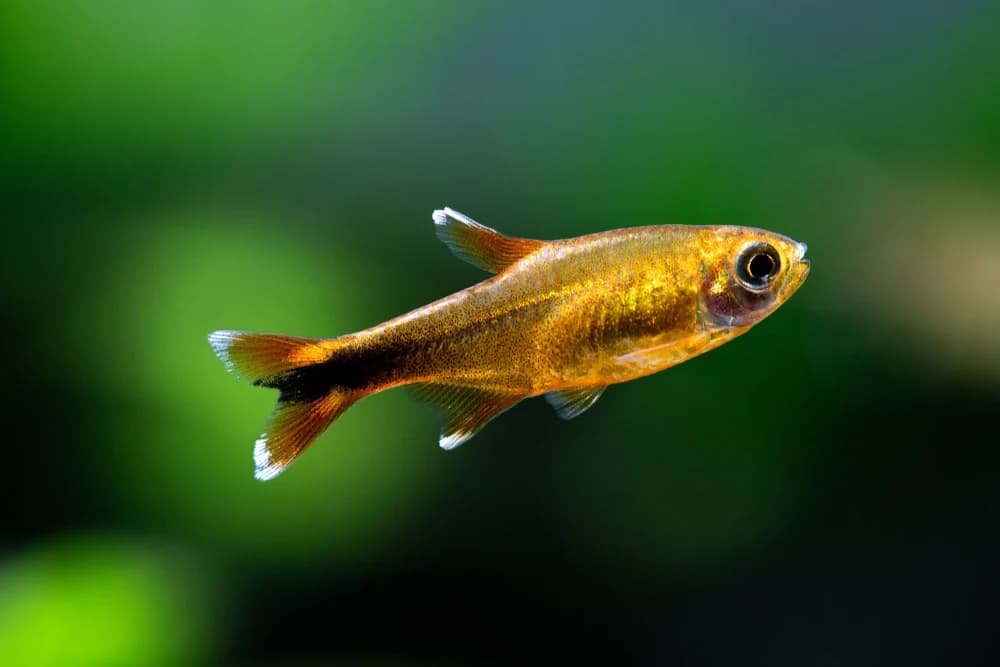
Hasemania nana, the silvertip tetra, is a lively and attractive small tetra from Brazil notable for the bright silver or white tips on all their fins. Males display vivid copper-orange to golden flanks; females are paler silver. Their active, slightly bold personality and tolerance of a wide range of water conditions make them popular community fish.
Native to the Sao Francisco River basin in Brazil, silvertip tetras inhabit slow-moving rivers and streams with sandy substrate and abundant vegetation. They are one of the more adaptable South American tetras, tolerating a range of temperatures and water chemistry.
Silvertip tetras are easy to care for and suitable for beginners. Their active schooling behavior, vivid fin coloration, and peaceful (though slightly nippy) temperament make them a good choice for planted community tanks with appropriately sized, robust tank mates.
Basic Overview
Common Misconceptions
"They are the same as other small tetras in behavior." Silvertip tetras are bolder and slightly more nippy than neon or cardinal tetras. They should not be kept with bettas or long-finned fish. They are better suited to robust community setups than delicate planted nano tanks with slow fish.
"They need warm tropical temperatures." Silvertip tetras tolerate a wide temperature range. They do well in slightly cooler setups and are more temperature-tolerant than many tropical tetras, making them versatile.
"Any school size is fine." Like all tetras, silvertips behave better and show less aggression toward tank mates in groups of 8 or more. In smaller groups their nippy tendency increases.
"The silver tips are always visible." The silver fin tips are most vivid in well-fed, comfortable fish in good water quality. Pale or absent fin tipping indicates stress or poor conditions.
Recommended Setup
- 20+ gallon tank for a school of 8-10
- Planted setup with open mid-water swimming space
- Fine substrate
- Moderate flow
- Good filtration
- Driftwood or leaf litter optional
Diet
Silvertip tetras are omnivores that accept most standard community foods:
- High-quality small flake or micro pellets
- Frozen bloodworms
- Frozen brine shrimp
- Frozen daphnia
Feed twice daily in small amounts. Silvertip tetras are enthusiastic, competitive feeders that accept most food readily. A varied diet maintains the best coloration and health.
Personality
Silvertip tetras are energetic, confident fish with more personality than their small size suggests. In a group of 8 or more they school actively, with the silver fin tips flashing under light as they move in coordination.
Their slight boldness compared to other tetras makes them engaging tank inhabitants. They approach the front glass, investigate new additions, and feed aggressively. This confidence can tip into mild nippiness, so tank mates should be appropriately robust.
They coexist well with most active community fish: other barbs, danios, robust tetras, cory catfish, and mid-sized livebearers. Their small size and peaceful nature (despite the mild nippiness) make them versatile community inhabitants in most medium-sized planted tanks.
Water Parameters
Silvertip tetras are highly adaptable to a range of water conditions:
- pH: 6.0-8.0 (highly adaptable)
- Hardness (gH): 5-25 dGH (very adaptable)
- Temperature: 72-82 degrees F
- Ammonia and Nitrite: 0 ppm
- Nitrate: below 25 ppm
Here are some top tips to deal with unwanted parameters:
- Silvertip tetras are among the most water-chemistry-tolerant tetras available. They are suitable for hard-water areas without softening.
- Weekly 25% water changes and standard community tank maintenance are all that is required.
- They are temperature tolerant and handle brief fluctuations better than more delicate species.
- Good oxygenation and moderate filtration are the only technical requirements.