Silver Dollar Care Guide
A Complete Care Guide for Metynnis argenteus
Introduction
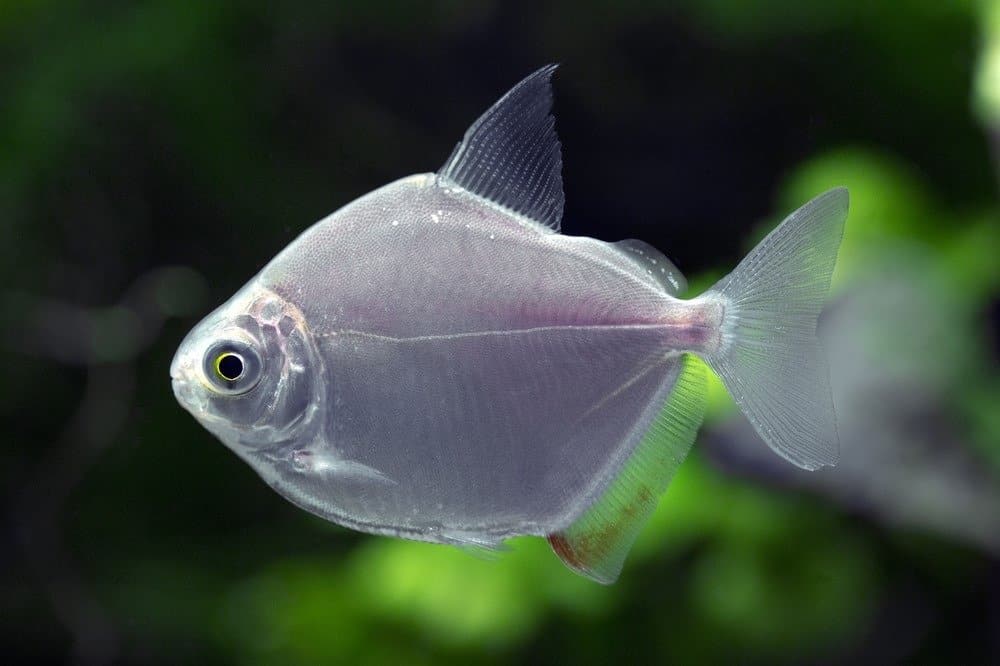
Metynnis argenteus, the silver dollar, is a large, disc-shaped characin from South America named for their bright silver flanks that look like spinning coins under light. Related to piranhas (they are in the same family, Serrasalmidae), silver dollars are strict herbivores and entirely harmless to other fish, though they are devastating to aquatic plants.
Native to the Amazon and Orinoco river systems, silver dollars are schooling fish that can reach 5–6 inches and live 10+ years. Their disc-shaped bodies and constant schooling behavior in large groups create a spectacular display in a large aquarium.
The key challenge of silver dollar keeping is their appetite for live plants, which they will consume entirely. They belong in a tank decorated with robust artificial plants, driftwood, and rockwork rather than a planted display.
Basic Overview
Common Misconceptions
"Silver dollars are small community fish." They grow to 5–6 inches and need very large tanks (75+ gallons) to be kept properly as a school. They are large schooling fish that demand significant space.
"They can go in a planted tank." Silver dollars will eat every live plant in a tank, down to bare stems, within days. This is not occasional nibbling but complete destruction. Live plants and silver dollars are incompatible.
"They are related to piranhas and are dangerous." Silver dollars are in the same family as piranhas but are strict herbivores. They will not harm any fish they cannot fit in their mouth and pose no danger to humans.
"A pair is sufficient." Silver dollars are schooling fish that are stressed in small numbers. A school of at least 5–6 is needed; 8–10 in a suitably large tank creates a truly impressive display.
Recommended Setup
- 75+ gallon tank for a school of 5–6; larger is better
- Fine gravel or sand substrate
- Robust artificial plants only (no live plants)
- Driftwood, rocks, and caves for decoration and cover
- Strong filtration capable of handling heavy feeding and large fish waste
- Good surface agitation and oxygenation
- Secure lid; silver dollars jump readily when startled
Diet
Silver dollars are strict herbivores in the wild, consuming aquatic plants, algae, fallen fruit, and seeds. In the aquarium:
- Spirulina flakes and pellets as a primary staple
- Blanched vegetables: lettuce, spinach, zucchini, cucumber, peas
- Fresh cucumber and romaine lettuce (clips in the tank work well)
- Algae wafers
- Occasionally: fruit pieces (banana, watermelon rind) as treats
Feed once or twice daily, primarily plant-based foods. A clip for vegetables in the tank allows constant access to greens, which suits their natural browsing behavior. Avoid high-protein foods as their primary diet; their digestive system is adapted for plant matter.
Personality
Silver dollars are shy, skittish fish despite their size. They startle easily and will bolt frantically around the tank when frightened, which can cause injury in a smaller aquarium. In a large, well-established tank with an adequate school, they settle into confident, graceful swimmers.
The schooling behavior of silver dollars in a large aquarium is one of the most visually striking displays available. The entire school moves as one synchronized unit, the silver bodies catching the light and creating a shimmering, almost hypnotic effect.
Over time and with regular feeding, silver dollars become much less skittish and learn to associate their keeper with food. Tame specimens approach the glass and will take food from the hand. Their initial timidity transforms into genuine interaction with patient, consistent care.
Tank Mates
Silver dollars are peaceful toward fish too large to eat, making them suitable companions for large South American species. Oscars, severums, large plecos, geophagus cichlids, and large catfish species are natural companions that can tolerate the same warm, soft water conditions.
The critical factor is size: silver dollars will eat any fish small enough to fit in their mouths, which is a larger fish than their peaceful reputation might suggest given their 5–6 inch adult size.
They also make excellent companions for bala sharks in very large tanks, as both species are peaceful, schooling, and require similar large tank sizes and water conditions.
Water Parameters
Silver dollars come from the warm, soft, often tannin-stained rivers of South America:
- pH: 5.5–7.5 (slightly soft and acidic preferred)
- Hardness (gH): 3–12 dGH
- Temperature: 75–82°F
- Ammonia and Nitrite: 0 ppm
- Nitrate: below 20 ppm
Here are some top tips to deal with unwanted parameters:
- Weekly 30–40% water changes are necessary for large, heavy-feeding fish. Silver dollars produce significant waste; strong filtration and regular changes are essential.
- Driftwood creates a natural environment and provides gentle water softening and acidification, which suits their native habitat.
- Soft, slightly acidic water brings out their best coloration. In harder tap water, blending with RO water (30–50%) improves conditions.
- Maintain stable parameters. Although adaptable, silver dollars are sensitive to sudden changes in pH or temperature, which can trigger ich in otherwise healthy fish.