Severum Cichlid Care Guide
A Complete Care Guide for Heros efasciatus
Introduction
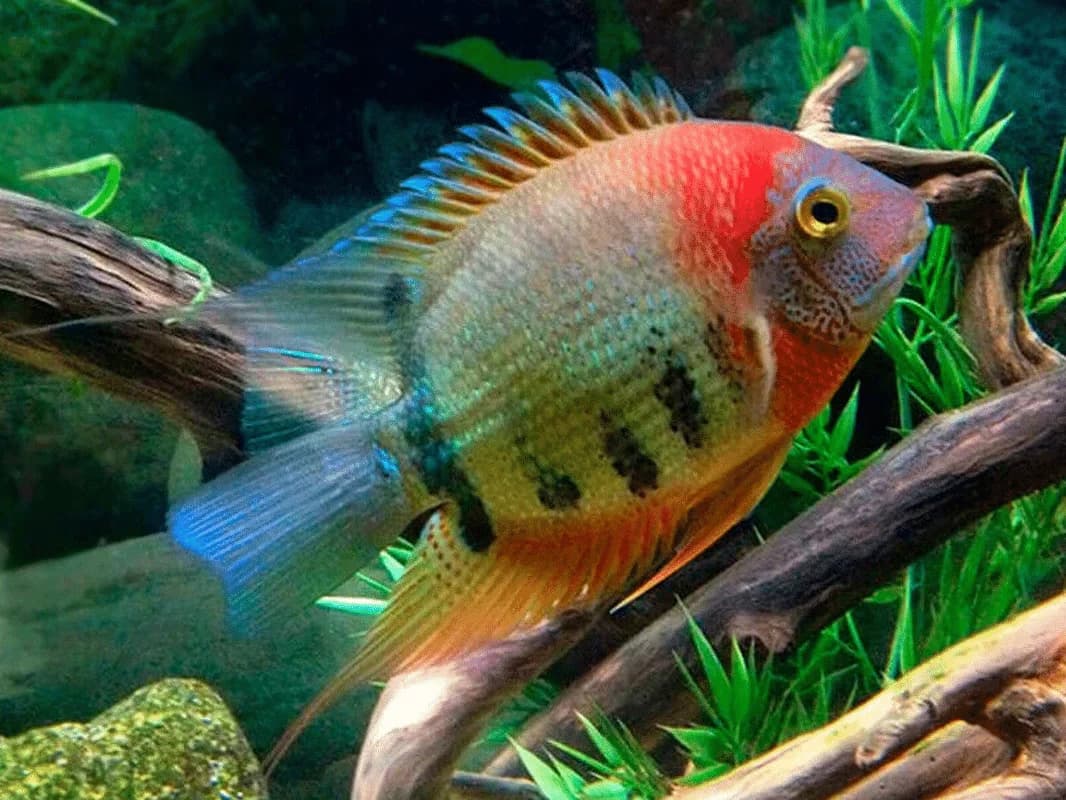
Heros efasciatus, the severum cichlid (also called the hero cichlid or banded cichlid), is a large, oval-bodied South American cichlid known for its gentle temperament relative to other large cichlids. Available in a variety of color forms including wild-type green, gold, and "super red," severums are handsome, intelligent fish suitable for large community tanks with other robust species.
Native to the Amazon and Orinoco river systems, severums inhabit slow-moving, warm, often tannin-stained rivers and flooded forest regions. They have a notably calm personality for a cichlid their size, making them one of the more approachable large cichlids for community setups.
Severums grow to 8–10 inches and are long-lived fish requiring a substantial commitment in tank size and filtration. Their reward is a beautiful, interactive fish that can become genuinely tame over time.
Basic Overview
Common Misconceptions
"Severums are peaceful and can go in any community." While more peaceful than most large cichlids, severums are still large fish that will eat anything small enough to fit in their mouth, and they are territorial during breeding. Community companions must be similarly large and robust.
"They are the same as blood parrots." Blood parrot cichlids are hybrids, while severums are a pure species. They look somewhat similar in body shape, but blood parrots are a completely different hybrid fish with ethical concerns surrounding their creation.
"Gold severums are a different species." Gold, green, and red severums are all color forms of the same or closely related Heros species. The gold form is a selectively bred variety, not a separate species.
"They do not need plants." Severums appreciate plant cover and will benefit from large, robust plants. While they may eat tender plant leaves, Java fern, anubias, and hornwort are generally ignored and create important cover.
Recommended Setup
- 55 gallon minimum for one adult; 75+ gallons for a pair
- Fine gravel or coarse sand substrate
- Large driftwood pieces and rock formations for territory definition
- Hardy plants: Java fern and anubias attached to wood and rocks, Vallisneria in the substrate
- Strong canister filtration with good flow
- Moderate to strong current; they appreciate oxygenated, flowing water
- Heater guard to protect the heater from an inquisitive or rearranging cichlid
Diet
Severums are omnivores with a strong plant-matter component to their diet in the wild, which distinguishes them from many other large cichlids:
- High-quality large cichlid pellets as a staple
- Blanched vegetables: zucchini, cucumber, peas, romaine lettuce (they genuinely enjoy greens)
- Frozen krill and mysis shrimp
- Frozen bloodworms and brine shrimp
- Occasional earthworms and feeder shrimp for enrichment
Feed once or twice daily. The plant matter component of their diet is important for long-term digestive health and reduces the risk of the bloat that can affect cichlids fed exclusively protein-heavy diets. Blanched zucchini or cucumber attached to a clip is a great way to provide greens.
Personality
Severums are often described as the "gentle giants" of the cichlid world. Compared to oscars, Jack Dempseys, or green terrors, they are significantly calmer and more willing to coexist with other fish. They still establish territories and will be assertive when breeding, but their baseline aggression is notably lower.
They are curious and personable fish that quickly learn to recognize their keeper. Tame adults often swim to the front of the tank to investigate and will take food from the hand with time and patience.
Breeding severums display genuine parental care typical of substrate-spawning cichlids, guarding eggs and fry actively. Unlike convicts, however, their defense behavior rarely extends to suicidal attacks on much larger fish; they are more measured in their responses.
Tank Mates
Severums are one of the more community-compatible large cichlids. Good companions include large peaceful fish like silver dollars, large plecos, giant gouramis, and bala sharks. In very large tanks (125+ gallons), they can be kept with other large South American cichlids like oscars or geophagus.
Avoid small fish (anything under 4 inches risk being eaten), very aggressive cichlids that might bully the generally calmer severum, and fin nippers.
Severums can sometimes be kept with large peaceful surface fish like silver arowanas in very large systems, though care must be taken to match species appropriately in terms of temperament and space requirements.
Water Parameters
Severums come from the warm, slightly soft South American river systems of the Amazon and Orinoco:
- pH: 6.0–7.5 (soft, slightly acidic preferred)
- Hardness (gH): 3–15 dGH
- Temperature: 76–84°F
- Ammonia and Nitrite: 0 ppm
- Nitrate: below 40 ppm (target below 20 ppm)
Here are some top tips to deal with unwanted parameters:
- Weekly 30–40% water changes are necessary for large fish producing significant waste. Strong filtration plus regular changes is the key combination.
- Driftwood benefits severums both as territory markers and as a natural water softener and pH buffer. Large pieces of driftwood complement their natural habitat.
- Soft, slightly acidic water brings out the best coloration, especially in wild-type green and red forms. Hard alkaline conditions cause chronic low-level stress and color fading.
- Monitor for ich and hole-in-the-head disease, two conditions that large cichlids are susceptible to in declining water quality. Both are preventable with good water change discipline.