Jack Dempsey Cichlid Care Guide
A Complete Care Guide for Rocio octofasciata
Introduction
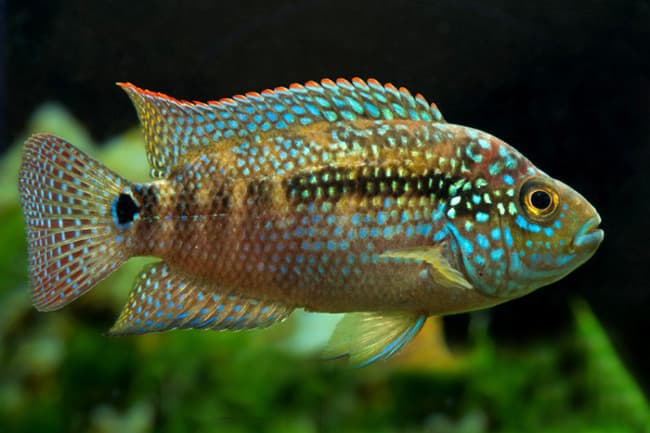
Rocio octofasciata, the Jack Dempsey cichlid, is a large, muscular, spectacularly colored cichlid from Central America. Named for the famously aggressive boxer Jack Dempsey because of their feisty temperament, these fish display iridescent blue-green and gold scales that appear almost metallic under aquarium lighting.
Jack Dempseys are native to slow-moving, warm, murky waters in Mexico, Guatemala, Belize, and Honduras. They are powerful fish that will rearrange any aquascape to their liking, uproot plants, and dig extensively. They need a tank that can withstand their natural behaviors.
They are a rewarding fish for intermediate to advanced keepers who want an intelligent, interactive, large cichlid that forms genuine bonds with their keeper. A well-kept Jack Dempsey is a genuinely impressive animal.
Basic Overview
Common Misconceptions
"Jack Dempseys can be kept in a community with peaceful fish." Adult Jack Dempseys will eat or bully most fish that are not similarly large and robust. They belong in a cichlid community with other large Central or South American cichlids of comparable size and temperament.
"They stay small." Males regularly reach 8–10 inches and require a 55-gallon tank at minimum just for a single individual. Plan for adult size before purchasing juveniles.
"Live plants work fine with Jack Dempseys." Jack Dempseys dig constantly and will uproot virtually any plant. If a planted aesthetic is desired, use very large, heavy plants anchored to driftwood or rocks (Java fern, anubias), or use artificial plants.
"Electric Blue Jack Dempseys are the same fish." Electric Blue Jack Dempseys are a line-bred color morph that often shows reduced growth and immune function compared to standard wild-type fish. They require more careful care.
Recommended Setup
- 55 gallon minimum for a single adult; 75+ gallons for a pair
- Smooth gravel or coarse sand substrate; they dig extensively
- Heavy rocks and driftwood as anchor points; use silicone to secure stacked rocks
- No live plants unless heavily weighted (Java fern and anubias on driftwood are acceptable)
- Strong, high-capacity filtration (canister filter recommended)
- Good surface agitation and oxygenation
- A sturdy heater protected in a heater guard to prevent breakage during rearrangement
Diet
Jack Dempseys are predatory omnivores in the wild, eating fish, invertebrates, insects, and plant matter. In the aquarium they accept a wide variety of foods:
- Large cichlid pellets or sticks as a primary staple
- Frozen krill, mysis shrimp, and silversides
- Frozen bloodworms and nightcrawlers
- Occasional live foods for enrichment: earthworms, feeder shrimp
- Blanched vegetables: zucchini, peas (for plant matter component)
Feed once daily. Jack Dempseys are enthusiastic eaters and will beg persistently, but overfeeding a large cichlid fouls the water quickly. Stick to a measured daily feeding and remove any uneaten food after an hour. As large fish, they produce substantial waste and need strong filtration and regular water changes.
Personality
Jack Dempseys are highly intelligent, interactive fish with strong individual personalities. They recognize their keepers and will follow them along the glass, appearing to interact with genuine curiosity and interest. Many become comfortable enough to accept food from their keeper's hand.
They are bold and confident, showing no fear of much larger objects. Their constant rearrangement of the tank is less destructive behavior than natural cichlid territory establishment. In a properly decorated tank with heavy stones and anchored wood, the rearrangement damage is manageable.
During breeding, both parents guard eggs and fry intensely. The colorful displays and coordinated parenting of a breeding pair are among the most visually impressive behaviors in the cichlid hobby.
Compatible Tank Mates
Jack Dempseys are best kept with other large, robust cichlids that can hold their own. Suitable companions include firemouth cichlids, severum cichlids, green terrors (with caution in smaller tanks), and large plecos.
In very large tanks (120+ gallons), they can sometimes coexist with oscars, convicts, and other large New World cichlids, provided each fish has adequate territory and there are sufficient visual barriers.
Avoid any fish small enough to be eaten, any slow or long-finned fish that would be bullied, and any gentle community fish. Also avoid pairing two male Jack Dempseys in a smaller tank; the resulting territorial conflict is usually severe.
Water Parameters
Jack Dempseys come from warm, slow-moving waters in Central America and are quite adaptable to aquarium conditions:
- pH: 6.5–8.0 (neutral to slightly alkaline preferred)
- Hardness (gH): 9–20 dGH
- Temperature: 72–86°F
- Ammonia and Nitrite: 0 ppm
- Nitrate: below 40 ppm (weekly changes to manage this in a heavily stocked cichlid tank)
Here are some top tips to deal with unwanted parameters:
- Weekly water changes of 30–40% are recommended, especially in a smaller tank with a large, messy cichlid. Nitrate buildup causes color fading and immune suppression.
- Invest in high-capacity filtration, ideally a canister filter rated for twice your tank volume. Jack Dempseys produce a large amount of waste for their size.
- Maintain stable temperature in the 76–80°F range for best health and color. Higher temperatures accelerate metabolism and may increase aggression.
- A small amount of aquarium salt (1 tablespoon per 10 gallons) can help with disease resistance and stress reduction for Central American cichlids, though it is not mandatory.