Oscar Cichlid Care Guide
The Ultimate Care Guide for Oscar Cichlids
Introduction
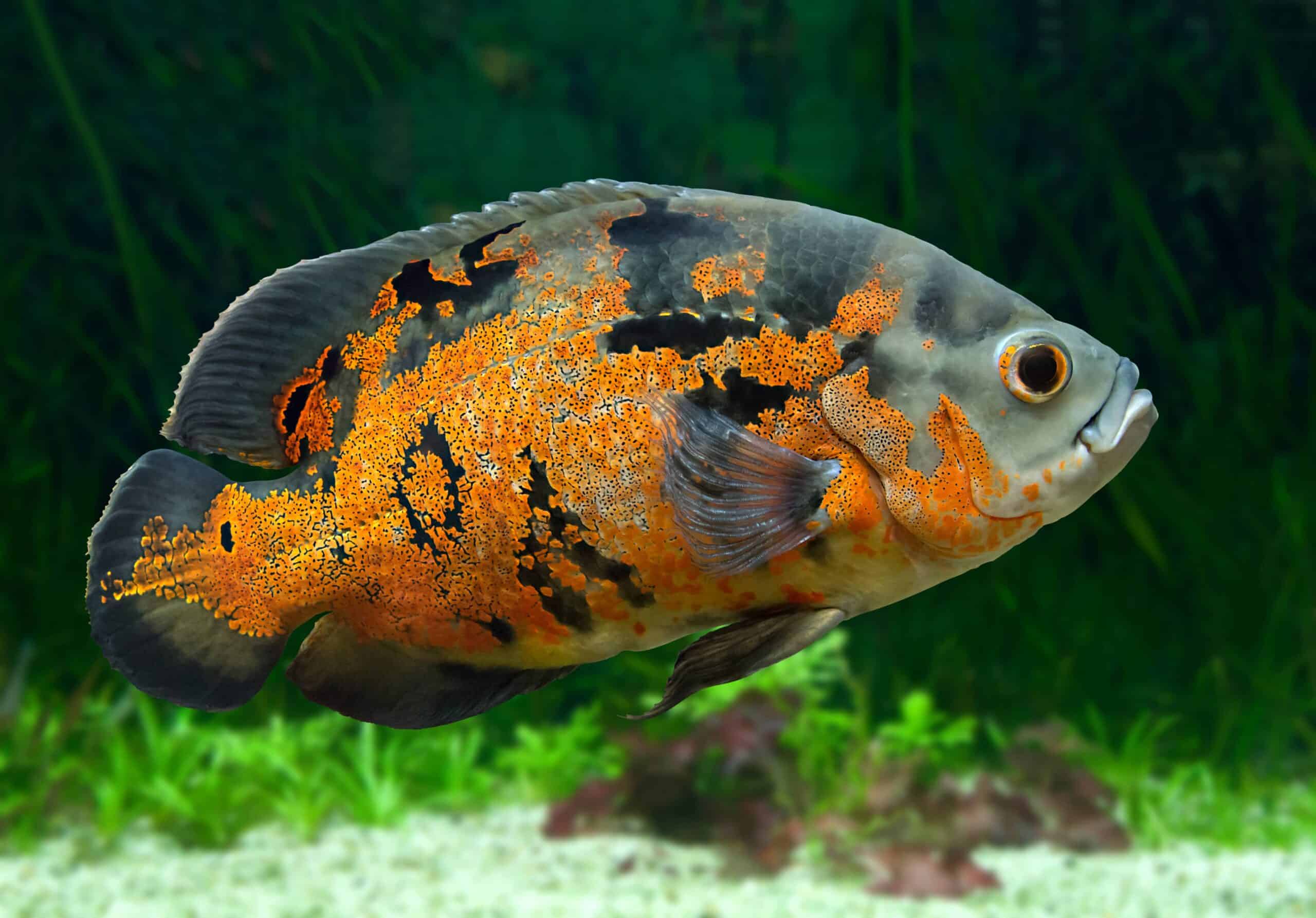
Astronotus ocellatus, commonly known as the oscar, is one of the most intelligent and personable fish in the freshwater hobby. They live roughly 10-15 years in captivity and prefer temperatures of 74-81 degrees Fahrenheit. They commonly reach 12-14 inches in size, which makes them one of the larger fish commonly kept in home aquariums.
Oscars are native to the slow-moving rivers and floodplains of the Amazon Basin and are members of the cichlid family. They are famous for their bold, interactive personalities. Oscars recognize their owners, beg for food at the glass, and have been known to allow gentle hand feeding. Keeping an oscar feels less like keeping a fish and more like keeping a pet.
Their intelligence and size come with significant care demands. Oscars require large tanks, powerful filtration, and regular maintenance. Cutting corners with an oscar almost always ends badly. But for the hobbyist willing to meet their needs, they are genuinely one of the most rewarding fish you can keep.
Basic Overview
Common Misconceptions
"Oscars can live in a 30 or 55 gallon tank!" Oscars grow fast, reaching 12+ inches in a couple of years. A 55-gallon tank is genuinely too small for a single adult oscar long-term. 75 gallons is the minimum, and bigger is always better.
"Oscars are just big, aggressive fish with no personality!" This could not be further from the truth. Oscars are among the most interactive and personable fish in the hobby. They know their owners, respond to their presence, and have distinct individual personalities.
"You can keep oscars with most fish if the tank is big enough!" Oscars will eat anything that fits in their mouth and may attack fish that do not. Tankmate selection requires care. Most smaller fish are simply food to an oscar, regardless of tank size.
"Oscar color patterns stay the same their whole lives!" Oscars can dramatically shift their coloration based on mood, stress, breeding condition, and age. A stressed oscar often looks very different from a relaxed, healthy one.
Recommended Setup
- 75+ gallon tank (125+ for pairs), cycled, with a lid, heater, and very powerful filtration
- Filtration rated for at least double the tank volume, oscars produce enormous amounts of waste
- Smooth, large rocks or driftwood (they will rearrange everything)
- Minimal decor, as oscars are notorious for redecorating their tank
- Bare bottom or large smooth gravel (fine substrate gets fouled quickly)
- Aquarium siphon (you will use it frequently)
Diet
Oscars are carnivore-leaning omnivores with a massive appetite. A healthy, varied diet includes:
High-quality large cichlid pellets as a staple
Frozen or live earthworms (a personal favorite for most oscars)
Frozen or live large shrimp
Frozen or live large feeder insects like crickets or mealworms
Blanched vegetables like peas, zucchini, or spinach (some individuals accept these)
Never feed feeder goldfish, as they can introduce disease and carry parasites
Feed once or twice daily, only what they can consume in a few minutes. Oscars are greedy eaters that will overeat given the chance, leading to bloat and poor water quality. Fasting one day per week is good practice.
Personality
Oscars are the dogs of the fish world. They greet their owners at the glass, follow movements around the room, beg enthusiastically at feeding time, and develop distinct individual personalities that make each one unique. Naming your oscar is not silly at all.
They are also notorious tank redecorators. Plants will be uprooted, rocks moved, and substrate rearranged constantly. Do not get attached to a specific aquascape in an oscar tank. Embrace the chaos.
Juveniles can be kept in groups, but adults often become intolerant of tankmates, even other oscars. If keeping a pair, they need to have bonded naturally, and even then, a divider and backup plan are wise precautions in case aggression escalates.
Compatible Tankmates
Finding suitable tankmates for oscars is genuinely challenging. Any fish small enough to fit in an oscar's mouth is a snack, which eliminates most community fish. Other large cichlids are sometimes kept with oscars, but aggression between individuals is unpredictable.
The most reliable tankmates are other large, robust fish of similar size: jack dempseys (with caution), severums, large plecos like the common pleco, and large catfish species like pictus catfish or striped raphael catfish.
The safest approach is a single oscar species tank. It sidesteps compatibility issues entirely and lets the oscar's personality take center stage, which is really the whole point of keeping one.
Water Parameters
Oscars prefer warm, soft water that mirrors their Amazon origins, but they are fairly adaptable. What matters more than perfect chemistry is consistently clean water, which is a challenge given how much waste they produce. Target:
- pH: 6.5-7.5
- gH: 50-150 PPM
- Temperature: 74-81 degrees Fahrenheit
Here are some top tips to deal with unwanted parameters:
- Oscars produce staggering amounts of waste. Weekly water changes of 30-50% are not excessive, they are necessary. Skipping water changes is the fastest way to make an oscar sick.
Powerful filtration is non-negotiable. A canister filter or a sump rated for double the tank volume is a great starting point.
Ammonia spikes are the most common cause of oscar illness. Test water parameters regularly and respond quickly to any readings above zero.
- Remember, using random chemicals is not recommended, since they can cause more problems through sudden, drastic changes.