Peacock Cichlid Care Guide
A Complete Care Guide for Aulonocara species
Introduction
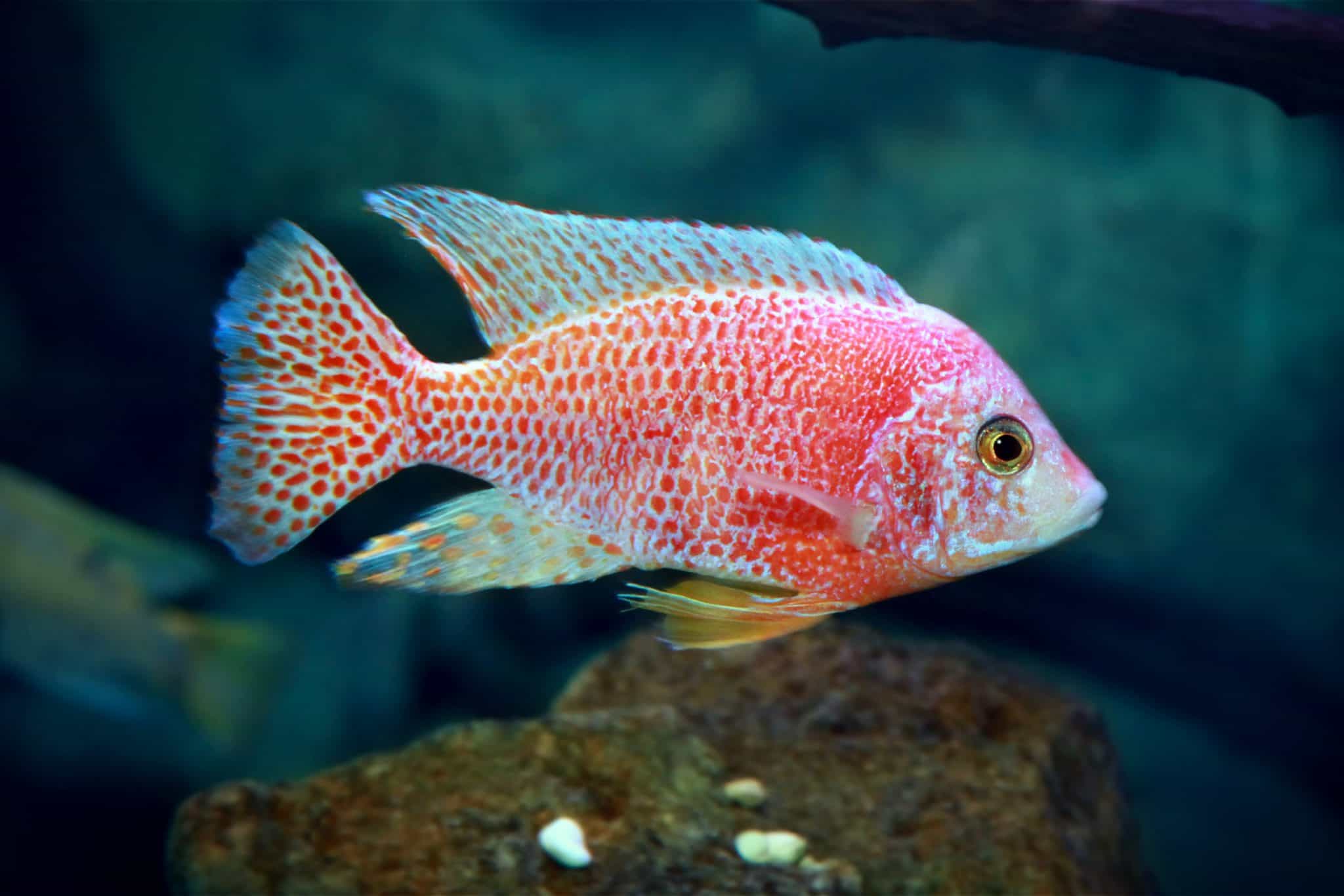
Aulonocara species, collectively known as peacock cichlids, are among the most colorful freshwater fish on earth. Native exclusively to Lake Malawi in East Africa, males of most species display breathtaking blues, yellows, oranges, and reds. They are the undisputed jewels of the African cichlid hobby.
Unlike many Lake Malawi cichlids that feed on algae (mbuna), peacocks are sand-sifters that feed on small invertebrates hidden in the sandy substrate. This feeding strategy and more peaceful temperament makes them distinctly different from their mbuna relatives and suitable for a different style of Malawi tank.
Peacock cichlids are maternal mouthbrooders: after spawning, the female carries eggs and fry in her mouth for 3–4 weeks. Males are brilliantly colored; females are typically silver-gray, allowing all the visual drama to come from the males.
Basic Overview
Common Misconceptions
"All African cichlids are the same." Lake Malawi cichlids alone span hundreds of species with very different diets, temperaments, and care requirements. Peacocks are significantly more peaceful than mbuna and should not be mixed with highly aggressive species.
"Peacocks can be kept with mbuna." The high aggression of mbuna is generally incompatible with the more peaceful peacocks in a 55-gallon tank. Either keep peacocks with Haps (haplochromines) or in a species-appropriate peacock-only setup.
"Males will always fight." In a large enough tank with enough females and visual barriers, multiple males can coexist. The key is providing sufficient space, rockwork for line-of-sight breaks, and a proper female-to-male ratio.
"They need the same care as South American cichlids." Peacocks need hard, alkaline water (pH 7.8–8.5) that is opposite to the conditions needed by South American species like discus and apistogrammas. Never mix their water chemistry requirements.
Recommended Setup
- 55+ gallon tank with sandy substrate
- Aragonite or crushed coral substrate to buffer pH and hardness (essential)
- Rock piles at the sides and back creating caves and visual barriers
- Open sandy areas in the center for natural sifting behavior
- Hard, alkaline water; pH 7.8–8.5
- Strong filtration; cichlids are messy feeders and produce significant waste
- Moderate flow and good oxygenation
Diet
Peacock cichlids are carnivore-leaning omnivores that sift sand for invertebrates in the wild. In the aquarium:
- High-quality cichlid pellets as a primary staple
- Frozen brine shrimp, mysis shrimp, and krill
- Frozen bloodworms (use in moderation; too much can cause bloat)
- Spirulina-based foods for plant matter component
- Live foods for breeding conditioning: brine shrimp, daphnia
Feed once or twice daily. Avoid high-protein mammalian foods (beef heart, beef liver) as cichlids from Lake Malawi can develop a fatal condition called "Malawi bloat" when fed foods too high in fat or incompatible proteins. Spirulina flakes alongside protein foods is a good balance.
Personality
Male peacock cichlids are stunning display fish that spend much of their time patrolling territories, displaying to females, and chasing rival males. Their colors are most intense when they are actively displaying, creating a constantly shifting visual spectacle.
Despite their territorial behavior during display and breeding, peacocks are significantly more peaceful than most cichlid species and much less aggressive than mbuna. Carefully chosen tank mates of comparable size and similar temperament can coexist successfully.
Females are quieter and less showy but equally interesting. A gravid (mouth-brooding) female stops eating for the 3–4 week brooding period, becoming visibly thinner. She should not be disturbed during brooding if you wish to raise fry.
Species Selection and Hybridization
There are dozens of Aulonocara species available in the hobby, ranging from the electric blue of A. nyassae to the yellow and blue of A. stuartgranti "Maleri" to the orange-red of A. hansbaenschi "Red Flush." Each is stunning in its own right.
Be aware that peacock cichlids hybridize readily with each other and with haplochromine cichlids. Many fish sold as "peacocks" in pet stores are hybrids rather than true species. If species purity is important to you, purchase from reputable cichlid specialist breeders.
A popular and visually stunning setup combines several Aulonocara species with a few Copadichromis or Placidochromis Hap species, creating a multi-species Malawi display. The key is choosing species of similar temperament and ensuring each male has enough space.
Water Parameters
Lake Malawi is one of the world's most chemically stable lakes, with hard, alkaline water that changes very little. Peacock cichlids need these conditions to thrive:
- pH: 7.8–8.5
- Hardness (gH): 10–20 dGH (hard water)
- Carbonate Hardness (kH): 10–18 dKH
- Temperature: 76–82°F
- Ammonia and Nitrite: 0 ppm
- Nitrate: below 20 ppm
Here are some top tips to deal with unwanted parameters:
- Use aragonite sand or crushed coral as substrate; it continuously buffers pH and hardness as it slowly dissolves, maintaining stable alkaline conditions.
- In soft tap water areas, add crushed coral to the filter or use a Rift Lake salt mix to achieve the correct hardness and alkalinity.
- Weekly 25–30% water changes prevent nitrate buildup. Malawi cichlids are surprisingly sensitive to high nitrates despite their reputation for hardiness.
- Never use driftwood or Indian almond leaves in a Malawi cichlid tank. These lower pH and hardness, which is the opposite of what these fish need.