Convict Cichlid Care Guide
A Complete Care Guide for Amatitlania nigrofasciata
Introduction
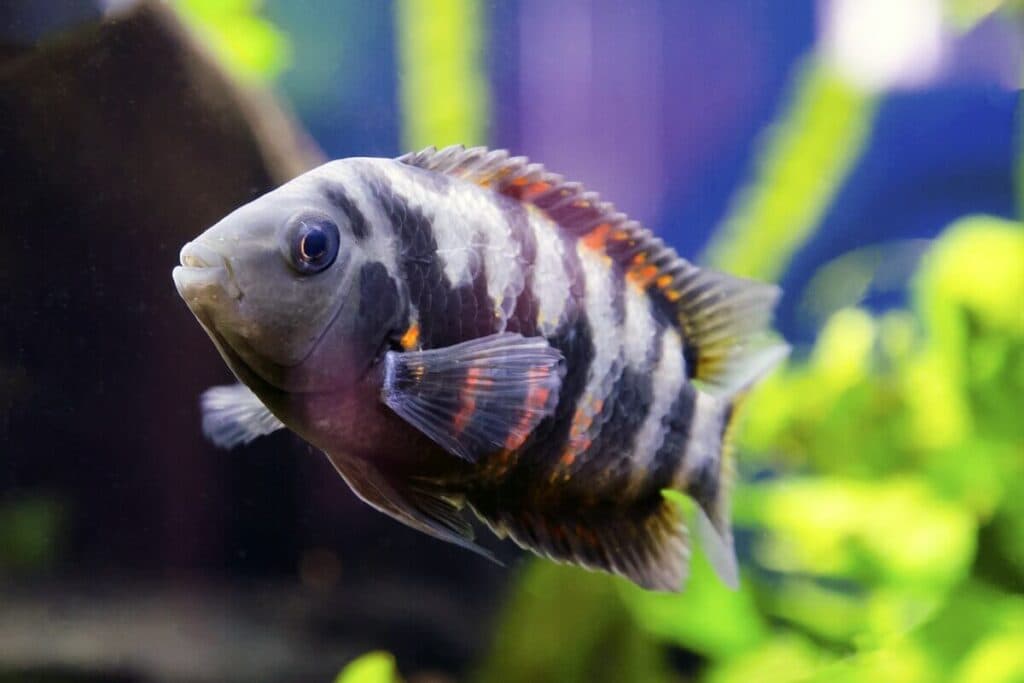
Amatitlania nigrofasciata, the convict cichlid (named for the black vertical bars on their silver bodies that resemble a prison uniform), is one of the hardiest and most prolific breeding cichlids in the hobby. Native to the fast-flowing rivers and streams of Central America, they are tough, adaptable, and will thrive in conditions that would stress many other fish.
Convict cichlids are a classic beginner cichlid, but do not let their accessibility fool you: they are feisty, territorial, and capable of significant aggression, especially when breeding. A spawning pair of convicts will defend their territory against any fish in the tank, regardless of size.
For hobbyists looking to experience cichlid breeding behavior for the first time, convicts are unmatched. They breed readily, are attentive parents, and the entire spawning and fry-rearing process is observable in a home aquarium.
Basic Overview
Common Misconceptions
"Convicts are good community fish." They are not. Outside of breeding they may tolerate tank mates, but a spawning pair will attack and kill virtually anything they can reach. Community keeping requires a large tank and robust, similarly sized tank mates.
"They need a heater." Convicts are more cold-tolerant than most tropical cichlids, surviving down to 60°F briefly. A heater is still recommended for consistent temperatures and best health, but they tolerate a wide range.
"They are too aggressive to be interesting." Their aggression is most visible in the context of their extraordinary parenting behavior, which is the main reason people keep them. Watching a pair defend fry against much larger fish is genuinely impressive.
"Any cichlid pellet food is sufficient." While they will eat virtually anything, a varied diet with plant matter and protein produces better health and coloration than a single pellet food alone.
Recommended Setup
- 30 gallon minimum for a breeding pair; 55+ gallons for a community
- Smooth gravel or sand substrate
- Caves, rocks, and driftwood for territory establishment and spawning sites
- Robust plants or artificial plants only; convicts will uproot and destroy live plants during breeding
- Moderate to strong filtration with good oxygenation
- Moderate current; they come from flowing river environments
- A separate grow-out tank for fry if you plan to raise them
Diet
Convict cichlids are opportunistic omnivores that eat almost anything in the wild including insects, plant matter, small fish, and detritus. In the aquarium they accept virtually every food offered:
- High-quality cichlid pellets or sticks as a staple
- Frozen bloodworms, brine shrimp, and mysis shrimp
- Blanched vegetables: zucchini, peas, cucumber
- Spirulina flakes for plant component
- Live foods for breeding conditioning: earthworms, brine shrimp
Feed once or twice daily. Convicts are greedy eaters and will beg constantly regardless of hunger level. Stick to a scheduled feeding routine and avoid overfeeding, which leads to fouled water and obesity.
Personality
Convict cichlids are bold, intelligent, and highly interactive fish. They recognize their keepers and will pace at the front of the tank during feeding time. Their personality is often described as "feisty" even during non-breeding periods.
When a pair forms and spawns, their entire character shifts. The pair becomes a unified, fierce defense team. The female guards the eggs and wrigglers intensely while the male patrols a wider perimeter, chasing anything that approaches. This behavior is extraordinary to observe.
Fry are herded by both parents in tight schools, and the parents communicate with each other through subtle movements and color changes. A successful convict family is one of the most impressive behavioral displays in the freshwater hobby.
Breeding Convicts
Convicts breed so readily that the challenge is often not triggering spawning but managing the frequency of it. A healthy, well-fed pair in a suitable tank will spawn every 4–6 weeks. Eggs are laid on flat rocks, inside caves, or on driftwood surfaces.
Incubation takes 48–72 hours. The parents move wrigglers to pits they dig in the substrate, and fry become free-swimming in another 5–7 days. First foods include baby brine shrimp, micro worms, and crushed fry flakes.
If you do not want to raise fry, you can remove the parents after spawning, remove the eggs, or simply let nature take its course in a community tank where other fish will eat the fry despite the parents' best efforts.
Water Parameters
Convict cichlids are among the hardiest cichlids available and tolerate a wide range of conditions:
- pH: 6.5–8.0 (very adaptable)
- Hardness (gH): 9–20 dGH (tolerates hard water well)
- Temperature: 68–82°F
- Ammonia and Nitrite: 0 ppm
- Nitrate: below 40 ppm (below 20 ppm preferred)
Here are some top tips to deal with unwanted parameters:
- Weekly 25–30% water changes are sufficient for a pair in an appropriately sized tank. During active breeding with fry, increase frequency slightly to maintain optimal water quality.
- Convicts tolerate most tap water conditions without modification. Standard dechlorinator treatment is all that is typically needed.
- Maintain good surface agitation and oxygenation. Convicts come from well-oxygenated rivers and appreciate good gas exchange.
- Avoid drastic temperature changes. While convicts tolerate a wide temperature range, rapid fluctuations can trigger disease in even this hardy species.