African Cichlid Tanks
Hard Water, Bold Colors, and Managing Aggression
Introduction
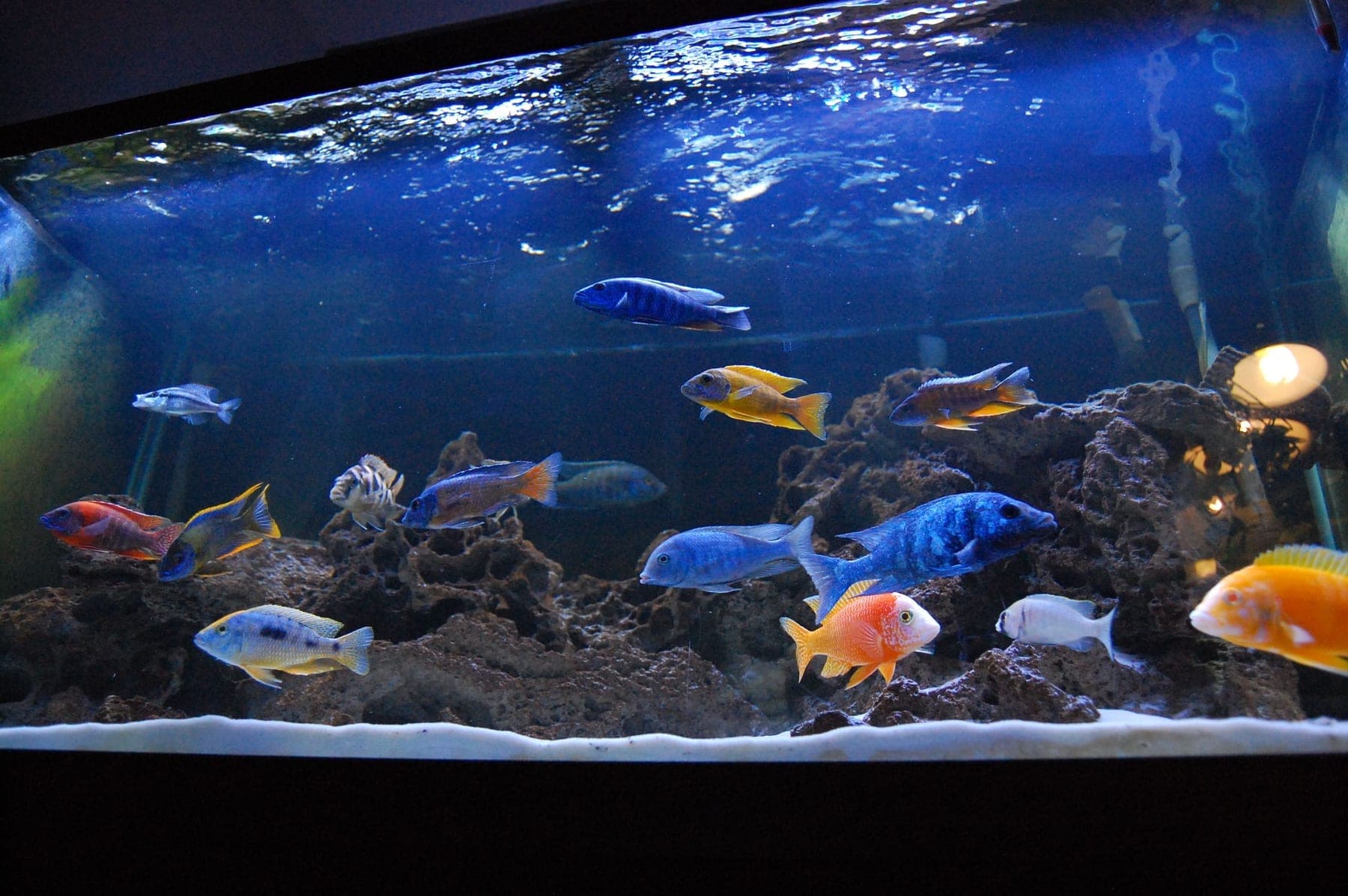
African cichlids from the Rift Valley lakes of East Africa, primarily Lake Malawi, Lake Tanganyika, and Lake Victoria, are among the most spectacularly colored freshwater fish in existence. The males of many mbuna (rock-dwelling Malawi cichlids) rival marine fish in the intensity of their blue, yellow, orange, and red coloration. They are also among the most behaviorally complex and entertaining fish you can keep, with strong personalities, social hierarchies, and fascinating breeding behavior.
They are not beginners' fish by any stretch. They are aggressive, territorial, have specific and non-negotiable water chemistry requirements, and will reorganize your carefully arranged aquascape into rubble within hours of introduction. But for the right hobbyist, an African cichlid tank is one of the most rewarding setups in freshwater fishkeeping.
Quick Overview
The Three Main Lake Groups
Lake Malawi Mbuna
Mbuna (a Tonga word meaning "rock fish") are the most commonly kept African cichlids, and for good reason: they are brightly colored, widely available, and the aggression management strategies for them are well established. Species like Pseudotropheus demasoni, Labidochromis caeruleus (the yellow lab), Melanochromis auratus, and dozens of Metriaclima species are all popular mbuna.
Mbuna are algae and aufwuchs grazers in the wild, requiring a diet high in vegetable matter and low in animal protein. A high-protein diet leads to a condition called Malawi bloat, which is often fatal.
Lake Malawi Peacocks and Haps
Peacock cichlids (Aulonocara species) and haplochromines are generally less aggressive than mbuna and occupy open water rather than rock crevices. They are often more brilliantly colored than mbuna and accept a broader diet. They can be mixed with each other with care but should not be kept with mbuna, which will outcompete and harass them.
Lake Tanganyika Cichlids
Tanganyikan cichlids are extraordinarily diverse, ranging from the tiny and fascinating shell dwellers (Neolamprologus multifasciatus, the world's smallest cichlid, which lives in empty snail shells) to large and predatory species like the frontosa. They tend to be more behaviorally complex and less frantically aggressive than mbuna.
Water Chemistry
All Rift Valley cichlids require hard, alkaline water, the opposite of most tropical community fish. This is non-negotiable and is the single most common reason African cichlid tanks fail.
- pH: 7.8-8.5 (some species prefer up to 9.0)
- General hardness (GH): 10-20 dGH
- Carbonate hardness (KH): 10-18 dKH (high KH buffers pH and prevents dangerous drops)
- Temperature: 76-82°F
If your tap water is naturally hard and alkaline, you are already well positioned. If it is soft, you will need to harden it using crushed coral in the filter or substrate, aragonite sand, or commercial buffer products. Crushed coral in a mesh bag in the filter is the most practical long-term solution.
Managing Aggression
The most common mistake with African cichlids is understocking. This seems counterintuitive, but mbuna tanks work on the principle of distributed aggression: with enough fish in the tank, no single individual can be singled out and bullied to death. An underpopulated mbuna tank often sees one dominant male terrorize and kill everything else.
- Stock mbuna tanks densely: at minimum 12-15 fish in a 55-gallon, more is often better
- Keep a harem structure for each species (one male to multiple females) or keep multiple males of different species
- Avoid keeping two male mbuna of the same or closely related species in the same tank; they will fight relentlessly
- Rearrange rocks when adding new fish to reset territorial boundaries and prevent established fish from immediately dominating the newcomer
- Provide extensive rockwork with caves, overhangs, and crevices that create many separate territories
The golden rule of mbuna: if a fish cannot hide from its aggressor, it will be killed. No amount of aggressor removal fixes a tank with inadequate territory structure. Rockwork is not decor in an African cichlid tank; it is life-support.
Decor and Tank Setup
African cichlid tanks should use substantial rockwork (limestone, Texas holey rock, or stacked slate) arranged to create dozens of small caves and visual barriers. Live plants are generally impractical with mbuna, which dig and uproot everything. Artificial plants are acceptable, or the tank can be left entirely as a rock biotope, which is actually the most authentic representation of the Lake Malawi shoreline.
Light-colored sand substrate reflects light beautifully, contrasts with the fish, and accurately represents the sandy lake floor between rock formations. Crushed coral or aragonite sand serves double duty as substrate and pH buffer.
Feeding African Cichlids
Diet is critically important for mbuna in particular. Their digestive system is designed for a diet of algae, biofilm, and plant matter with minimal animal protein. Feeding high-protein foods like bloodworms or tubifex worms to herbivore mbuna causes Malawi bloat: a condition of internal organ failure that is very difficult to treat and almost always fatal.
- Feed mbuna a spirulina-based pellet or cichlid pellet with plant matter listed as the primary ingredient
- Supplement with blanched spinach, kale, or spirulina wafers
- Peacock and hap cichlids tolerate more protein in their diet; high-quality cichlid pellets are appropriate
- Feed two small meals daily rather than one large one