Rosy Barb Care Guide
A Complete Care Guide for Pethia conchonius
Introduction
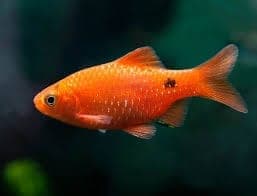
Pethia conchonius, the rosy barb, is one of the hardiest and most colorful of the barb species. Males develop a vivid pink-to-red blush across their body during breeding condition, deepening to almost crimson, while females are a more subdued gold-green. Their robust nature, active schooling behavior, and cool-water tolerance make them a popular choice for community tanks.
Native to the rivers of Pakistan, India, Nepal, and Bangladesh, rosy barbs are found in a wide range of water conditions from still ponds to fast-moving rivers. Their adaptability makes them tolerant of beginner mistakes and less-than-perfect conditions that would stress more delicate fish.
They are available in several forms including a long-finned variety. They are active, bold fish that prefer to be kept in schools and can be excellent fin nippers if kept in insufficient numbers or paired with slow, long-finned tank mates.
Basic Overview
Common Misconceptions
"Rosy barbs need tropical temperatures." Rosy barbs tolerate a wide temperature range (64–77°F) and actually prefer the cooler end of this range. They are suitable for unheated tanks in temperate climates and can be kept alongside goldfish with careful management.
"They are fin nippers and cannot go in community tanks." In groups of 6 or more, rosy barbs direct their energy at each other and nipping behavior toward other fish drops significantly. The key is keeping enough of them.
"Long-finned varieties are just as easy." Long-finned rosy barbs are more delicate than the standard form, more susceptible to fin damage, and their extended fins make them targets for fin nipping from other fish.
"They stay small." Rosy barbs grow to 3–4 inches, larger than many beginners expect. A 30-gallon long tank is needed for a proper school.
Recommended Setup
- 30+ gallon long tank for a school of 6
- Fine gravel or sand substrate
- Hardy plants along sides and back; rosy barbs may nibble tender plants
- Open swimming space in the middle of the tank; they are active swimmers
- Moderate filtration with some flow; they appreciate current
- No heater required in most temperate homes; a thermometer to monitor temperature
- Secure lid; active, jumpy fish
Diet
Rosy barbs are omnivores that eat insects, plant matter, and small invertebrates in the wild. They are enthusiastic and undemanding eaters:
- High-quality tropical flakes or small pellets as a staple
- Frozen bloodworms, brine shrimp, and daphnia
- Blanched vegetables: spinach, peas, zucchini
- Spirulina flakes for plant component
- Live foods for breeding conditioning
Feed once or twice daily. Rosy barbs are greedy and will eat anything offered quickly. Stick to measured feedings rather than feeding until they stop eating; overfeeding fouls the water rapidly.
Personality
Rosy barbs are boisterous, energetic fish that are in constant motion throughout the tank. Males chase each other and display to females with intensified pink-red coloration, creating a lively, active display. They are confident fish that are never shy and are visible at all times.
In adequate numbers they are focused primarily on each other, which reduces interaction with other fish in the tank. In too small a group, their energy is redirected toward nipping other fish. The solution is always to add more rosy barbs.
They are highly adaptable and forgiving fish that make excellent choices for beginner community tanks or for unheated cool-water setups where most tropicals cannot survive.
Cool Water Community Options
Rosy barbs are one of the few colorful schooling fish that can be kept in a cool-water community alongside goldfish, white cloud mountain minnows, and dojo loaches. Their temperature range overlaps enough with these species to create an unusual cool-water community that does not require a heater.
In a cool-water setup, keep temperatures consistently in the 65–72°F range. Rosy barbs at these temperatures are slower than at warm tropical temperatures but remain healthy and colorful.
Avoid mixing with true tropical fish (76°F+) unless you are willing to keep the tank at the warmer end of the rosy barb range, where they remain healthy but are somewhat below optimal conditions.
Water Parameters
Rosy barbs are extremely adaptable and among the hardiest of the barb species:
- pH: 6.0–8.0 (very adaptable)
- Hardness (gH): 2–25 dGH (very adaptable)
- Temperature: 64–77°F
- Ammonia and Nitrite: 0 ppm
- Nitrate: below 30 ppm
Here are some top tips to deal with unwanted parameters:
- Weekly 25% water changes are all that is typically needed. Rosy barbs are among the most forgiving fish for beginner water management mistakes.
- Standard tap water in virtually any area suits rosy barbs without modification. A quality dechlorinator is all that is needed.
- Cooler temperatures (65–72°F) extend their lifespan compared to keeping them at the warm end of their range. Avoid temperatures above 80°F.
- Good surface agitation benefits these active fish. They come from a variety of water types but prefer well-oxygenated conditions.