Odessa Barb Care Guide
A Complete Care Guide for Pethia padamya
Introduction
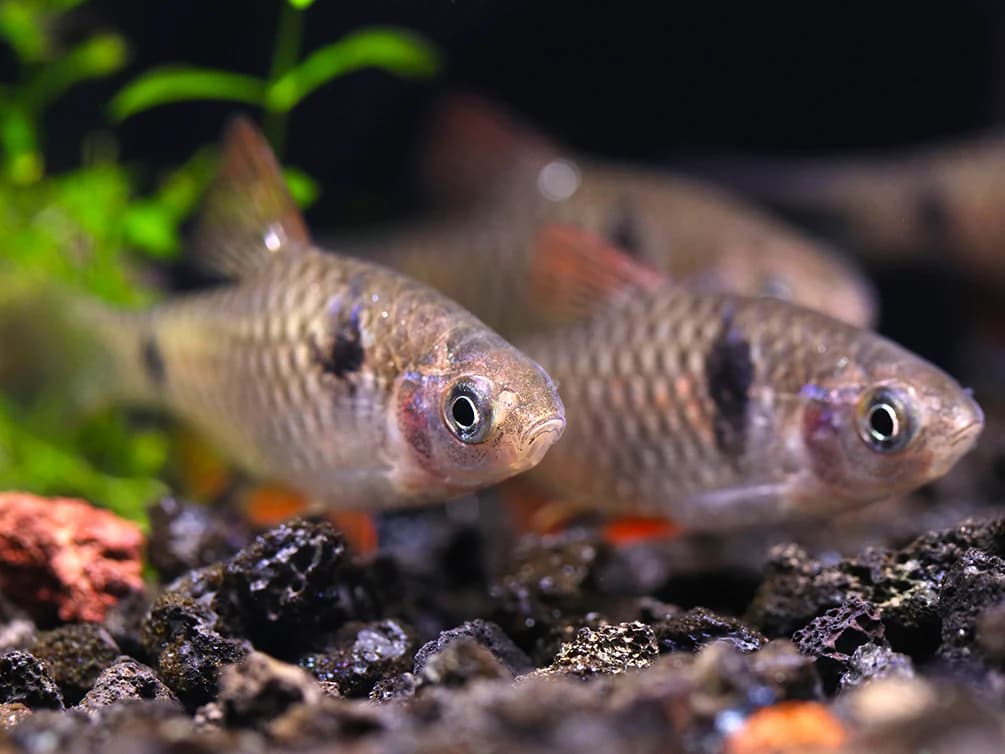
Pethia padamya, the Odessa barb, is a strikingly colored small barb from Myanmar. Males display a vivid crimson to orange-red horizontal stripe flanked by iridescent scales, making them one of the most colorful barb species available. Their name originates from a Ukrainian fish market where they first appeared in the Western hobby, though they are native to the Irrawaddy River drainage in Myanmar.
Native to a single small lake system in Myanmar (Inle Lake and surrounding waters), Odessa barbs inhabit shallow, warm, vegetated water over fine substrate. They are a relatively new species to science, formally described in 2008.
Odessa barbs are easy to care for and excellent for planted community tanks. Their size (3 inches), peaceful schooling temperament, and extraordinary male coloration make them one of the premium small barb choices for the planted aquarium hobby.
Basic Overview
Common Misconceptions
"They need tropical temperatures." Odessa barbs prefer cool water (65-75 degrees F) from their highland Myanmar habitat. They tolerate tropical temperatures but thrive and show best color in cooler conditions. This is one of the most overlooked aspects of their care.
"They will aggressively nip all fins." Odessa barbs have mild nipping tendency, much less pronounced than tiger barbs. In groups of 6 or more with appropriate active tank mates, fin-nipping is rarely a problem. Avoid pairing with bettas or long-finned fish.
"Females are drab and not worth including." While females lack the crimson stripe of males, they have attractive olive-silver coloration with spots. A mixed group of both sexes is natural and shows the most complete behavioral repertoire.
"Any barb food is fine." Odessa barbs show the most intense red coloration when fed color-enhancing foods with astaxanthin or carotenoids. A varied diet including color-enhancing components significantly improves male coloration.
Recommended Setup
- 25+ gallon tank for a group of 6-8
- Dense planted setup with open swimming space
- Cool water; no heater required in most rooms
- Moderate flow
- Dark substrate to enhance color contrast
- Good filtration
Diet
Odessa barbs are omnivores that accept most standard community foods:
- High-quality small flake or pellets
- Color-enhancing foods with astaxanthin (important for red stripe intensity)
- Frozen bloodworms
- Frozen brine shrimp
- Blanched vegetables
Feed twice daily. The intensity of the male red stripe is directly influenced by diet. Color-enhancing flake or pellets with astaxanthin or spirulina produce noticeably more vivid coloration than standard community food alone.
Personality
Odessa barbs are active, bold schooling fish with a natural energy that keeps a tank lively. Males display to each other with fin-spreading and circling, using the vivid red stripe as a dominance signal. These displays are sustained and visually striking.
Their relatively mild temperament compared to tiger barbs makes them accessible for most community setups. They coexist well with other active fish of similar size: danios, other barbs, robust tetras, and loaches.
A group of 8 Odessa barbs in a densely planted tank under appropriate lighting is a spectacular sight. The combined effect of multiple males displaying their crimson stripes against green plants is one of the most visually rewarding small community tank combinations.
Water Parameters
Odessa barbs come from the cool, slightly soft waters of highland Myanmar:
- pH: 6.5-7.5
- Hardness (gH): 5-15 dGH
- Temperature: 65-77 degrees F
- Ammonia and Nitrite: 0 ppm
- Nitrate: below 25 ppm
Here are some top tips to deal with unwanted parameters:
- Cool temperature (65-75 degrees F) is important for longevity and color intensity. Room temperature in most homes is appropriate without a heater.
- Standard community tank parameters are adequate. They are not demanding about water chemistry.
- Weekly 25% water changes maintain good conditions.
- Good oxygenation is beneficial given their cool, flowing stream origins.