Gold Barb Care Guide
A Complete Care Guide for Barbodes semifasciolatus
Introduction
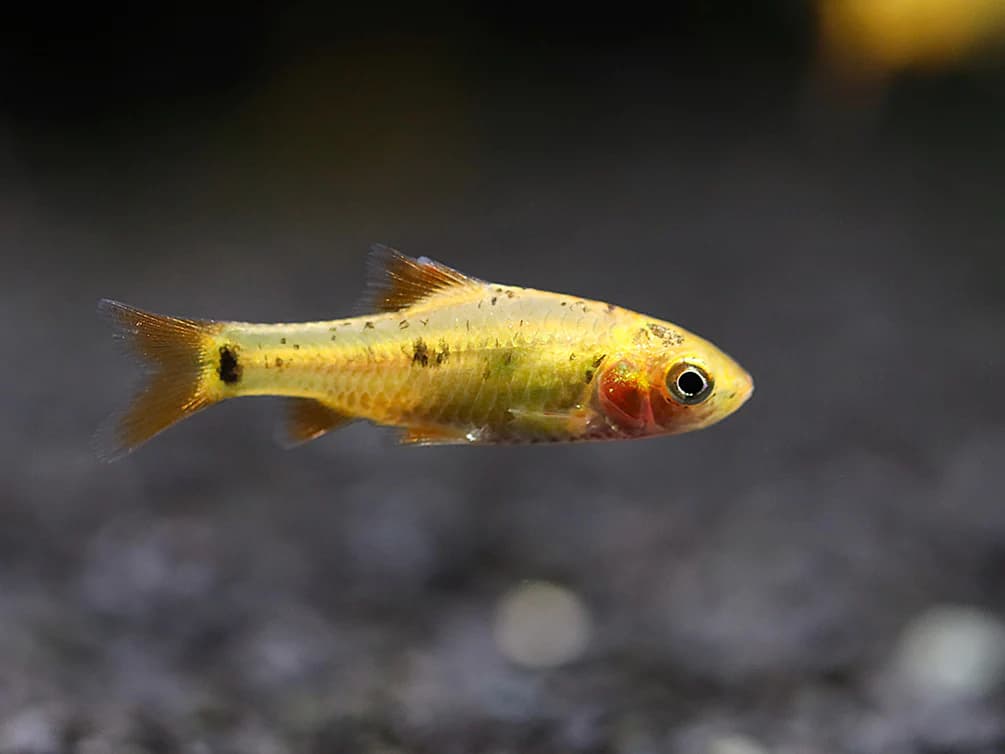
Barbodes semifasciolatus, the gold barb (also known as the Schuberti barb or Chinese barb), is a lively, attractive schooling fish available in the vibrant gold and orange selectively bred color form that gave the species its common name. They are active, hardy, and undemanding, making them one of the best choices for beginning aquarists looking for a colorful schooling fish.
Native to southern China, Vietnam, and surrounding countries, the wild form of the species is olive-green with partial black banding. The gold form available in the hobby is a domesticated color variety developed through selective breeding. They inhabit streams, ponds, and river margins in their native range.
Gold barbs are easy to care for and highly adaptable. They tolerate a range of water conditions, accept most foods readily, and their active daytime behavior makes them engaging display fish. Their slight tendency toward fin-nipping should be managed through appropriate tank mate selection.
Basic Overview
Common Misconceptions
"They need tropical temperatures." Gold barbs prefer cooler water (64-75 degrees F) than most tropical fish. They originate from the cooler mountain streams of southern China. Persistent temperatures above 78 degrees F shorten their lifespan and reduce activity.
"They will not bother other fish." Gold barbs can fin-nip, particularly targeting long-finned or slow-moving fish. Avoid keeping them with bettas, angelfish with long fins, or fancy guppies. Keep them with robust, fast-moving fish or in single-species setups.
"A pair or trio is fine." Like all barbs, gold barbs exhibit much less fin-nipping behavior when kept in groups of 6 or more. In large groups, social interaction within the school occupies them and reduces harassment of other fish.
"The gold color is always present." Gold barbs can fade in poor conditions, stress, or incorrect temperature. Vivid gold-orange coloration indicates a healthy, comfortable fish. Pale, washed-out color is a stress indicator.
Recommended Setup
- 20-30+ gallon tank for a school of 6-8
- Open swimming space with planted areas
- Moderate flow; they appreciate current
- Good oxygenation; cool water holds more oxygen
- Fine to medium gravel or sand substrate
- Hardy plants that tolerate cooler temperatures (anubias, java fern, vallisneria)
- Avoid keeping at tropical temperatures; room temperature or slightly warmed is fine
Diet
Gold barbs are omnivores that readily accept most aquarium foods:
- High-quality flake or small pellets as a staple
- Frozen bloodworms and brine shrimp
- Blanched vegetables: zucchini, peas, spinach
- Frozen daphnia
- Algae wafers (supplemental)
Feed twice daily in moderate amounts. Gold barbs are enthusiastic feeders that will eat almost anything. A varied diet with both protein and plant matter maintains the best health and coloration.
Personality
Gold barbs are bold, energetic, and entertaining schooling fish that are almost constantly in motion. A group of 8 or more in a moderately planted tank creates a lively, dynamic display of darting gold-orange fish.
Males display to each other with fin-spreading and chasing, particularly during feeding and when competing for female attention. These interactions are energetic but rarely harmful in adequately sized groups.
Their hardiness and tolerance of cooler water make them useful for tanks in rooms without heaters, or for seasonal outdoor pond setups in mild climates. Gold barbs are versatile fish that adapt to a wider range of conditions than most tropical species.
Water Parameters
Gold barbs prefer cooler, well-oxygenated water reflecting their mountain stream origins:
- pH: 6.0-8.0 (highly adaptable)
- Hardness (gH): 5-19 dGH (adaptable)
- Temperature: 64-75 degrees F
- Ammonia and Nitrite: 0 ppm
- Nitrate: below 25 ppm
Here are some top tips to deal with unwanted parameters:
- Cool temperature is the most critical parameter for gold barbs. Temperatures above 78 degrees F cause chronic stress, reduced lifespan, and increased disease susceptibility.
- They are unusually pH and hardness tolerant and adapt to a very wide range of tap water chemistry. Standard tap water is appropriate in most areas.
- Good oxygenation is important, especially at the lower temperature end of their range. Ensure surface agitation for good gas exchange.
- Weekly 25% water changes maintain good conditions. Standard community tank maintenance routines are entirely adequate.