Red Panda Barb Care Guide
A Complete Care Guide for Pethia padamya
Introduction
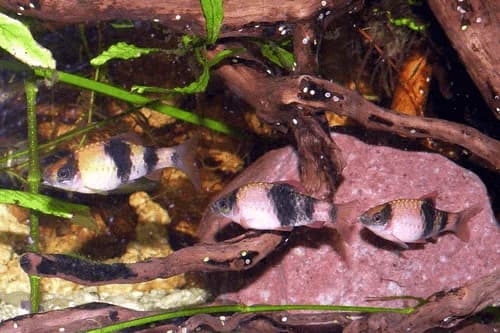
Pethia padamya, the red panda barb (also called the Scarlet barb or Padamya barb), is a small, vivid barb from Myanmar. Males display a striking combination of vivid red-orange body coloration with black fin markings -- a bold, saturated red that is unusually intense for a small barb. The "panda" in their name refers to the black and red contrast rather than any panda-like pattern.
Native to rivers and streams in the Irrawaddy drainage of Myanmar, red panda barbs inhabit clear, moderately flowing water with soft to moderate hardness. They were described scientifically only in 2008 and have become increasingly popular in the planted tank hobby.
Red panda barb care is easy. Their peaceful temperament, small size (2 inches), vivid coloration, and adaptability to standard community conditions make them excellent schooling fish for planted tanks. They are one of the most colorful barbs available for smaller aquariums.
Basic Overview
Common Misconceptions
"They are fin nippers like other barbs." Red panda barbs are peaceful barbs that are not prone to fin-nipping in appropriate group sizes. Unlike tiger barbs, they are generally safe with long-finned community fish.
"Their red color is artificial." The vivid red-orange coloration of male P. padamya is entirely natural and genetic. It intensifies with good water quality, soft water, and a varied diet.
"A school of 4 is adequate." Groups of 8-10 or more produce natural schooling behavior and the most impressive collective red display. Smaller groups are more timid.
Recommended Setup
- 20+ gallon planted tank for a school of 8-10
- Dark substrate to maximize red coloration contrast
- Dense planting with open swimming areas
- Soft, slightly acidic water for best coloration
- Gentle to moderate flow
- Good filtration
Diet
Red panda barbs are omnivores that accept most standard small community foods:
- High-quality small flake or micro pellets
- Frozen baby brine shrimp
- Frozen daphnia
- Frozen bloodworms
- Blanched vegetables
Feed twice daily. A varied diet with frozen protein foods maintains the most intense red coloration in males. They are enthusiastic, non-fussy feeders.
Personality
Red panda barbs in a school are vivid, active fish that bring genuine color intensity to a planted community tank. Their saturated red-orange with black fin accents creates a bold visual impact unlike most small barbs.
Males display to each other within the school, intensifying their red coloration and spreading fins. In good conditions, the collective schooling display of mature males is one of the most vivid small-barb displays available.
Their peaceful temperament and small size make them compatible with a wide range of planted community fish, from small tetras and rasboras to corydoras and dwarf shrimp.
Water Parameters
Red panda barbs come from the clear rivers of the Irrawaddy drainage, Myanmar:
- pH: 6.0-7.5
- Hardness (gH): 3-12 dGH
- Temperature: 72-79 degrees F
- Ammonia and Nitrite: 0 ppm
- Nitrate: below 20 ppm
Here are some top tips to deal with unwanted parameters:
- Soft, slightly acidic water produces the most intense red coloration.
- Standard community tank parameters work well for this adaptable species.
- Weekly 25% water changes maintain good conditions.
- Dark substrate significantly enhances the visual impact of their red coloration.