Rhombo Barb Care Guide
A Complete Care Guide for Desmopuntius rhomboocellatus
Introduction
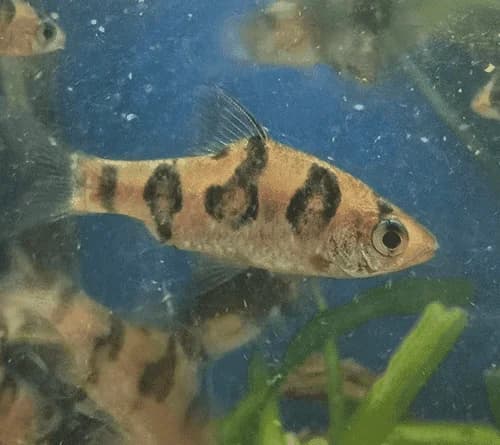
Desmopuntius rhomboocellatus, the rhombo barb (also called the rhombus barb or spotted barb), is a small, attractively patterned barb from Southeast Asia. Their body is marked with a series of large, rhombus-shaped or diamond-shaped dark spots arranged along the lateral line, with reddish-orange fin coloration creating an attractive contrast. Males are more vivid with deeper fin color.
Native to clear, slow to moderately flowing streams and peat swamps in Borneo and Sumatra, rhombo barbs inhabit soft, acidic, tannin-stained water with abundant vegetation. Their blackwater habitat preference distinguishes them from many other barb species.
Rhombo barb care is easy to moderate. Their preference for soft, acidic water is their primary care distinction from typical barb species. In appropriate conditions, they are active, attractive schooling fish for planted nano and community tanks.
Basic Overview
Common Misconceptions
"Hard water is fine." Rhombo barbs come from soft, acidic peat swamp water. Hard or alkaline conditions suppress their color and reduce vitality. Soft, slightly acidic water is important for maintaining their best appearance.
"They are fin nippers like some barbs." Rhombo barbs are peaceful and not prone to fin-nipping in appropriate group sizes.
"Their spots indicate disease." The rhombus-shaped spots are a permanent, natural feature of this species. They are not a sign of disease.
Recommended Setup
- 20+ gallon planted tank
- Soft, acidic water
- Dark substrate
- Dense planting with open areas
- Indian almond leaves or driftwood
- Gentle to moderate flow
Diet
Rhombo barbs are omnivores that accept most small aquarium foods:
- High-quality small flake or micro pellets
- Frozen baby brine shrimp
- Frozen daphnia
- Frozen bloodworms
Feed twice daily. A varied diet with frozen protein foods maintains the most vivid rhombus spot pattern and red fin coloration.
Personality
Rhombo barbs in a school are lively, sociable fish with a distinctive spot pattern that becomes particularly visible when the school turns simultaneously. Their red-orange fin accents against pale body with dark diamond spots create an attractive visual.
Their blackwater origin makes them compatible with other soft-water community fish: tetras, rasboras, corydoras, and dwarf shrimp in a planted Southeast Asian biotope setup.
In a dark-substrate, tannin-stained planted tank, a school of 15 rhombo barbs creates an attractive, active display that rewards keepers who appreciate the subtler beauty of patterned schooling fish.
Water Parameters
Rhombo barbs come from the soft, acidic peat swamps and streams of Borneo and Sumatra:
- pH: 5.5-7.0
- Hardness (gH): 1-8 dGH (soft water important)
- Temperature: 72-79 degrees F
- Ammonia and Nitrite: 0 ppm
- Nitrate: below 15 ppm
Here are some top tips to deal with unwanted parameters:
- Soft, acidic blackwater conditions produce the most vivid patterning and best health.
- Indian almond leaves and driftwood add tannins naturally.
- Very gentle flow. Sponge filtration is appropriate.
- Weekly 20-25% water changes maintain stability.