Red Tail Loach Care Guide
A Complete Care Guide for Yasuhikotakia modesta
Introduction
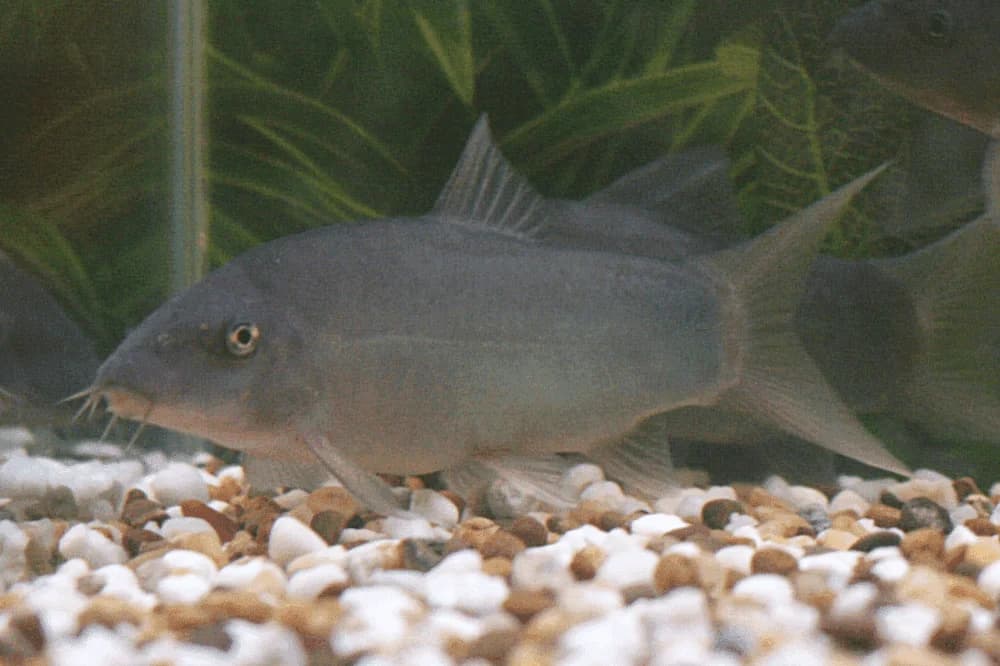
Yasuhikotakia modesta, the red tail loach (also called the orange finned loach or blue botia), is a medium-sized Southeast Asian loach with a distinctive blue-grey body and vivid orange-red fins. Their bold fin coloration against the grey body creates a striking contrast. They are social, active fish with interesting personality and typical Botia-family behavior.
Native to rivers in Thailand, Laos, Cambodia, and Vietnam, including the Mekong River system, red tail loaches inhabit moderate to fast-flowing rivers with rocky and sandy substrates. They are found in groups and exhibit the social behaviors characteristic of Botia loaches.
Red tail loach care is easy to moderate. Their need for groups of 4 or more, active behavior, and moderate adult size make them suitable for medium to large community tanks. Their striking orange-red fins and active personality make them engaging display fish.
Basic Overview
Common Misconceptions
"They can be kept singly or in pairs." Red tail loaches kept alone or in pairs become stressed and may develop aggressive behavior toward tank mates. Groups of 4 or more distribute social energy within the group and produce calmer, healthier fish.
"They are small loaches." At 6-8 inches as adults, red tail loaches are substantially larger than kuhli or smaller Botia species. A 75-gallon minimum tank is appropriate for a small group.
"They are peaceful with all fish." While generally peaceful with fish of different body shapes, red tail loaches can be aggressive toward each other in small groups. They may also bully shy, retiring fish.
"Their clicking is alarming." Clicking sounds produced by the suborbital spine are normal Botia family behavior used during social interaction. Hearing clicking indicates the loaches are actively communicating and is a sign of healthy social behavior.
Recommended Setup
- 75+ gallon tank for a group of 4-5
- Fine sand substrate
- Caves, smooth rocks, and hiding spots
- Good filtration and moderate flow
- Protected filter intakes
- Compatible community tank mates of appropriate size
Diet
Red tail loaches are omnivores with strong carnivore tendencies:
- Sinking pellets as primary food
- Frozen bloodworms
- Frozen brine shrimp
- Blanched vegetables
- Small snails (natural behavioral enrichment)
Feed once daily in the evening. They are enthusiastic, competitive feeders. Ensure all group members receive food by distributing it across the tank floor.
Personality
Red tail loaches in a group of 4-5 are active, bold fish with clear social hierarchies and interesting group dynamics. Their orange-red fins against a blue-grey body make them visually striking in motion.
Their clicking communication, competitive feeding behavior, and social pile-resting habits make them entertaining and engaging to observe. Unlike more sedentary loaches, they are active throughout the day in groups.
In a large planted community tank with sandy substrate, smooth rocks, and appropriate companions, red tail loaches are one of the most active and visually impressive medium-sized loaches available.
Water Parameters
Red tail loaches come from the moderate to fast-flowing rivers of Southeast Asia:
- pH: 6.5-7.5
- Hardness (gH): 5-15 dGH
- Temperature: 75-86 degrees F
- Ammonia and Nitrite: 0 ppm
- Nitrate: below 20 ppm
Here are some top tips to deal with unwanted parameters:
- Standard community tank parameters are appropriate.
- Good filtration and moderate flow.
- Weekly 25-30% water changes.
- Avoid copper-based medications.