Gold Zebra Loach Care Guide
A Complete Care Guide for Botia histrionica
Introduction
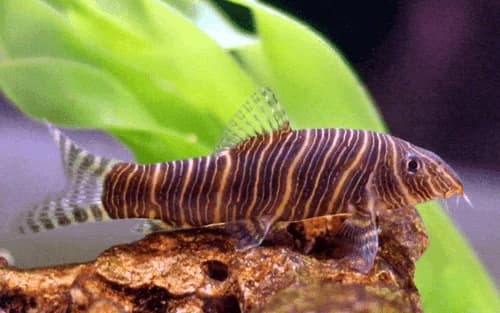
Botia histrionica, the gold zebra loach (also called the Burmese loach or banded loach), is a striking loach from Myanmar and India with a distinctive pattern of alternating yellow-gold and dark brown to black bands that cover the entire body. Their bold banding pattern, active social behavior, and moderate size make them one of the more visually impressive loaches in the hobby.
Native to rivers and streams in Myanmar (Burma) and northeastern India, gold zebra loaches inhabit moderately flowing water with rocky and sandy substrates. They are found in groups and are social fish that do not thrive when isolated.
Gold zebra loach care is easy to moderate. Their need for groups of 4 or more, a varied diet, and good water quality are the primary care considerations. In appropriate setups they are active, engaging fish with interesting social behavior.
Basic Overview
Common Misconceptions
"They can be kept singly or in pairs." Gold zebra loaches are social fish that require groups of 4 or more for psychological wellbeing. Solo or paired loaches become shy, inactive, and prone to stress-related illness.
"They are strictly nocturnal." Gold zebra loaches, like most Botia species, are active throughout the day in groups with good hiding spots. They become increasingly bold over time as they establish comfort in their tank.
"They communicate silently." Gold zebra loaches produce audible clicking sounds when interacting with group members, particularly during feeding or social conflict. This clicking is produced by the suborbital spine and is entirely normal.
"They will eat all pest snails efficiently." While gold zebra loaches do eat snails, they target smaller snails and may ignore large specimens. They are effective at managing ramshorn and bladder snail populations but should not be relied upon to eliminate all snails.
Recommended Setup
- 40+ gallon tank for a group of 4-5
- Fine sand substrate for burrowing
- Caves, smooth rocks, and hiding spots
- Good filtration with protected intake
- Moderate flow
- Some planting for cover
Diet
Gold zebra loaches are omnivores that accept a wide range of sinking foods:
- Sinking pellets as primary food
- Frozen bloodworms
- Frozen brine shrimp
- Blanched vegetables: zucchini, peas
- Live or frozen snails (small ones)
Feed once daily in the evening. Gold zebra loaches are enthusiastic feeders that compete actively at feeding time. Sinking foods placed throughout the tank ensure all group members receive adequate nutrition.
Personality
Gold zebra loaches in a group are dynamic, interactive fish with a distinct social life. They play-chase, rest in piles, investigate every aspect of their environment, and produce characteristic clicking sounds that add an auditory dimension to their presence.
Their bold gold-and-black banding pattern is vivid and clearly visible as they move through the tank. In a group in a well-planted 55-gallon tank, they provide constant activity in the lower and mid-water zones.
Their snail-eating behavior serves a practical purpose in tanks with ramshorn or bladder snail overpopulation, reducing snail numbers while the loaches provide their own entertainment.
Water Parameters
Gold zebra loaches come from the rivers and streams of Myanmar and northeastern India:
- pH: 6.5-7.5
- Hardness (gH): 5-15 dGH
- Temperature: 74-82 degrees F
- Ammonia and Nitrite: 0 ppm
- Nitrate: below 20 ppm
Here are some top tips to deal with unwanted parameters:
- Standard community tank parameters are appropriate.
- Good filtration and regular water changes maintain the low-nitrate conditions they prefer.
- Protect filter intakes with pre-filter sponges.
- Avoid copper-based medications.