Red-bellied Piranha Care Guide
A Complete Care Guide for Pygocentrus nattereri
Introduction
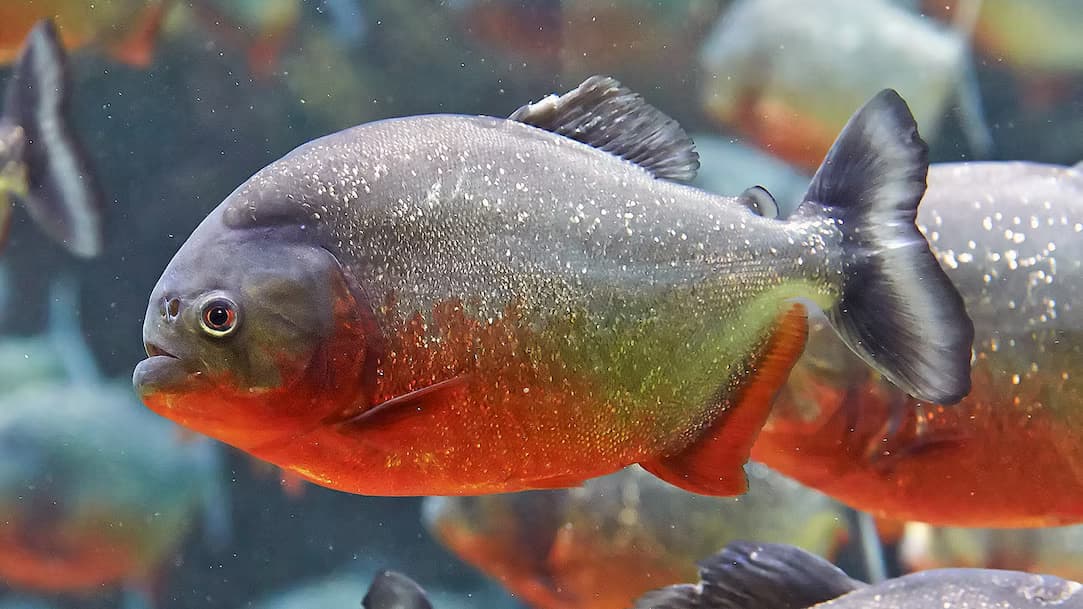
Pygocentrus nattereri, the red-bellied piranha, is one of the most recognizable freshwater fish in the world. Their reputation, fierce appearance, and distinctive compressed body with vivid red-orange undersides have made them both feared and fascinating. In the aquarium, they are surprisingly timid fish that require careful attention to tank size and grouping.
Native to the Amazon River basin and other major South American river systems, red-bellied piranhas inhabit slow to fast-moving rivers, flooded forest margins, and lakes. Contrary to popular belief, they are largely scavengers and opportunistic predators rather than relentless killing machines.
Their care requires experience. They are legal to keep in many regions but illegal in others; check local regulations first. They need large tanks, groups of 4 or more to reduce individual stress, and a consistent supply of meaty food. Properly kept, they are fascinating, distinctive fish.
Basic Overview
Common Misconceptions
"They should be kept alone or in pairs." Red-bellied piranhas are schooling fish that are actually calmer and less stressed in groups of 4-6 or more. Isolated individuals or pairs are more skittish, prone to injury from startling, and more aggressive during feeding than fish in established groups.
"They will attack anything immediately." Captive red-bellied piranhas are often surprisingly shy and timid. They spook easily, hide at sudden movements, and are cautious about new food initially. Their fearsome reputation is significantly exaggerated for aquarium specimens.
"They need live feeder fish." Feeder fish are unnecessary and potentially harmful (disease vector) for captive piranhas. They readily accept frozen meaty foods, raw fish, and carnivore pellets. Live fish should not be the primary diet.
"They are illegal everywhere." Legality varies enormously by state, country, and region. Research your specific location's regulations before obtaining them. They are legal to keep in many US states and countries.
Recommended Setup
- 100+ gallon tank for a group of 4
- Minimal decor: driftwood, rocks, few plants (plastic or tough species like anubias)
- Strong filtration rated for 3-4 times tank volume (messy carnivores)
- Strong water flow and high oxygenation
- Sturdy equipment; they are powerful fish that bite objects in their tank
- Very secure lid; startled piranhas can jump
- No sharp decor; they can injure themselves when startled
Diet
Red-bellied piranhas are carnivores that require meaty, protein-rich foods:
- High-quality carnivore pellets or sticks as a staple
- Frozen fish fillets (tilapia, pollock, etc.)
- Frozen whole shrimp
- Frozen krill
- Frozen squid
Feed every other day or once daily in moderate amounts. Piranhas can be trained to eat from tongs, which removes the need to put hands in the tank during feeding. Feed cautiously - feeding time is when they are most aggressive. Remove uneaten food within an hour to prevent water quality issues. Fasting one day per week is beneficial for digestive health.
Personality
Red-bellied piranhas in an established group develop a fascinating group dynamic. They orient together when threatened, feed in coordinated bursts, and maintain a clear social hierarchy. The shoal behavior of a settled group in a large tank is genuinely interesting to observe.
Individual temperaments vary. Some groups become relatively bold and approach the keeper at feeding time; others remain permanently shy. The consistency of the keeper's approach - same time, same feeding routine - helps establish confidence.
Outside feeding time, piranhas spend much of their time hovering in mid-water in their characteristic hunched posture. A large, established shoal of red-bellied piranhas hovering in formation in a large, dimly lit tank is one of the most dramatic freshwater aquarium displays available.
Safety and Handling
Red-bellied piranhas have extremely sharp, interlocking teeth and powerful bite force. Any maintenance involving hands in the tank should be done with caution. Many keepers use tongs for feeding to avoid having hands near the water at the time of highest aggression.
During routine maintenance (filter cleaning, glass scraping, plant trimming), piranhas are usually not aggressive toward the keeper's hands if they are not associated with feeding. Move slowly and deliberately; sudden movements trigger the startle response.
Startled piranhas can injure themselves by slamming into the glass or each other. Keep the tank environment consistent, approach slowly, and minimize sudden disturbances near the tank.
Water Parameters
Red-bellied piranhas come from the warm, slightly acidic to neutral Amazon river systems:
- pH: 6.0-7.5
- Hardness (gH): 5-15 dGH
- Temperature: 76-82 degrees F
- Ammonia and Nitrite: 0 ppm
- Nitrate: below 20 ppm
Here are some top tips to deal with unwanted parameters:
- Piranha tanks generate very high waste loads from meaty feeding. Strong filtration (canister filters rated at 3-4x tank volume) and twice-weekly 30% water changes are standard for a group of 4 in 100 gallons.
- High dissolved oxygen is important. Good surface agitation and powerful flow are standard.
- pH tolerance is relatively wide. Standard neutral tap water is acceptable. Soft, slightly acidic water is ideal but not strictly necessary for long-term health.
- Avoid copper-based treatments. Use piranha-safe medications only; many standard aquarium medications are dosed for lighter fish and can harm larger, more sensitive carnivores.