Pink Kissing Gourami Care Guide
A Complete Care Guide for Helostoma temminkii
Introduction
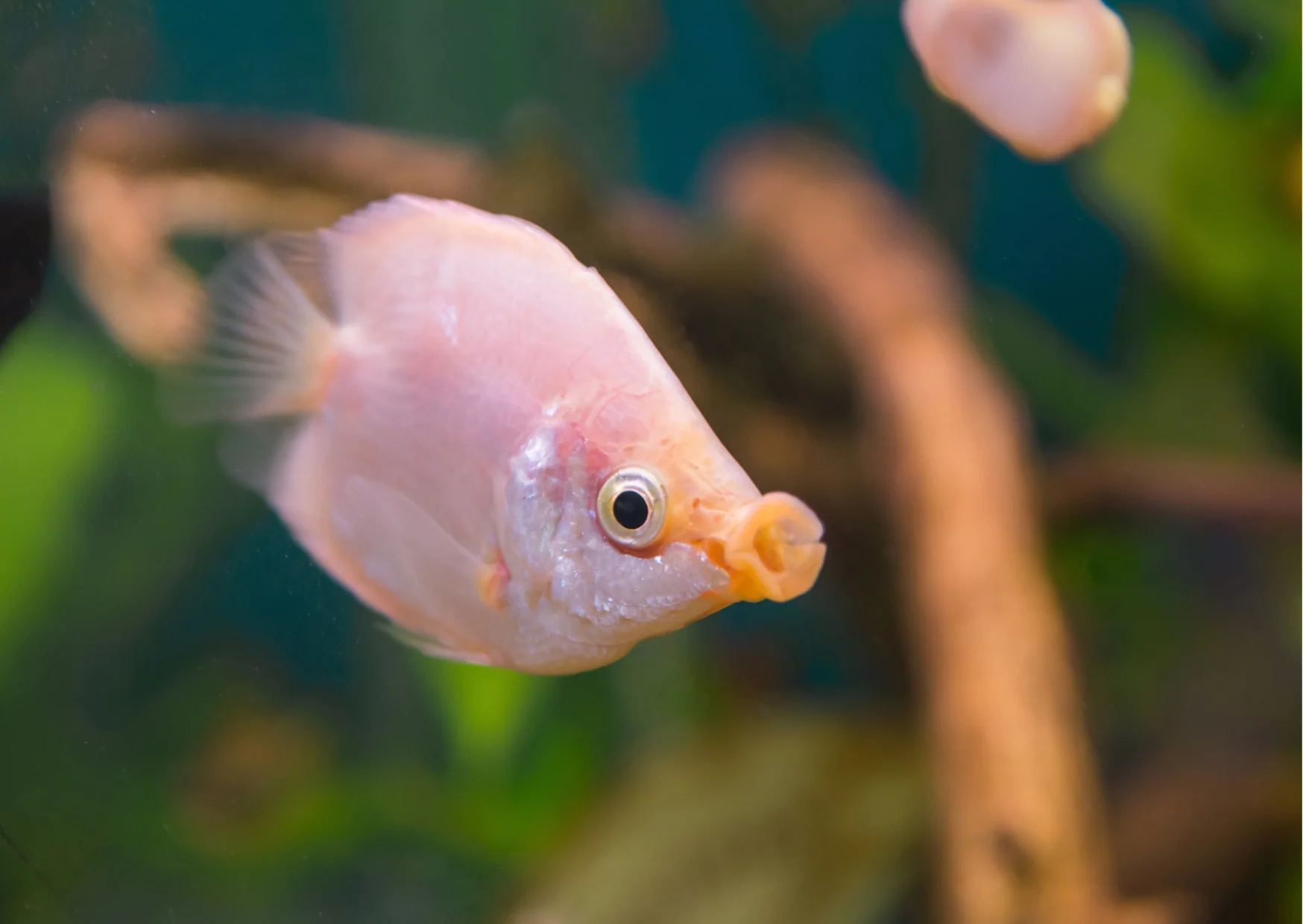
Helostoma temminkii, the kissing gourami, is instantly recognizable by its distinctive thick lips and the "kissing" behavior that gives the species its common name. Despite appearing affectionate, the lip-to-lip contact between kissing gouramis is actually a test of strength and social dominance, not a friendly gesture. They are large, distinctive fish that make impressive display animals in spacious aquariums.
Native to Southeast Asia from Thailand through Indonesia, kissing gouramis inhabit slow-moving ponds, rivers, and lakes with abundant vegetation and soft substrate. The pink variety common in the aquarium trade is a domesticated color form of the naturally greenish wild type.
Their care is relatively straightforward for experienced aquarists but requires attention to tank size - kissing gouramis grow to 10-12 inches and require 55+ gallon tanks as adults. They are generally peaceful with non-similar species but may bother and stress smaller, weaker fish through persistent physical contact.
Basic Overview
Common Misconceptions
"Kissing means they like each other." The kissing behavior is aggressive sparring, not affection. Two kissing gouramis with lips locked are engaging in a dominance contest. While it rarely causes serious injury, frequent kissing can stress subordinate fish. This is why two males in a small tank can be problematic.
"They stay small." Kissing gouramis grow to 10-12 inches and require appropriately sized tanks. Fish sold at 2-3 inches in stores are juveniles that will outgrow small tanks. Plan for adult size from the beginning.
"They are vegetarians." Kissing gouramis are omnivores that feed on algae, phytoplankton, and small invertebrates in the wild. While they rasp algae from surfaces with their specialized lips, they also eat protein-based foods and benefit from a varied diet.
"Any fish is a suitable tank mate." Kissing gouramis may persistently rasp or "kiss" smaller, slower fish, causing stress and damage to their slime coat. Small, slow, or delicate fish are not appropriate tank mates.
Recommended Setup
- 55+ gallon tank for one or two adults
- Open swimming space with robust planted areas
- Hardy, fast-growing plants or artificial plants (they may eat soft plants)
- Driftwood and smooth rocks
- Moderate flow
- Good filtration for large, messy fish
- Robust, weighted decor; they rearrange things
Diet
Kissing gouramis are omnivores with a significant plant matter component in their natural diet:
- Algae wafers and spirulina-based pellets or flake
- High-quality omnivore pellets or flake
- Blanched vegetables: zucchini, peas, spinach, romaine lettuce
- Frozen bloodworms (occasional protein)
- Frozen brine shrimp
Feed twice daily. Include significant plant-based foods to replicate their natural grazing diet. They will also graze algae from tank surfaces, which is beneficial. Their specialized lips allow them to rasp algae and biofilm from surfaces, so providing some surfaces (smooth rocks, broad-leaved plants) for this natural behavior is beneficial.
Personality
Kissing gouramis are large, personable fish that develop recognizable individual personalities over time. They become familiar with their keeper, approaching feeding spots confidently and investigating new additions to the tank. Their size and presence make them natural focal points of any aquarium.
Between individuals of their own species, they engage in ongoing social assessment through the kissing behavior. Two fish of similar size and confidence will periodically engage in these sparring sessions without serious consequence. Significant size differences between tank mates should be avoided.
In a spacious tank with appropriate companions, kissing gouramis are generally peaceful and untroubling. Their primary issue is that their rasping lips can inadvertently damage the slime coats of other fish they contact, which is why delicate or small tank mates are not appropriate.
Water Parameters
Kissing gouramis are adaptable to a range of tropical water conditions:
- pH: 6.0-8.0 (highly adaptable)
- Hardness (gH): 5-20 dGH (adaptable)
- Temperature: 72-82 degrees F
- Ammonia and Nitrite: 0 ppm
- Nitrate: below 20 ppm
Here are some top tips to deal with unwanted parameters:
- Kissing gouramis are among the most water-chemistry-tolerant of all freshwater fish. Standard tap water in most areas is entirely adequate.
- Good filtration is important given their large size and significant waste production. A powerful canister filter or multiple HOB filters for a 55-gallon setup are recommended.
- Weekly 25-30% water changes maintain good conditions. Large fish in medium-sized tanks produce considerable ammonia and require consistent maintenance.
- They are labyrinth fish (like bettas and other gouramis) and breathe atmospheric air from the surface. Ensure the surface is accessible and not completely blocked by floating plants or a tight-fitting lid with no air gap.