Peppered Corydoras Care Guide
A Complete Care Guide for Corydoras paleatus
Introduction
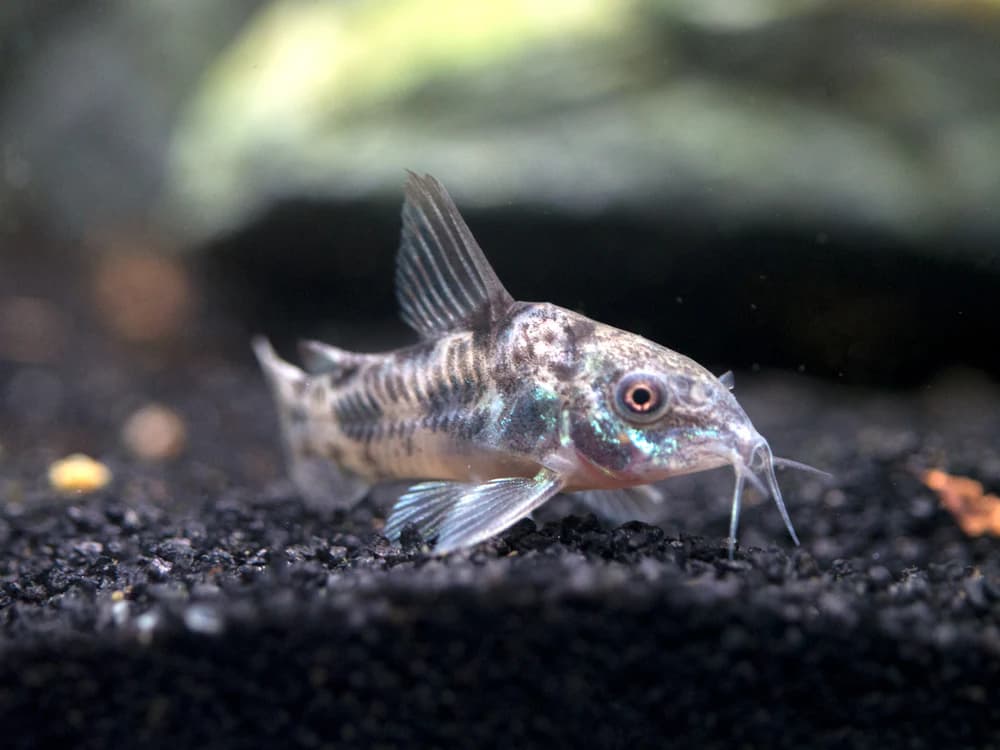
Corydoras paleatus, the peppered corydoras, is one of the first corydoras species introduced to the aquarium hobby and remains one of the most widely kept to this day. Their mottled green-to-gray coloration with dark patches, reminiscent of a sprinkling of black pepper, is subtle but attractive, and their hardiness and cold tolerance make them one of the most beginner-friendly bottom fish available.
Native to the La Plata River basin in southeastern Brazil and Argentina, peppered corydoras are naturally adapted to cooler temperatures than most tropical fish. They are comfortable at 65–77°F, making them suitable companions for cool-water setups alongside goldfish, white cloud mountain minnows, and dojo loaches.
Like all corydoras, they are peaceful, social schooling fish that must be kept in groups. Their wide distribution in the trade ensures they are almost always available at accessible prices, making them an excellent introduction to the corydoras family.
Basic Overview
Common Misconceptions
"They need tropical temperatures." Peppered corydoras are one of the few corydoras that prefer cooler water. Keeping them at 78°F+ shortens their lifespan and makes them sluggish. They are far more active and longer-lived in the 68–74°F range.
"They are the same as all other corydoras." Within the corydoras family, peppered cories are distinctly cold-tolerant and significantly more compatible with goldfish and cool-water setups than the vast majority of their relatives.
"Gravel is fine for corydoras." Fine sand is essential for all corydoras, including peppered. Sharp gravel causes barbel erosion and bacterial infection over time.
"They are boring and common." Common does not mean boring. Peppered corydoras have fascinating social behaviors and are among the easiest corydoras to breed in home aquariums.
Recommended Setup
- 20+ gallon for a group of 6
- Fine sand substrate (mandatory)
- No heater required in most temperate homes; 65–75°F is optimal
- Hardy cool-water plants: Java fern, anubias, hornwort, Vallisneria
- Hiding spots: driftwood, caves, dense planting
- Moderate filtration with gentle flow
- Good oxygenation: cooler water holds more oxygen but surface agitation is still important
Diet
Peppered corydoras are omnivores that sift substrate for invertebrates and organic matter. They accept a wide range of sinking foods:
- Sinking corydoras wafers as a staple
- Frozen bloodworms, brine shrimp, and daphnia
- Blanched vegetables: zucchini, cucumber, peas
- Sinking mini pellets
- Live blackworms for enrichment and breeding conditioning
Feed in the evening. Ensure food reaches the bottom; use sinking foods rather than flakes or floating pellets that surface fish will consume before they reach the substrate. In cooler water, their metabolism is slower and feeding frequency can be reduced to every other day.
Personality
Peppered corydoras are lively, social fish that are in near-constant motion during their active periods. They work methodically across the substrate, their sensitive barbels probing the sand for food, popping up to gulp air at the surface, and clustering together in social groups between feeding bouts.
In cooler water they are particularly active and healthy. Keepers who have kept peppered corydoras in warm tropical tanks and then transitioned them to a cool-water setup are often struck by how much more energetic and vibrant they become.
They breed more readily than most corydoras in home aquariums, and the classic T-position spawning behavior is frequently observed in a well-maintained group.
Breeding Peppered Corydoras
Peppered corydoras are among the easiest corydoras to breed at home. A large water change with slightly cooler water triggers spawning reliably. The female holds 2–4 eggs between her ventral fins while the male fertilizes them, then she deposits them on plants, glass, or other surfaces.
Eggs hatch in 3–5 days at room temperature; fry are tiny and need infusoria or liquid fry food initially. Baby brine shrimp are appropriate after the first week.
The parents do not guard eggs, so removing eggs to a separate container for hatching gives better survival rates. A gentle sponge filter and a small piece of java moss in the hatch container provide appropriate conditions.
Water Parameters
Peppered corydoras come from the cooler rivers of southern Brazil and Argentina:
- pH: 6.0–8.0 (very adaptable)
- Hardness (gH): 2–25 dGH (very adaptable)
- Temperature: 65–77°F
- Ammonia and Nitrite: 0 ppm
- Nitrate: below 20 ppm
Here are some top tips to deal with unwanted parameters:
- Standard tap water in most areas suits peppered corydoras without modification. They are among the most water-chemistry-tolerant of all corydoras.
- Keep temperature below 77°F consistently. Above 78°F they become sluggish, lose color, and their immune system is suppressed. A room-temperature unheated tank is ideal in most temperate climates.
- Weekly 25% water changes maintain water quality. Good filtration plus consistent changes prevents the nitrate buildup that stresses all corydoras.
- Fine sand is non-negotiable regardless of how adaptable they are in other parameters. Barbel health is always the priority.