Panda Corydoras Care Guide
A Complete Care Guide for Corydoras panda
Introduction
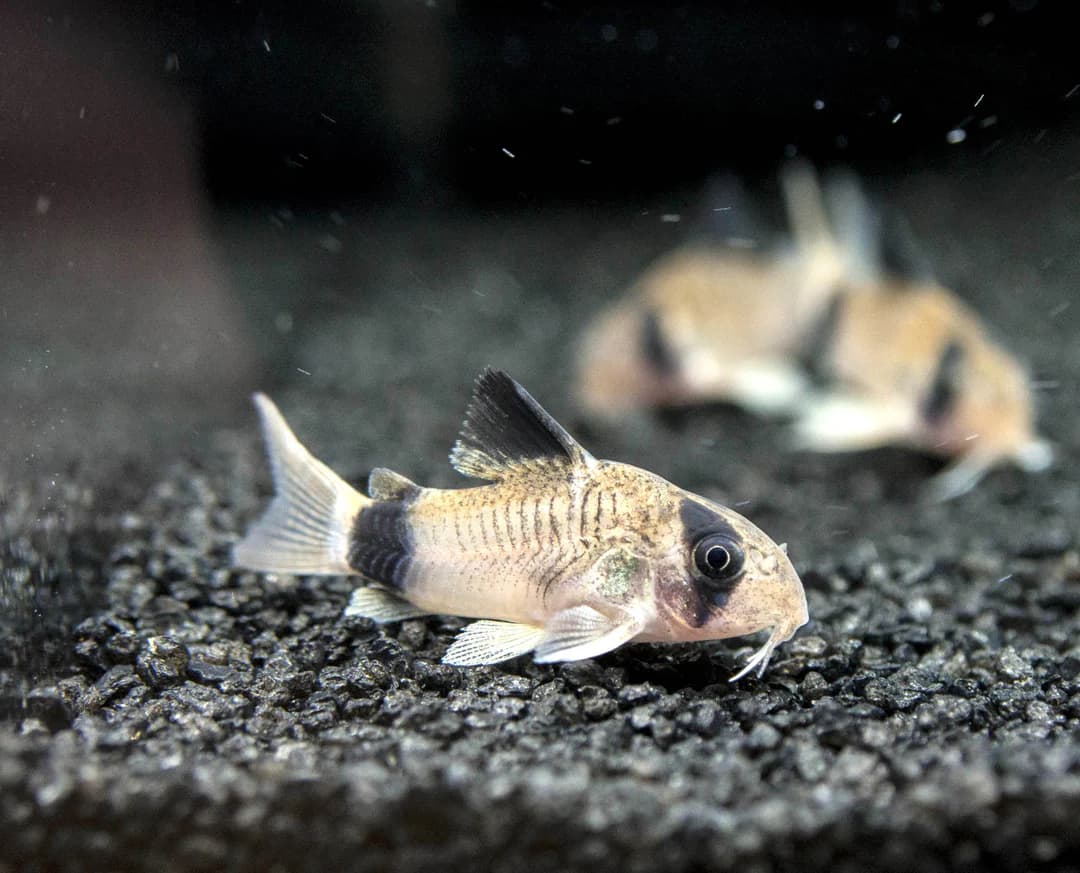
Corydoras panda, the panda corydoras, is one of the most charming and visually distinctive corydoras species. Their white or pale body with three bold black patches (over the eyes like a panda's mask, on the dorsal fin, and at the base of the tail) give them an instantly recognizable appearance that makes them perennially popular.
Native to the Ucayali and Pachitea River systems in Peru, panda corydoras inhabit cool, clean, fast-moving Andean foothill streams with sandy substrates. Their preference for cooler, well-oxygenated water must be respected for them to remain healthy long-term.
They are relatively small for corydoras (reaching about 2 inches), making them particularly suitable for nano and smaller planted tanks. They are peaceful, social, and display the typical endearing corydoras behaviors that make the genus so beloved in the hobby.
Basic Overview
Common Misconceptions
"They are as hardy as bronze corydoras." Panda corydoras are noticeably more temperature-sensitive and less robust than the common bronze cory. They are not a good choice for warm tropical tanks running at 78°F+.
"Their black markings are painted or artificial." The bold black panda patches are entirely natural and genetic. They are one of the most striking natural color patterns in the corydoras family.
"They stay small forever." Panda corydoras are naturally small, reaching only about 2 inches. This is their genuine adult size, not stunting. Their small size makes them suitable for tanks too small for larger corydoras species.
"They can be kept solo." Like all corydoras, pandas are highly social and stressed without conspecifics. A group of 6 minimum is essential; 8–10 in a 15–20 gallon planted tank is ideal.
Recommended Setup
- 15+ gallon planted tank for a group of 6
- Fine sand substrate (mandatory for barbel health)
- Cool water: 70–75°F is optimal; a fan for evaporative cooling may be needed in summer
- Well-oxygenated water with moderate surface agitation; they come from Andean foothill streams
- Dense planting with open sandy foraging areas
- Sponge filter or pre-filtered intake to protect small fish
- Driftwood and leaf litter for natural aesthetics
Diet
Panda corydoras are omnivores that forage the substrate for small invertebrates and organic matter. They need sinking foods that reach the bottom:
- Mini corydoras wafers or sinking micro pellets as a staple
- Frozen baby brine shrimp (appropriate size for their small mouths)
- Frozen daphnia and cyclops
- Finely grated blanched vegetables: zucchini, cucumber
- Micro worms (live) for enrichment
Feed once daily in the evening. Their small mouths need small food; standard corydoras wafers can be crushed for juveniles. In well-planted tanks with active biofilm, they supplement their diet naturally between feedings.
Personality
Panda corydoras have all the charming behaviors of the corydoras family in a particularly compact package. They forage actively, rest in communal piles, dart to the surface for air, and interact with each other in the constant social dynamics of a healthy corydoras group.
Their panda-like face pattern gives them an expressive, almost cartoon-like quality that makes them particularly popular for display in planted tanks where they can be observed closely. Under a loupe or in a macro photo, the detail of their banding and scales is extraordinary.
They are ideal for planted nano and medium tanks where their small size makes them proportionate. A group of 10 pandas in a well-planted 20-gallon blackwater nano tank is one of the most appealing small freshwater setups possible.
Temperature Considerations
Temperature management is the single most important aspect of panda corydoras care. Consistently warm water above 77°F suppresses their immune system and shortens their lifespan significantly. Many cases of panda cories declining in captivity trace directly to being kept too warm.
In homes that are warm year-round, consider a small clip-on fan directed across the water surface for evaporative cooling. This can bring a tank down 3–5°F below room temperature reliably. In temperate climates, unheated or lightly heated tanks in the 70–75°F range are ideal.
The good news: their cool-water preference makes them compatible with white cloud mountain minnows, peppered corydoras, and other cool-water species that are underserved by the tropical-focused hobby mainstream.
Water Parameters
Panda corydoras come from cool, clean, well-oxygenated Andean foothill streams in Peru:
- pH: 6.0–7.5
- Hardness (gH): 2–12 dGH (soft water preferred)
- Temperature: 68–77°F (never exceed 77°F long-term)
- Ammonia and Nitrite: 0 ppm
- Nitrate: below 10–20 ppm
Here are some top tips to deal with unwanted parameters:
- Cool temperature is more important for panda corydoras than for almost any other commonly kept species. Invest in a reliable thermometer and check it regularly.
- Well-oxygenated water with surface agitation is beneficial. Their Andean stream origin means they are adapted to high dissolved oxygen levels.
- Soft, slightly acidic water with driftwood improves conditions in harder tap water areas. Pandas are more sensitive to hard water than some of their relatives.
- Avoid copper-based medications. Sensitive to copper at concentrations safe for fish; always check medication ingredients before treating a tank with panda corydoras.