Peacock Gudgeon Care Guide
A Complete Care Guide for Tateurndina ocellicauda
Introduction
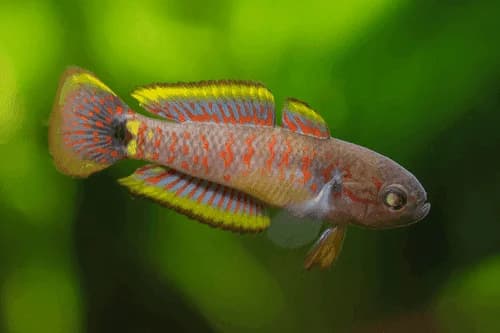
Tateurndina ocellicauda, the peacock gudgeon, is a small, spectacularly colored gudgeon from Papua New Guinea. Males display a vivid iridescent blue-purple body with red horizontal striping, yellow belly, and a large, prominent eyespot (ocellus) at the caudal fin base. This combination of colors -- blue, purple, red, and yellow -- rivals the most colorful nano fish available. Females are slightly less vivid but remain attractive.
Native to lowland rivers and streams in Papua New Guinea, peacock gudgeons inhabit slow-moving, clear water with abundant vegetation. They are substrate-spawning fish that lay eggs in caves and exhibit paternal care.
Peacock gudgeon care is easy to moderate. Their small size (1.5-2 inches), peaceful temperament, and extraordinary coloration make them ideal for planted nano community tanks. Their cave-spawning behavior and male parental care add an interesting behavioral dimension.
Basic Overview
Common Misconceptions
"They are aggressive like many gobies." Peacock gudgeons are peaceful fish that pose no threat to any similarly sized or larger tank mate. Males may display to each other but rarely cause injury. They are not typical "aggressive goby" fish.
"They swim at the surface." Peacock gudgeons are primarily bottom and mid-water fish. They inhabit lower portions of the tank, emerging to feed but not competing at the surface.
"They are difficult to breed." Peacock gudgeons breed readily in aquariums with appropriate cave structures. Males guard eggs and fry in a cave, and breeding is a common, rewarding occurrence in well-maintained pairs or groups.
"They need large tanks." Their small size makes them ideal for 15-20 gallon planted nano tanks. Unlike many gudgeons, they are suitable for smaller, heavily planted setups.
Recommended Setup
- 15-20+ gallon planted tank
- Small caves or coconut shell halves for spawning
- Dense planting for cover
- Dark substrate to maximize color display
- Gentle flow
- Soft to moderately hard water
- Peaceful community tank mates only
Diet
Peacock gudgeons are carnivores that require small meaty foods:
- Baby brine shrimp (live or frozen -- highly preferred)
- Micro worms
- Frozen daphnia
- Frozen bloodworms (small pieces)
- Small sinking carnivore pellets
Feed twice daily. Peacock gudgeons are primarily carnivores that prefer live or frozen small invertebrates. Baby brine shrimp produce the most vivid coloration and are the ideal staple food. They may ignore dry foods initially but can be trained to accept them.
Personality
Male peacock gudgeons in breeding condition are among the most colorful nano fish in the hobby. The combination of iridescent blue-purple body, red stripes, yellow belly, and caudal eyespot is extraordinary -- a living jewel that rivals marine fish in color complexity.
Males display to each other and to females with fin erection and body shimmering, intensifying their already vivid colors. The cave-guarding and egg-care behavior of brooding males is fascinating to observe in a planted nano tank.
Their peaceful temperament, small size, and extraordinary coloration make them one of the most recommended nano fish for planted aquarists who want color complexity comparable to marine fish without the challenges of saltwater keeping.
Water Parameters
Peacock gudgeons come from the clear, warm streams of Papua New Guinea:
- pH: 6.5-7.5
- Hardness (gH): 5-15 dGH
- Temperature: 72-79 degrees F
- Ammonia and Nitrite: 0 ppm
- Nitrate: below 15 ppm
Here are some top tips to deal with unwanted parameters:
- Standard community tank parameters are appropriate. They are adaptable.
- Slightly cooler temperatures (74-78 degrees F) are preferred for longevity.
- Gentle flow and good plant cover reduce stress.
- Weekly 20-25% water changes maintain good conditions.