Electric Blue Ahli Cichlid Care Guide
A Complete Care Guide for Sciaenochromis fryeri
Introduction
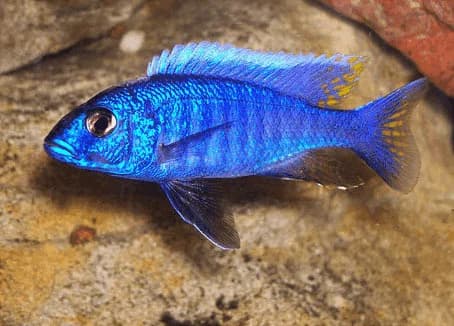
Sciaenochromis fryeri, the electric blue ahli (also called the electric blue hap or ice blue cichlid), is one of the most spectacular Lake Malawi cichlids. Males display a vivid, intense electric blue coloration covering their entire body with no pattern -- a solid, saturated blue that is among the most vivid colors available in freshwater fish. Females are silver-grey, creating extreme sexual dimorphism.
Endemic to Lake Malawi in East Africa, S. fryeri inhabits the open water and rocky reef zones of the lake. Unlike the herbivorous mbuna cichlids, S. fryeri is a predator of small fish and invertebrates in the wild, belonging to the "hap" (haplochromine) group of Lake Malawi cichlids.
Electric blue ahli care is intermediate. Their predatory nature (requiring protein-rich foods rather than strict herbivore diets), Lake Malawi water requirements, and need for appropriate, non-competing tank mates distinguishes their care from mbuna cichlids.
Basic Overview
Common Misconceptions
"They should be fed spirulina foods like mbuna." Electric blue ahli are predators, not herbivores. They require protein-rich cichlid foods. Feeding them exclusively spirulina or herbivore-formula foods causes nutritional deficiency. High-quality cichlid pellets and protein-rich foods are appropriate.
"They can be kept with mbuna." Mixing haps like S. fryeri with aggressive mbuna often results in the hap being bullied and fin-damaged. Hap-only tanks or hap-peacock combinations are more appropriate.
"Only one male is needed." In sufficiently large tanks (125+ gallons), multiple males can be kept with appropriate female ratios, reducing fighting by distributing attention. Single male setups are simpler for smaller tanks.
"Female color is attractive." Female electric blue ahli are silver-grey with minimal color. The spectacular electric blue is exclusive to mature males. Purchasing unsexed juveniles results in a group that slowly differentiates by sex.
Recommended Setup
- 75+ gallon tank
- Rocky decor creating caves and territories
- Crushed coral substrate
- Strong filtration and oxygenation
- Compatible hap or peacock cichlid tank mates
- One male to multiple females or one male in single-species setup
Diet
Electric blue ahli are carnivores requiring protein-rich foods:
- High-quality cichlid pellets (primary)
- Frozen krill
- Frozen mysis shrimp
- Frozen brine shrimp
- Occasional frozen bloodworms
Feed once or twice daily. Unlike mbuna, electric blue ahli benefit from protein-rich cichlid foods. Krill-based foods enhance and maintain the blue coloration. Avoid foods with excessive carotenoids that can distort their natural blue hue.
Personality
A mature male electric blue ahli is one of the most visually stunning freshwater fish available. The solid, saturated electric blue with no pattern or competing color is extraordinary under aquarium lighting, and the fish's large size and confident swimming make it a genuine centerpiece.
Males are territorial and aggressive with conspecifics, but in a properly stocked hap-and-peacock Lake Malawi setup they are manageable. Their aggression toward females during spawning is typical of mouthbrooding cichlids and requires appropriate sex ratios.
Mouthbrooding females hold eggs and fry for 3-4 weeks. The color and size of a male electric blue ahli in breeding condition is extraordinary -- the most intense expression of this species's remarkable coloration.
Water Parameters
Electric blue ahli require the hard, alkaline, highly oxygenated conditions of Lake Malawi:
- pH: 7.6-8.8
- Hardness (gH): 10-20 dGH
- Temperature: 76-82 degrees F
- Ammonia and Nitrite: 0 ppm
- Nitrate: below 20 ppm
Here are some top tips to deal with unwanted parameters:
- Hard, alkaline Lake Malawi water is essential for all long-term health.
- Crushed coral substrate provides continuous passive buffering.
- Strong filtration and regular water changes (25-30% weekly) in well-stocked cichlid tanks.
- High oxygenation through vigorous surface agitation.