Electric Yellow Lab Care Guide
A Complete Care Guide for Labidochromis caeruleus (Yellow form)
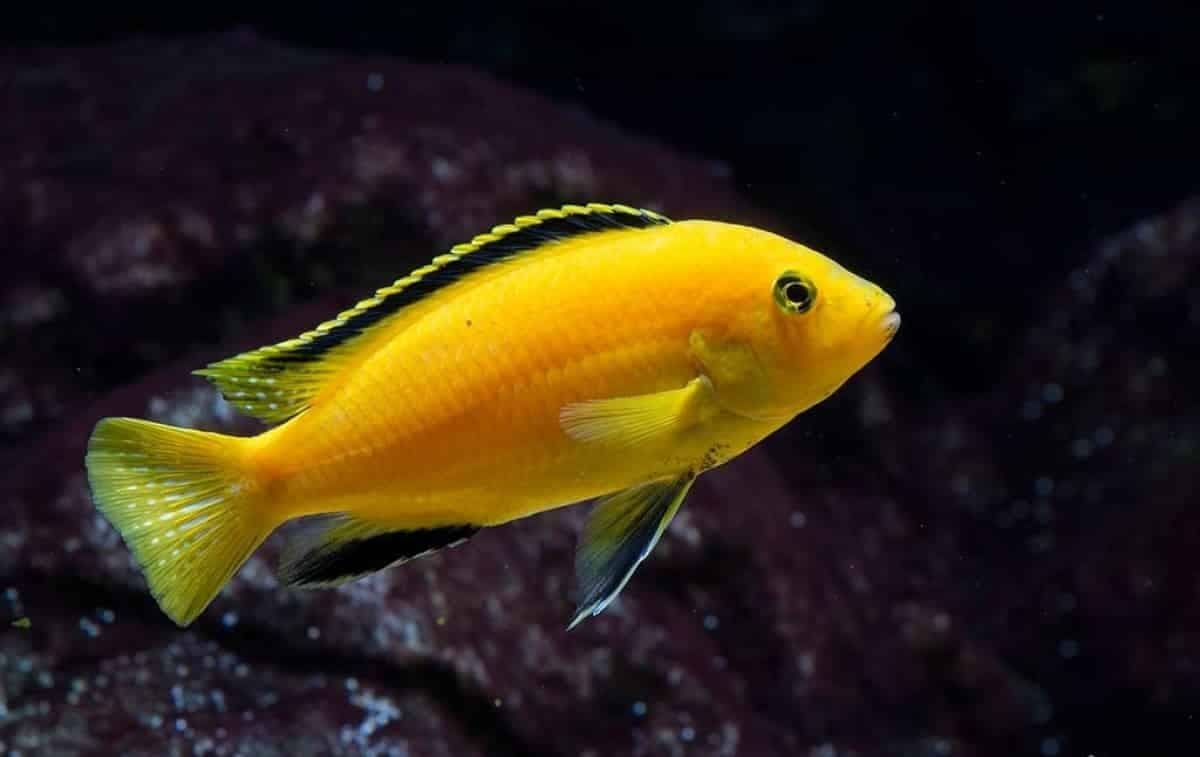
Introduction
Labidochromis caeruleus, the electric yellow lab, is widely considered the most beginner-friendly and peaceable mbuna cichlid from Lake Malawi. Their vivid canary-yellow body with black fin margins, combined with a relatively calm temperament for a mbuna species, has made them one of the most popular African cichlids in the hobby.
Native to the rocky shoreline around Lion's Cove and Nkhata Bay in Lake Malawi, Labidochromis caeruleus is endemic to these restricted areas. The yellow form is the color variant that became popular in the hobby; wild populations include white, blue, and other color forms.
Electric yellow labs are the recommended starting point for hobbyists interested in Lake Malawi cichlids. Their reduced aggression relative to most mbuna, attractive coloration, and manageable adult size of 4-5 inches make them more forgiving of community composition than most species in this group.
Basic Overview
Common Misconceptions
"They can be kept in a tropical community tank." Electric yellow labs require the hard, alkaline water and rocky decor of a Lake Malawi setup. A standard soft-water tropical community tank is chemically and ecologically inappropriate. They should be kept in a Lake Malawi biotope or mixed mbuna setup.
"Any mbuna can be kept with them." While electric yellow labs are the most peaceful mbuna, they can still be harassed by highly aggressive species like Melanochromis auratus or demasoni. Compatible co-inhabitants should be similar in size and from non-conflicting genera.
"The yellow color is their natural coloring in all conditions." Electric yellow labs can fade significantly in poor conditions, stress, or inappropriate water. Vivid yellow coloration indicates good health, correct water chemistry, and a low-stress environment.
"Multiple males are fine in a small tank." Male electric yellow labs will fight, though less intensely than most mbuna. Keep one male per group in smaller tanks, or only introduce multiple males into large tanks with extensive rockwork.
Recommended Setup
- 55+ gallon tank for a group of 6-8 (1 male, 5-7 females is ideal)
- Extensive rockwork: stacked rocks creating caves, crevices, and territory zones
- Crushed coral or aragonite substrate to buffer pH to alkaline levels
- No soft plants; Java fern may survive but plants are not appropriate for a mbuna tank
- Strong filtration; cichlids in a mbuna tank produce significant waste
- Good oxygenation and surface agitation
- Moderate to strong water flow throughout the tank
Diet
Electric yellow labs are omnivores with a preference for invertebrates and plant matter:
- High-quality cichlid flakes or pellets as a staple
- Spirulina flakes or pellets (important for health)
- Frozen brine shrimp and daphnia (moderate amounts)
- Blanched vegetables: peas, spinach
- Mbuna-specific pellets formulated for omnivore Lake Malawi cichlids
Unlike some mbuna, electric yellow labs can tolerate moderate protein in their diet without developing Malawi Bloat as readily as strictly herbivorous species. However, a high-protein diet (bloodworms, krill as primary food) is still not recommended. Balance spirulina-based foods with moderate protein supplements.
Personality
Electric yellow labs are active, bold, and personable cichlids that quickly become familiar with their keeper. Males display their vivid yellow coloration enthusiastically, particularly when establishing dominance or courting females.
Compared to other mbuna, the aggression of electric yellow labs is noticeably lower. Males still spar and chase, but the intensity and persistence is reduced compared to demasoni, kenyi, or Melanochromis species. This makes them significantly easier to manage in a community mbuna setup.
Females are mouthbrooders: they carry fertilized eggs in their mouth for 3 weeks, barely eating during this period. A female with distended throat and reduced activity is brooding, and should not be disturbed or stressed. She will release free-swimming fry at the end of the brooding period.
Lake Malawi Setup Basics
Electric yellow labs are best kept in a setup that replicates Lake Malawi's rocky littoral zone: extensive rock piles, hard alkaline water, and no plants. The rocks serve as territory markers, breeding sites, and hiding places for subordinate fish.
The crushed coral or aragonite substrate is not just aesthetic; it actively buffers the water to maintain the alkaline pH that Malawi cichlids require. Without it, pH can drop over time and stress the fish.
Overstocking slightly (relative to typical community tank recommendations) helps distribute aggression in a mbuna tank. A 55-gallon with 10-12 yellow labs is less problematic than the same tank with only 4, because the aggression is spread across more targets.
Water Parameters
Electric yellow labs require the hard, alkaline water of Lake Malawi:
- pH: 7.8-8.5
- Hardness (gH): 10-20 dGH
- Temperature: 76-82 degrees F
- Ammonia and Nitrite: 0 ppm
- Nitrate: below 20 ppm
Here are some top tips to deal with unwanted parameters:
- Crushed coral substrate is the most reliable way to maintain alkaline pH. Without calcium carbonate buffering, pH will drift downward over time.
- Weekly 25-30% water changes are essential in a mbuna tank. These tanks are typically stocked heavily and produce significant nitrate without consistent changes.
- Hard tap water in many areas is already appropriate for Lake Malawi cichlids without modification. Test your tap water; if it is already pH 7.5+ and moderately hard, minimal adjustment is needed.
- Add a Lake Malawi salt mix if your tap water is soft to provide the appropriate mineral balance. Alternatively, crushed coral substrate in the filter provides passive buffering.