Gold Lab Cichlid Care Guide
A Complete Care Guide for Labidochromis caeruleus (Yellow Variant)
Introduction
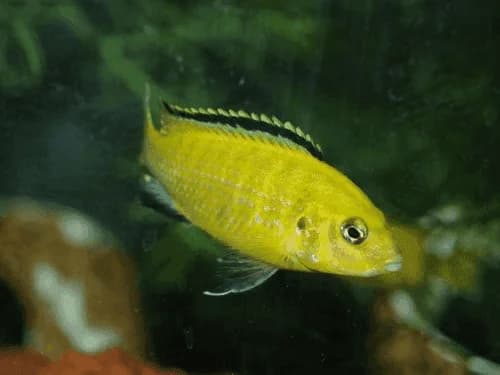
Labidochromis caeruleus, the electric yellow lab, is one of the most popular and beginner-friendly Lake Malawi cichlids. Their vivid, uniform lemon-yellow body with black fin markings makes them one of the most colorful solid-color cichlids available. Their moderate temperament for an mbuna and adaptability to a range of conditions make them an excellent entry point into African cichlid keeping.
Endemic to Lake Malawi, L. caeruleus inhabits the rocky littoral zone where it uses its distinctive narrow, non-protrusible jaw to extract invertebrates from rock crevices. Unlike most mbuna, they are insectivores rather than strict aufwuchs herbivores, which allows a slightly more varied diet.
Gold lab care is easy to moderate. They are the most peaceful of the common mbuna species, making them compatible with a wider range of tank mates. Their vivid yellow color, manageable size (4-5 inches), and hardiness make them ideal for beginning mbuna keepers.
Basic Overview
Common Misconceptions
"They are as aggressive as other mbuna." L. caeruleus is notably less aggressive than most other mbuna species. This makes them more suitable for community cichlid setups and less likely to cause severe damage to tank mates. They are still capable of aggression and should not be kept with very passive fish.
"They need exclusively herbivore foods like other mbuna." Unlike strict herbivore mbuna, yellow labs are insectivores in the wild. They can tolerate moderate protein in their diet, including occasional frozen bloodworms and brine shrimp, without the Malawi bloat risk of strict herbivores. However, a varied diet with plant components is still recommended.
"Only males are yellow." Both males and females of L. caeruleus are vivid yellow, with males typically having more intense black markings on the dorsal, pelvic, and anal fins. This makes sexing more difficult than in many other mbuna species.
Recommended Setup
- 55+ gallon tank
- Extensive rockwork with caves
- Crushed coral substrate
- Strong filtration and oxygenation
- One male to 2-3+ females
- Compatible mbuna tank mates (other less-aggressive species)
Diet
Gold labs are insectivores that tolerate a more varied diet than most mbuna:
- High-quality cichlid pellets with moderate protein
- Spirulina flake or wafers (plant component)
- Frozen brine shrimp (occasional)
- Frozen bloodworms (occasional)
- Blanched vegetables
Feed twice daily. Unlike strict herbivore mbuna, yellow labs can handle moderate protein foods without significant bloat risk. A balanced diet with both plant and animal protein components maintains excellent health. Avoid very high-fat animal foods.
Personality
Gold labs are active, confident mbuna that patrol their territory with energy but without the constant intense aggression of more pugnacious species. Their vivid lemon-yellow body against a grey rock Malawi setup creates a striking color contrast.
Their relative peacefulness makes them one of the few mbuna that can be kept with other cichlid groups with careful planning. They are also less likely to harm females and subordinate males to the degree that more aggressive mbuna can.
Breeding in the standard mbuna mouthbrooding pattern is common in captivity. Females holding eggs are identifiable by slightly distended throat pouches. Brooding lasts 3-4 weeks and produces 10-20 well-developed fry.
Water Parameters
Gold labs require the hard, alkaline conditions of Lake Malawi:
- pH: 7.6-8.8
- Hardness (gH): 10-20 dGH
- Temperature: 76-82 degrees F
- Ammonia and Nitrite: 0 ppm
- Nitrate: below 20 ppm
Here are some top tips to deal with unwanted parameters:
- Hard, alkaline water is essential for all Lake Malawi cichlids.
- Crushed coral substrate provides passive pH and hardness buffering.
- Weekly 25-30% water changes in well-stocked cichlid tanks.
- Strong filtration handles the waste load of active cichlid setups.