Duboisi Cichlid Care Guide
A Complete Care Guide for Tropheus duboisi
Introduction
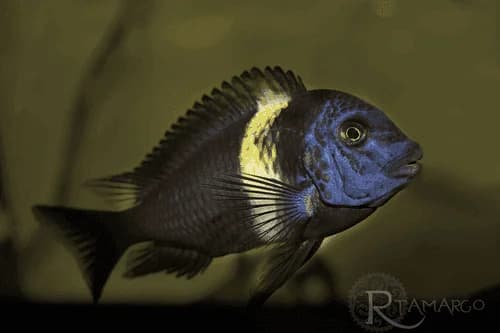
Tropheus duboisi, the duboisi cichlid (or white-spotted Tropheus), is one of the most visually striking cichlids from Lake Tanganyika. Juveniles display a dramatic pattern of small white to pale blue spots on a jet-black body -- one of the most stunning juvenile colorations in freshwater fish. Adults transition to a different pattern with a broad yellow or white band across the body against a dark head and posterior, creating a striking two-tone appearance.
Endemic to Lake Tanganyika in East Africa, T. duboisi inhabits the rocky upper littoral zone of the lake, where it grazes on aufwuchs -- the algae and microorganism community growing on rocks. Like all Tropheus, they are specialist herbivores.
Duboisi cichlid care is intermediate to advanced. They are more delicate than mbuna in terms of dietary sensitivity and intra-specific aggression management, but their extraordinary appearance and fascinating social behavior make them highly rewarding for keepers who invest in appropriate conditions.
Basic Overview
Common Misconceptions
"A pair or small group is fine." Tropheus are extremely aggressive toward conspecifics in small groups. The only safe approach is large groups (12-15+) in a large tank, where aggression is distributed across many individuals rather than focused on one subordinate fish. Small groups lead to the deaths of subordinate fish.
"They eat like other cichlids." Tropheus are among the most strict herbivores in the cichlid world. Even small amounts of high-protein animal food cause Bloat (a potentially fatal gut infection), which is the leading killer of Tropheus in captivity. Exclusively plant-based feeding is essential.
"The juvenile spotted pattern is permanent." The striking white-spotted juvenile pattern changes completely as the fish matures. Adults display the characteristic broad body band coloration. This transformation surprises many first-time Tropheus keepers.
"Standard Tanganyikan care is sufficient." Tropheus require stricter dietary management than most other Tanganyikan cichlids. Even Tanganyika-appropriate pellets with animal protein percentages too high can trigger Bloat.
Recommended Setup
- 75+ gallon tank for a group of 12-15
- Extensive rockwork (rocks from top to bottom)
- Hard, alkaline water
- Strong filtration and oxygenation
- Crushed coral or aragonite substrate
- Single species or Tropheus-only tank strongly recommended
Diet
Duboisi cichlids are strict herbivores that require exclusively plant-based foods:
- Spirulina-based flake or pellets (primary staple -- 40%+ spirulina content)
- Blanched spinach, zucchini (occasionally)
- Dried Spirulina nori/seaweed sheets
- Tropheus-specific herbivore pellets
Feed small amounts 3-4 times daily. Frequent small meals are better than one or two large feedings for Tropheus digestion. No animal-derived foods of any kind. No standard cichlid pellets unless verified to be very low in animal protein. Bloat (fatal gut infection) is caused by feeding inappropriate high-protein foods.
Personality
Duboisi cichlids in a large group create one of the most dynamic and visually extraordinary of all cichlid setups. The constant inter-fish interactions -- chasing, displaying, territorial disputes, courting -- fill the tank with activity. The contrast between the bold juvenile spotting and the striking adult banding pattern creates ongoing visual interest as fish mature.
Their Lake Tanganyika origin means they are adapted to hard, alkaline, highly oxygenated water in a rocky environment. A proper Tropheus setup with rock-filled 75+ gallon tank and hard water is dramatically different from a planted soft-water tank, but the reward -- a thriving colony of one of Africa's most spectacular cichlids -- is exceptional.
Females mouth-brood fry for 4 weeks, releasing well-developed miniature fish. In a colony, brooding females can sometimes be identified by their slightly distended throat.
Water Parameters
Duboisi cichlids require the hard, alkaline, highly oxygenated conditions of Lake Tanganyika:
- pH: 7.8-9.0
- Hardness (gH): 10-20 dGH
- Temperature: 76-82 degrees F
- Ammonia and Nitrite: 0 ppm
- Nitrate: below 15 ppm
Here are some top tips to deal with unwanted parameters:
- Hard, alkaline Lake Tanganyika conditions are essential.
- Low nitrate (below 15 ppm) is important for this sensitive species. Regular water changes are critical.
- Strong oxygenation through surface agitation.
- Crushed coral substrate provides passive pH and hardness buffering.