Albino Socolofi Cichlid Care Guide
A Complete Care Guide for Pseudotropheus socolofi (Albino Variant)
Introduction
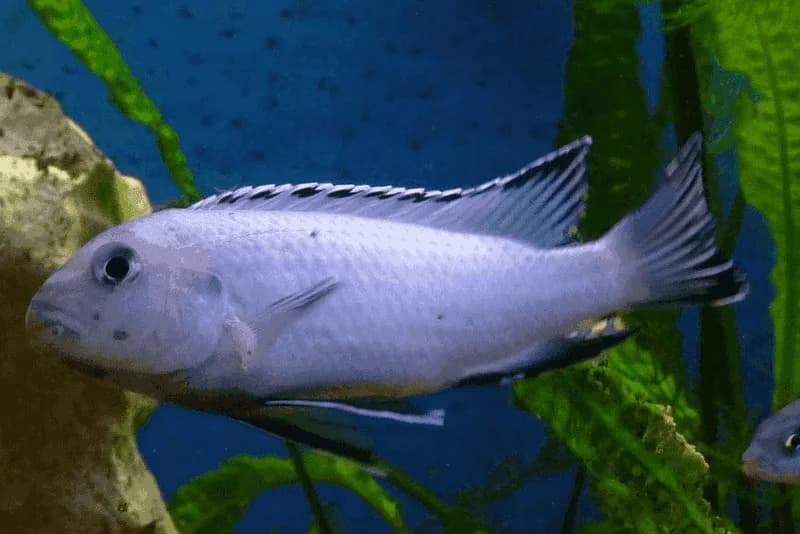
Pseudotropheus socolofi, the powder blue cichlid or socolofi, is a Lake Malawi mbuna cichlid from the rocky shores of the lake. The albino variant, commonly marketed as the "snow white socolofi," replaces the standard blue coloration with a clean white body and pink-red eyes, giving the fish a striking, distinctive appearance while retaining all the characteristic mbuna energy and behavior.
Endemic to Lake Malawi in East Africa, socolofi inhabit the rocky littoral zone where they feed primarily on aufwuchs -- the algae and microorganism community that grows on rocks. Like all mbuna, they are adapted to hard, alkaline, highly oxygenated lake water.
Albino socolofi care is easy to moderate for aquarists with experience in African cichlids. Their requirements -- hard alkaline water, algae-based diet, rocky environment, and appropriately managed aggression -- are standard for Lake Malawi cichlids. The albino form has identical care requirements to the standard blue socolofi.
Basic Overview
Common Misconceptions
"Albino cichlids are weaker than standard forms." Well-bred albino socolofi from reputable sources are perfectly robust. The albino trait in line-bred cichlids does not inherently reduce health or vigor when managed by experienced breeders.
"They eat like typical community fish." Socolofi are strict herbivores adapted to grazing aufwuchs. A diet high in protein causes Malawi bloat, a potentially fatal condition. Spirulina-based foods and algae wafers must be the dietary staple.
"Any cichlid is a compatible tank mate." Socolofi should be kept with other Lake Malawi mbuna of similar size and aggression level. Mixing with South American cichlids or Tanganyikan species is inappropriate due to conflicting water chemistry and behavior needs.
"One male with one female is ideal." Single-pair mbuna setups lead to the female being relentlessly harassed. A group of one male to multiple females (1:3 or more) distributes attention and reduces injury.
Recommended Setup
- 55+ gallon tank
- Extensive rockwork with many caves and overhangs
- Crushed coral or aragonite substrate to maintain alkaline pH
- One male to three or more females
- Good filtration and strong oxygenation
- Compatible mbuna tank mates of similar size
Diet
Albino socolofi are strict herbivores that require an algae-based diet:
- Spirulina flake or pellets (primary staple)
- Algae wafers
- Blanched vegetables: spinach, zucchini, cucumber
- Mbuna-specific herbivore pellets
Feed twice daily with plant-based foods. Avoid high-protein foods such as bloodworms and brine shrimp -- these can cause Malawi bloat in mbuna. A strict herbivore diet is the single most important care factor for long-term health in this species.
Personality
Albino socolofi are active, assertive mbuna cichlids that patrol their territory with constant energy. Their pure white coloration against a rocky, dark-substrate Malawi setup creates a vivid visual contrast. Males display to females and rivals with intense jaw-spreading and chasing behavior.
Their mbuna aggression is moderate compared to some other species. In a properly stocked tank with adequate rockwork and appropriate sex ratios, they are manageable fish that provide the full mbuna cichlid experience.
Breeding in captivity is common and follows the standard mbuna mouthbrooding pattern: females incubate fertilized eggs in their mouths for 3-4 weeks before releasing free-swimming fry.
Water Parameters
Albino socolofi require the hard, alkaline, highly oxygenated conditions of Lake Malawi:
- pH: 7.6-8.8
- Hardness (gH): 10-20 dGH
- Temperature: 76-82 degrees F
- Ammonia and Nitrite: 0 ppm
- Nitrate: below 20 ppm
Here are some top tips to deal with unwanted parameters:
- Crushed coral substrate provides passive pH and hardness buffering that works continuously.
- Strong oxygenation through vigorous surface agitation or a spray bar is important in high-fish-load mbuna tanks.
- Weekly 25-30% water changes are essential in mbuna setups that are typically stocked heavily.
- Never use soft, acidic water for Lake Malawi cichlids -- it causes chronic osmotic stress.