Gold Dojo Loach Care Guide
A Complete Care Guide for Misgurnus anguillicaudatus (Gold Variant)
Introduction
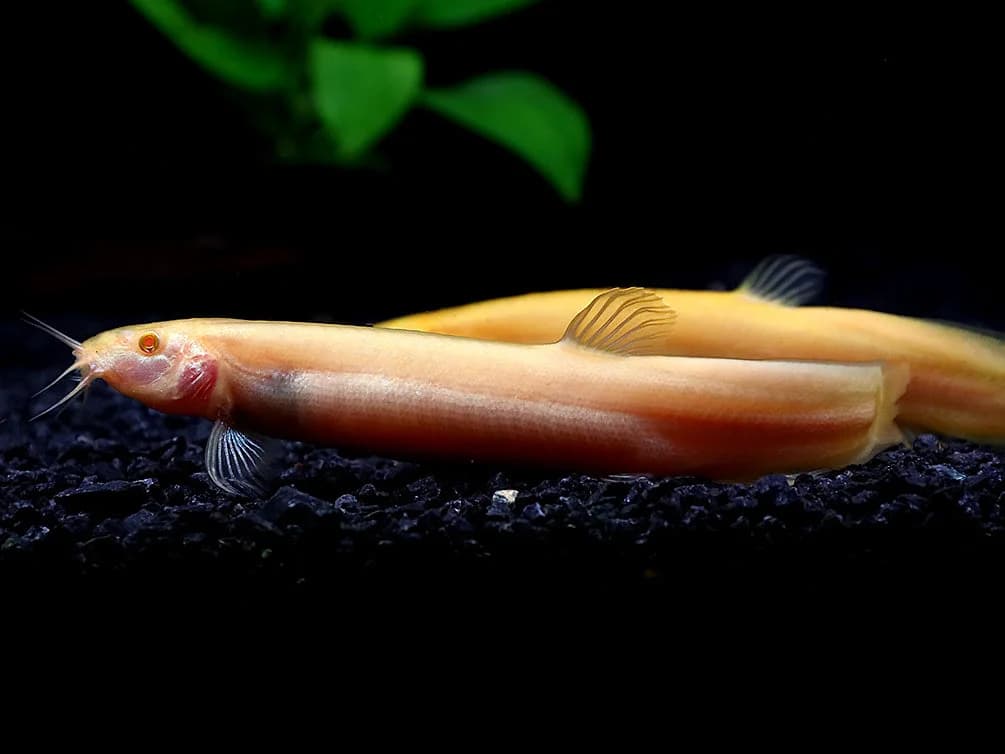
Misgurnus anguillicaudatus, the dojo loach (or weather loach), is a popular elongated loach from East Asia. The gold variant is a captive-bred color form displaying a warm golden-yellow to orange body with pink eyes, lacking the standard brown-grey mottled coloration of the wild type. Their elongated, eel-like body, prominent barbels, and entertaining behavior make them charming and personable aquarium inhabitants.
Native to rivers, ponds, and rice paddies across China, Japan, Korea, and neighboring countries, dojo loaches inhabit slow-moving to still water with soft, muddy substrates. They are remarkably cold-tolerant fish that can survive near-freezing temperatures.
Gold dojo loach care is easy. Their exceptional temperature tolerance, adaptability to a range of water parameters, hardy constitution, and personable behavior make them excellent beginner fish. Their gold coloration is more visible and attractive than the standard cryptic brown form.
Basic Overview
Common Misconceptions
"They need tropical temperatures." Gold dojo loaches are subtropical to temperate fish that prefer 60-72 degrees F and can survive temperatures approaching freezing. They can share tanks with goldfish. Standard tropical temperatures (76-80 degrees F) are stressful for long-term keeping.
"They can be kept singly." Dojo loaches are social and do better in groups of 3 or more. Solo loaches are less active and more shy.
"Their surface-gulping behavior indicates oxygen deficiency." Dojo loaches are intestinal air-breathers and regularly gulp air at the surface. This is normal and healthy behavior for the species, not an indicator of low oxygen.
"Their " weather prediction" is a myth." Dojo loaches are genuinely sensitive to barometric pressure changes and become visibly more active before approaching storms. This behavior is well-documented and is the origin of their "weather loach" common name.
Recommended Setup
- 55+ gallon tank for 2-3 fish
- Soft sand or fine gravel substrate for burrowing
- Good filtration
- Moderate flow
- Cooler temperature: 60-72 degrees F
- Compatible cool-water tank mates (goldfish, white clouds)
- Secure lid (active jumpers)
Diet
Gold dojo loaches are omnivores that accept most sinking foods:
- Sinking pellets or wafers (primary)
- Frozen bloodworms
- Frozen brine shrimp
- Blanched vegetables: zucchini, cucumber
- Earthworms (occasional treat)
Feed once daily. Gold dojo loaches are enthusiastic, non-fussy feeders that forage actively on the substrate. They will find and eat leftover food from other fish, which helps maintain tank cleanliness.
Personality
Gold dojo loaches are among the most interactive and personable loaches available. They recognize their keeper, approach the glass for feeding, and engage in amusing social behaviors with group members including pile-resting (sleeping in a heap with tank mates) and synchronized burrowing.
Their gold coloration against a sandy substrate in a cool-water tank is genuinely warm and attractive. Their elongated body, prominent whisker-like barbels, and rounded snout give them an appealing, mammalian-like facial quality.
Their reactivity to barometric changes -- becoming suddenly active and surface-skimming before weather changes -- is an endearing quirk that adds another layer of interest to keeping this species.
Water Parameters
Gold dojo loaches come from the cool rivers and ponds of East Asia:
- pH: 6.5-8.0 (highly adaptable)
- Hardness (gH): 5-20 dGH (highly adaptable)
- Temperature: 50-77 degrees F (cooler is better)
- Ammonia and Nitrite: 0 ppm
- Nitrate: below 25 ppm
Here are some top tips to deal with unwanted parameters:
- Cooler temperatures (60-72 degrees F) are ideal. Standard tropical temperatures cause stress over time.
- They are among the most water-chemistry-adaptable fish available. Standard tap water in virtually any area is suitable.
- Weekly 25% water changes are sufficient.
- Deep soft substrate allows natural burrowing behavior that keeps them calm and active.