Weather Loach Care Guide
A Complete Care Guide for Misgurnus anguillicaudatus
Introduction
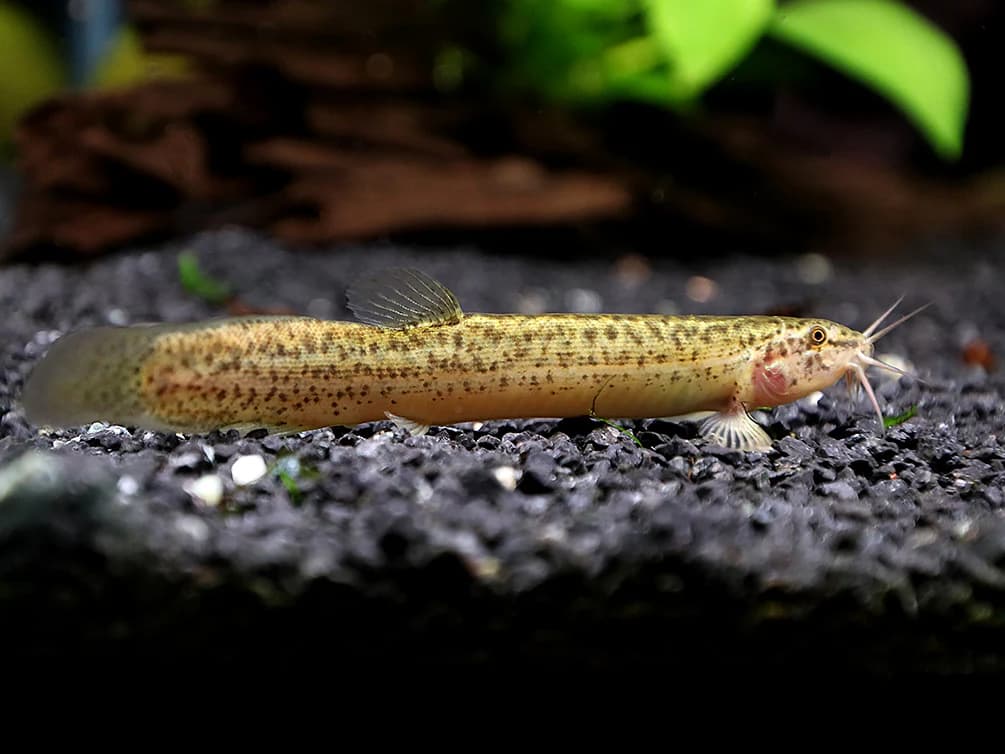
Misgurnus anguillicaudatus, the weather loach (also called the dojo loach or pond loach), is a large, eel-like loach from East Asia. Their name comes from a fascinating behavioral quirk: they become highly active, erratically swimming to the surface, as barometric pressure drops before storms. This behavior has long been used as a primitive weather indicator by people in their native range.
Native to China, Japan, Korea, and surrounding East Asian countries, weather loaches inhabit slow-moving rivers, ponds, rice paddies, and ditches with muddy substrate. They are extremely cold-tolerant and can survive being frozen in ice briefly, making them more suitable for cool or unheated aquariums than most aquarium fish.
Weather loaches are easy to care for, hardy, and personable. They accept a very wide range of conditions, eat almost anything, and their elongated, wriggling movements and curious personalities make them entertaining pets. Their large adult size (10-12 inches) requires adequate tank space.
Basic Overview
Common Misconceptions
"They need tropical temperatures." Weather loaches are cool-water fish adapted to the seasonally cold rivers of East Asia. They prefer 60-72 degrees F and do poorly long-term at persistent tropical temperatures (78+ degrees F). They are one of the best fish for unheated indoor aquariums.
"They stay small." Weather loaches grow to 10-12 inches in appropriate conditions. Young fish sold at 4-5 inches will more than double in size over a few years.
"They are tropical community fish." Their cool water preference makes them incompatible with standard tropical fish (tetras, cichlids, etc.). Good tank mates are other cool-water fish: goldfish, white cloud mountain minnows, and temperate loaches.
"Erratic surface swimming is a problem." The barometric weather-sensing behavior produces temporary erratic surface swimming and hyperactivity before storms. This is completely normal and not a disease indicator. It will resolve once the pressure change has passed.
Recommended Setup
- 55+ gallon tank for 2-3 adults
- Deep soft substrate (3+ inches of sand): they burrow extensively
- Smooth rocks and driftwood
- Hardy cool-water plants (vallisneria, anubias)
- Secure lid (they can and do escape)
- Good filtration; they are messy
- No heater required (room temperature is usually appropriate)
Diet
Weather loaches are omnivores that eat almost everything:
- Sinking pellets or wafers
- Frozen bloodworms
- Frozen brine shrimp
- Blanched vegetables: zucchini, peas, spinach
- Earthworms
Feed once daily. Weather loaches are enthusiastic, non-fussy eaters that accept virtually everything. They spend much of their time foraging in the substrate for leftover food, making them effective tank cleaners in addition to their direct feeding. Do not overfeed; they will eat continuously if food is available.
Personality
Weather loaches are genuinely personable fish with more obvious individual personality than most aquarium species. They become very familiar with their keeper, approaching the glass and actively interacting during maintenance and feeding. Many keepers describe them as having dog-like personalities.
Their social nature means they do best in groups of 2 or more, piling up together in hiding spots and foraging cooperatively. A group of weather loaches working together through a sandy substrate with their barbels probing for food is entertaining and charming.
The barometric storm-sensing behavior is a fascinating and unique natural phenomenon. A tank of weather loaches going from calm to frenzied surface activity an hour before a thunderstorm is a genuinely remarkable thing to observe.
Water Parameters
Weather loaches come from the cool, temperate rivers and ponds of East Asia:
- pH: 6.5-8.0 (very adaptable)
- Hardness (gH): 5-20 dGH (very adaptable)
- Temperature: 50-75 degrees F
- Ammonia and Nitrite: 0 ppm
- Nitrate: below 20 ppm
Here are some top tips to deal with unwanted parameters:
- Cool temperature is the most important parameter. Maintaining them at standard tropical temperatures significantly reduces lifespan.
- Weather loaches are among the most water-chemistry adaptable fish available. Standard tap water in virtually any area is appropriate.
- Their intestinal breathing (they can gulp air and absorb oxygen through their gut) means they are more tolerant of low dissolved oxygen than most fish, though this should not be used as justification for inadequate filtration.
- Weekly 25-30% water changes and standard maintenance are all that is required.