Dwarf Neon Rainbowfish Care Guide
A Complete Care Guide for Melanotaenia praecox
Introduction
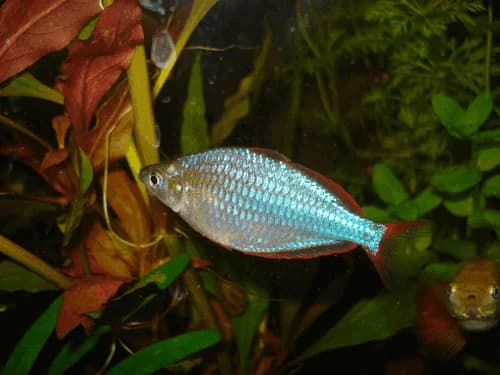
Melanotaenia praecox, the dwarf neon rainbowfish (also called the neon rainbowfish or peacock rainbowfish), is one of the most popular and widely available rainbowfish in the hobby. Males display an electric, iridescent blue body with vivid red-orange fins, creating a striking color combination that is immediately eye-catching. Their compact size (2.5-3 inches) makes them suitable for medium-sized planted tanks.
Native to the Mamberamo River drainage in Papua New Guinea, dwarf neon rainbowfish inhabit clear, slightly fast-flowing rivers with moderately hard water. Like most Melanotaenia, they are hardy and adaptable in captivity.
Dwarf neon rainbowfish care is easy and suitable for intermediate to advanced beginners. Their vivid coloration, active social behavior, and adaptability to a range of community tank conditions make them one of the most recommended rainbowfish for planted tanks.
Basic Overview
Common Misconceptions
"Juveniles show the same color as adults." Juvenile dwarf neon rainbowfish appear dull and colorless compared to mature males. The vivid blue body and red-orange fins develop fully at 8-12 months of age. Purchasing a group of juveniles requires patience for full color to develop.
"Soft, acidic water is optimal." Like most rainbowfish, M. praecox develops the most intense color in moderately hard, slightly alkaline water rather than soft, acidic conditions. pH 7.0-7.8 and moderate hardness produce the best color.
"They need a large tank." Their small size (2.5-3 inches) makes them suitable for 30+ gallon tanks, which is more manageable than many other rainbowfish species that require 55+ gallons.
Recommended Setup
- 30+ gallon tank for a school of 8-10
- Open swimming space with planted background and edges
- Moderate flow
- Moderately hard, slightly alkaline water
- Good filtration
- Multiple males in group for active display
Diet
Dwarf neon rainbowfish are omnivores that accept most standard foods:
- High-quality small flake or pellets
- Frozen bloodworms
- Frozen brine shrimp
- Frozen daphnia
- Blanched vegetables
Feed twice daily. They are active, enthusiastic feeders. A varied diet with regular frozen protein foods maintains the most vivid blue body color and red-orange fin intensity.
Personality
Male dwarf neon rainbowfish display constantly -- shimming their vivid blue bodies and fanning their red-orange fins at females and rival males. The collective effect of multiple males displaying simultaneously in a group is spectacular: a shimmering cloud of electric blue and red in a planted tank.
Their peaceful temperament makes them compatible with virtually all community fish of appropriate size. They do not nip fins and are not aggressive toward tank mates.
Dwarf neon rainbowfish are often cited as one of the most underappreciated community fish available. Their small size, vivid color, active display behavior, and adaptability make them excellent choices for planted community tanks.
Water Parameters
Dwarf neon rainbowfish come from the rivers of Papua New Guinea:
- pH: 7.0-7.8
- Hardness (gH): 8-18 dGH
- Temperature: 74-82 degrees F
- Ammonia and Nitrite: 0 ppm
- Nitrate: below 20 ppm
Here are some top tips to deal with unwanted parameters:
- Moderately hard, slightly alkaline water produces the most vivid blue color.
- Good flow and surface agitation for oxygenation.
- Weekly 25-30% water changes maintain good conditions.
- Avoid very soft, acidic water -- it suppresses their color.