Dwarf Mexican Orange Crayfish Care Guide
A Complete Care Guide for Cambarellus patzcuarensis var. orange
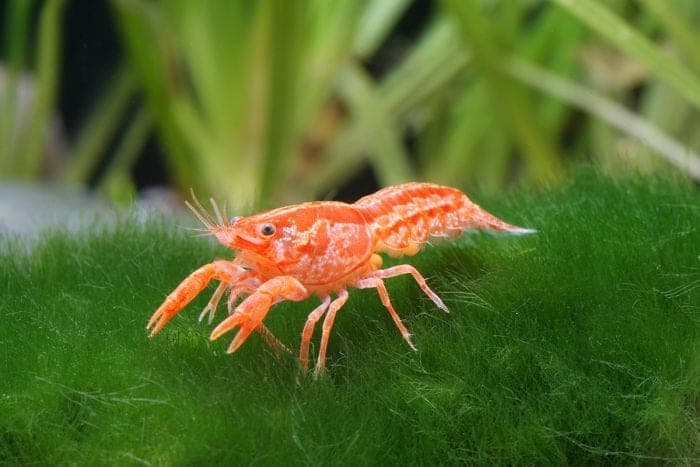
Introduction
Cambarellus patzcuarensis var. orange (CPO crayfish) is a small, vividly colored dwarf crayfish from Mexico. Their vivid orange-to-red coloration, small adult size of 1.5-2 inches, and significantly more peaceful temperament compared to full-sized crayfish make them one of the most accessible and appealing freshwater invertebrates for planted tanks.
Native to Lake Patzcuaro in Mexico (a high-altitude lake), CPO crayfish prefer cooler water than many tropical invertebrates. The orange variety available in the hobby is a selectively bred color morph developed from the wild form.
Unlike large crayfish (Procambarus clarkii, etc.), CPO crayfish pose minimal risk to plants and fish. They are small enough that they cannot catch or harm adult fish of even modest size, and while they will nibble on plants, the damage is minimal compared to full-sized species.
Basic Overview
Common Misconceptions
"All crayfish are the same." CPO crayfish are dwarf species with significantly different care needs and behavior from standard crayfish. They are much smaller, cooler-water, and considerably less destructive to plants and tank mates.
"They need warm tropical temperatures." CPO crayfish come from a high-altitude Mexican lake and prefer 65-75 degrees F. At tropical temperatures above 78 degrees F, their lifespan shortens significantly.
"They are completely plant-safe." CPO crayfish nibble on soft-leaved plants, particularly Java moss and fine-leaved stems. Hardy plants like Java fern and anubias attached to wood are generally safe. Dense moss may be grazed.
"They can be kept with any fish." CPO crayfish are safe with fish too large to fit in their claws (most fish over 2 inches). Very small nano fish (ember tetras, chili rasboras) may occasionally be caught and eaten, particularly at night or during molting.
Recommended Setup
- 10+ gallon tank for a pair; 20 gallons for a small colony of 4-6
- Fine sand or smooth gravel substrate
- Multiple small caves and hiding spots; more hiding spots than crayfish to reduce conflict
- Hardy plants: Java fern, anubias, hornwort, Vallisneria
- Gentle to moderate filtration; sponge filter is ideal
- Cool water: 68-73 degrees F optimal; fan for evaporative cooling if needed
- A secure lid; they can climb filter tubes and escape
Diet
CPO crayfish are omnivores that accept most sinking foods:
- Sinking shrimp or crayfish pellets as a staple
- Blanched vegetables: zucchini, spinach, peas, carrots
- Frozen bloodworms and brine shrimp (occasional protein)
- Algae wafers
- Dried leaf litter (Indian almond, oak) for grazing
Feed once daily with small amounts. CPO crayfish are opportunistic and will also graze biofilm and detritus from the tank. Remove uneaten food after 24 hours to prevent water quality degradation.
Personality
CPO crayfish are active, curious invertebrates that explore their environment thoroughly. They investigate every corner, move decorations, and emerge readily during the day - more diurnal than many crayfish species.
Males and females interact in interesting ways: males pursue females persistently during breeding periods, and females with eggs become noticeably more reclusive and aggressive in defense of their brood.
Their vivid orange coloration is one of their primary attractions. Under white or warm-spectrum lighting against dark substrate, they are genuinely striking. They tend to be most visible during feeding and in the hours after lights-on and before lights-off.
Breeding CPO Crayfish
CPO crayfish breed readily in captivity. Males mate with females by depositing sperm packets, after which the female carries eggs under her tail for 3-4 weeks. Egg-carrying females become reclusive and should not be disturbed.
Juveniles emerge from the eggs as miniature versions of the adults and are independent immediately. They require fine food (crushed powder, bacterial floc, powdered spirulina) for the first two weeks. In a planted tank with good biofilm, survival is usually reasonable without special intervention.
The main risk to juveniles is predation by adult crayfish and any fish in the tank. A species-only tank produces the highest juvenile survival. In a mixed tank, dense plants and mosses provide adequate hiding for some juveniles to survive.
Water Parameters
CPO crayfish come from a high-altitude Mexican lake and prefer cooler, moderately hard water:
- pH: 7.0-8.0
- Hardness (gH): 8-15 dGH
- Temperature: 65-75 degrees F
- Ammonia and Nitrite: 0 ppm
- Nitrate: below 20 ppm
Here are some top tips to deal with unwanted parameters:
- Cool water is the most important parameter. At 78 degrees F+ CPO crayfish show reduced lifespan and increased disease susceptibility. A fan for evaporative cooling can reduce tank temperature by 3-5 degrees F.
- Moderately hard, slightly alkaline water suits them. Standard tap water in most areas is appropriate without modification.
- Avoid copper-based medications entirely. Copper is lethal to all invertebrates including crayfish.
- Weekly 20-25% water changes maintain good water quality. Crayfish produce significant waste relative to their size.