Apistogramma Care Guide
A Complete Care Guide for South American Dwarf Cichlids
Introduction
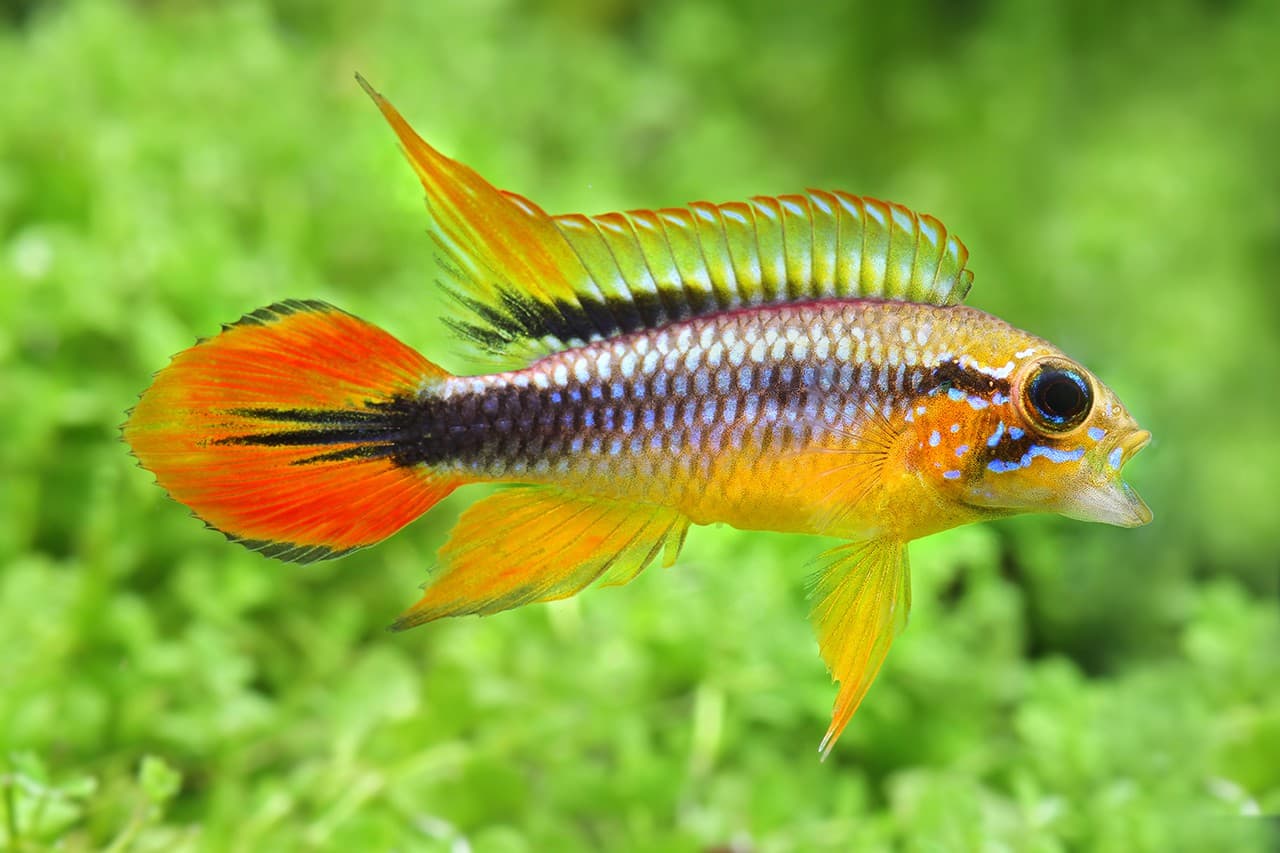
Apistogramma is a genus of small, brilliantly colored South American dwarf cichlids native to the soft, acidic river systems of the Amazon and Orinoco basins. With over 100 described species and many more awaiting description, apistogrammas represent some of the most diverse, colorful, and behaviorally fascinating fish in the freshwater hobby.
Apistogramma cacatuoides (cockatoo dwarf cichlid) is among the most commonly kept and beginner-friendly species, while others like A. agassizii and A. borellii are also widely available. Males of most species develop spectacular finnage and vibrant coloration; females are smaller, yellow, and equally important as parents.
Apistogrammas are intelligent, interactive, and display remarkable parental behaviors. In a well-planted soft-water aquarium, they are among the most rewarding fish you can keep.
Basic Overview
Common Misconceptions
"Apistogrammas are just small, less impressive cichlids." Males of many species rival any fish in the hobby for color complexity and finnage. The cockatoo apistogramma's dorsal fin extensions, the orange and blue of an agassizii, and the pastel colors of a borellii are extraordinary.
"They need a huge tank." A 20-gallon planted tank is genuinely suitable for a pair. Their small size and preference for defined territories makes medium-sized planted tanks ideal, not a compromise.
"They are too aggressive for community tanks." Outside of breeding, most apistogramma species are peaceful with fish that occupy different water levels. Upper-water schooling fish coexist beautifully with apistogrammas on the bottom.
"Any water conditions will do." While hardier captive-bred strains tolerate moderate tap water, apistogrammas display their best colors and breed most readily in soft, slightly acidic conditions. Hard alkaline water causes chronic stress in wild-type and more sensitive species.
Recommended Setup
- 20+ gallon planted tank for a pair (one male, one or two females)
- Soft, slightly acidic water; driftwood and leaf litter are highly beneficial
- Fine sand substrate; apistogrammas sift through substrate naturally
- Multiple caves and hiding spots: coconut shells, clay caves, driftwood crevices
- Dense plant cover, especially at lower levels: crypts, Java fern, anubias, Amazon swords
- Gentle filtration with low flow; sponge filter or baffled hang-on-back
- Subdued lighting with floating plants or overhanging vegetation
Diet
Apistogrammas are carnivore-leaning omnivores that hunt small invertebrates in the wild. A protein-rich, varied diet produces the best health and coloration:
- High-quality micro pellets or cichlid pellets as a staple
- Frozen bloodworms (a favorite; excellent for conditioning before breeding)
- Frozen brine shrimp, daphnia, and cyclops
- Live foods for breeding conditioning: baby brine shrimp, micro worms, blackworms
- Occasional small pieces of white fish for variety
Feed once or twice daily in small amounts. Live and frozen foods are important for bringing fish into breeding condition and maintaining the vivid coloration of males. Vary the diet as much as possible for best results.
Personality
Apistogrammas are among the most behaviorally complex fish in the freshwater hobby. Males court females with elaborate fin displays, color intensification, and ritualized swimming behaviors. When a pair spawns, the female transforms into a fierce guardian, driving away any fish that approaches the nest, including fish much larger than herself.
The relationship between male and female apistogrammas is fascinating to observe. Males are flamboyant and dominant; females are practical and decisive. In a harem setup (one male, two or three females), social dynamics are rich and constantly shifting.
Males establish territories and will display at and occasionally chase bottom-level intruders. This is entirely normal behavior that causes no harm in a properly sized tank with adequate hiding spots. Their small size means even their "aggressive" displays are harmless to most community fish.
Breeding Apistogrammas
Breeding apistogrammas is one of the most rewarding experiences in the hobby. Triggering spawning typically requires soft, acidic water, live or frozen foods, and slightly raising the temperature. The female will select a cave and lay eggs on the ceiling or walls inside it.
The female becomes a remarkably attentive parent, fanning the eggs, removing unfertilized ones, and guarding the fry fiercely once they hatch (typically in 48–72 hours). The male is often chased away from the immediate nest area.
First foods for fry include infusoria, baby brine shrimp, and micro worms. In a species tank with soft water and dense planting, raising apistogramma fry alongside the parents is entirely feasible and lets you observe the full parenting behavior.
Water Parameters
Apistogrammas come from some of the world's softest, most acidic rivers. For best health and color:
- pH: 5.5–7.0 (6.0–6.8 ideal for most species)
- Hardness (gH): 1–10 dGH (soft water)
- Temperature: 76–84°F
- Ammonia and Nitrite: 0 ppm
- Nitrate: below 10–20 ppm
Here are some top tips to deal with unwanted parameters:
- Driftwood, Indian almond leaves, and catappa bark naturally soften and acidify water. A blackwater apistogramma tank with dark substrate and tannin-stained water brings out colors that are impossible in hard alkaline conditions.
- In hard tap water areas, blend with RO water (50–70% RO) to bring hardness into range. This is especially important for wild-caught or more sensitive species.
- Weekly 25% water changes with matched temperature and chemistry keep parameters stable and reduce the risk of disease.
- Nitrate is particularly important to manage. Above 20 ppm, apistogrammas show reduced coloration and are more susceptible to bacterial infections. Frequent water changes and live plants help keep nitrate low.